Learn what every symbol on the card means.Full credits and sources at beakbrain.com/symbols
 ForestCavity nestSmall · 16 g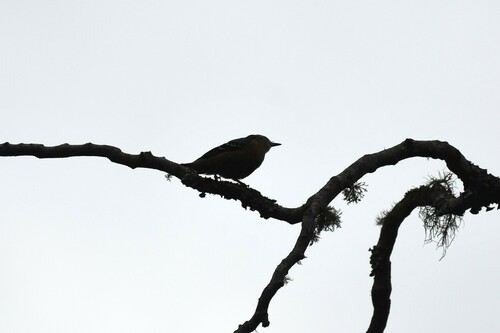
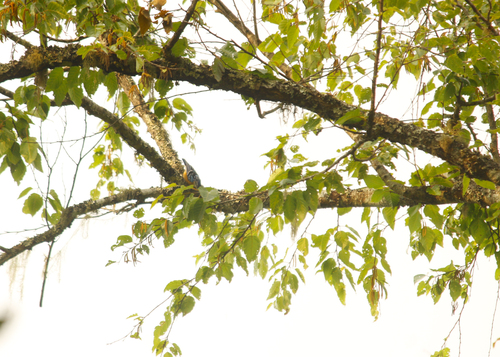
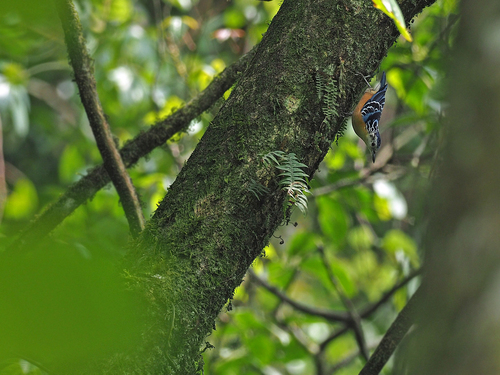
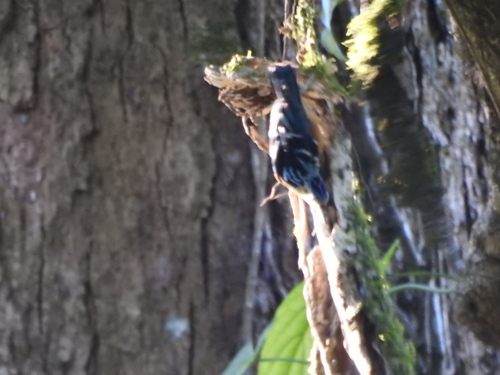


ID tip
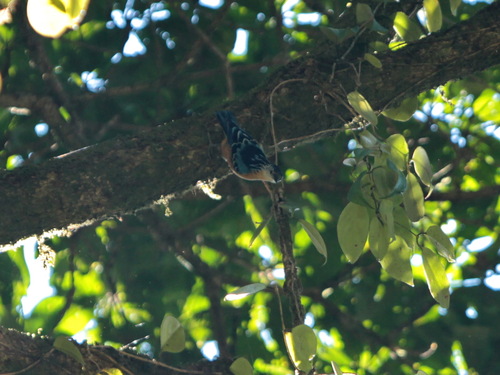
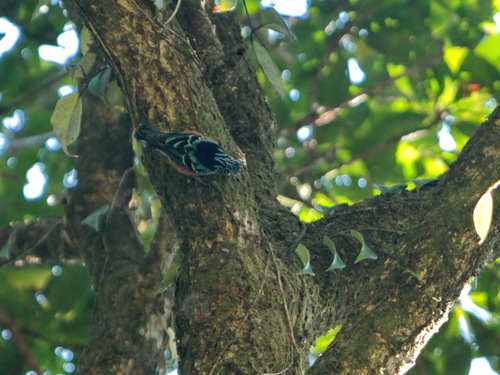
Described by Erik Matthysen in his 1998 treatise The Nuthatches as a bird that "deserves its name", the beautiful nuthatch has highly distinctive plumage. Its upperparts are black and azure, and it is orange on the underparts. The crown and upper mantle are black, streaked with pale blue and white. The scapulars, back and rump are an azure blue. The greater and medium coverts are black, finely edged with white, forming two narrow wing bars; the flight feathers are black and more or less lined with pale blue. Voice: The calls and song are not well known, but its song is described as "low and sweet in tone". Its call is typical of nuthatches, and similar to that of the Eurasian nuthatch (Sitta europaea), but less strident.
Text from Wikipedia, licensed CC BY-SA 4.0.
When to see the Beautiful Nuthatch
One bar for each month. Filled bars are the 7 months with records; pale bars are months with none. The wide bar is April, the month with the most records.
Where to see the Beautiful Nuthatch
The map shades 6 countries with regular records, and 1 more in a lighter tone where the bird turns up only as a stray. Everything unshaded has no records. Countries are listed below the map.
Recorded as a rare visitor in Thailand.
About the Beautiful Nuthatch
The beautiful nuthatch is a bird species in the family Sittidae, collectively known as nuthatches. It is a large nuthatch, measuring 16.5 cm (6.5 in) in length, that is not sexually dimorphic. Its colour and markings are dramatic, the upper parts being black and azure, streaked with white and pale blue on the head and lined with the same colours on the wing feathers. The underparts are orange, and the eyebrow and throat are ochre. An irregular, dark eyestripe highlights its eye. Its ecology is not fully described, but it is known to feed on small insects and larvae found on the trunks and epiphyte-covered branches of trees in its range.
Text adapted from Wikipedia, licensed CC BY-SA 4.0.
Easily confused with
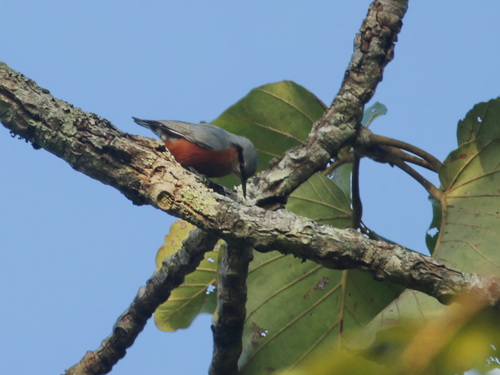 Burmese NuthatchSitta neglectaThe Burmese nuthatch, also known as the neglected nuthatch, is a species of bird in the family Sittidae.
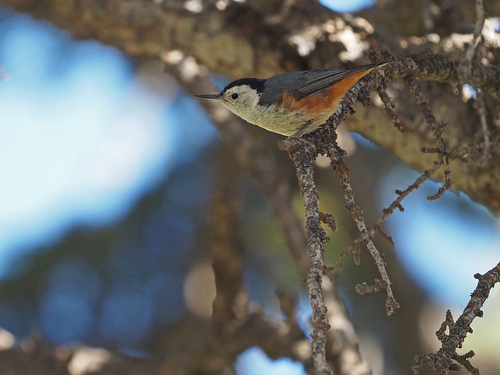 White-cheeked NuthatchSitta leucopsisIt is 13 cm (5.1 in) long, white cheeks, chin, throat, and underparts, upper parts mostly dark grey.
 Giant NuthatchSitta magnaThe upperparts are dark bluish-grey, with the crown, nape, and upper mantle much lighter grey and somewhat streaked with black, varyingly between individuals, regardless of sex.
Learn the Beautiful Nuthatch in the BeakBrain App
Photo and call practice. Coming soon to iPhone and Android.
Play today's Daily BirdEvery photo and recording on this page is credited to its author under the licence shown. Spotted a problem with this page, or have a better photo? Contribute.