Learn what every symbol on the card means.Full credits and sources at beakbrain.com/symbols
 ShrublandScrapeSmall · 46 g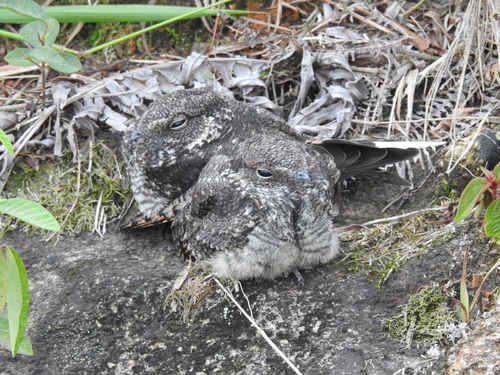
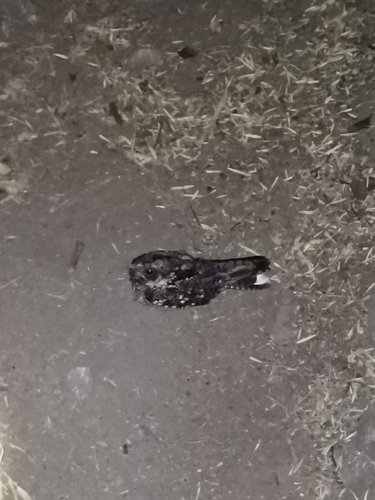
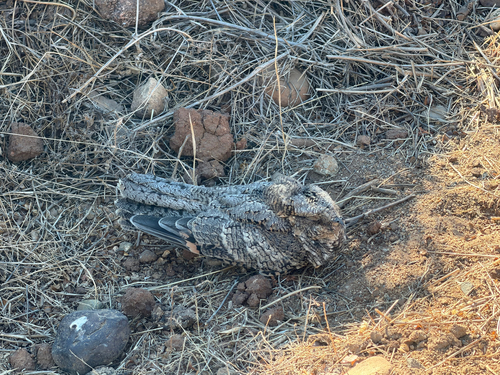
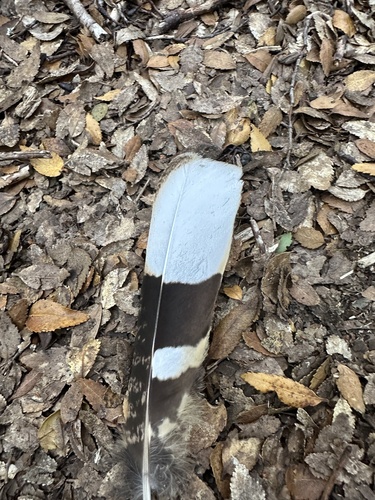
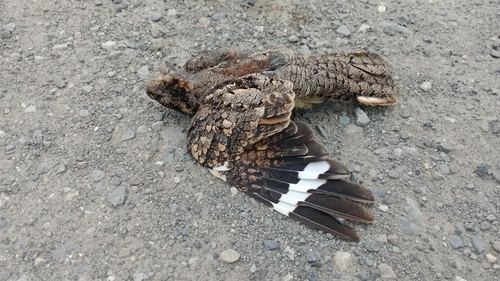
What the Band-winged Nightjar sounds like


ID tip
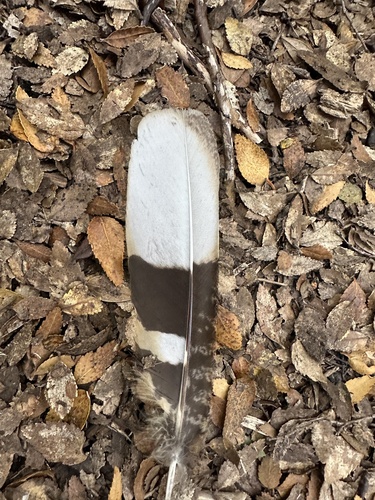
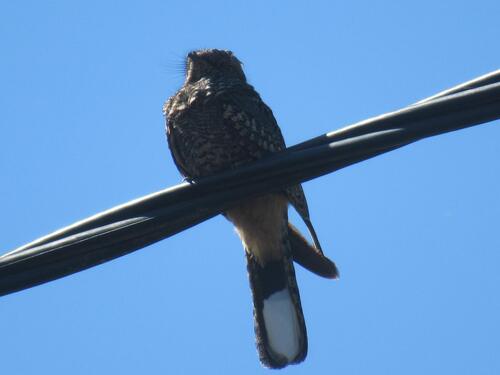
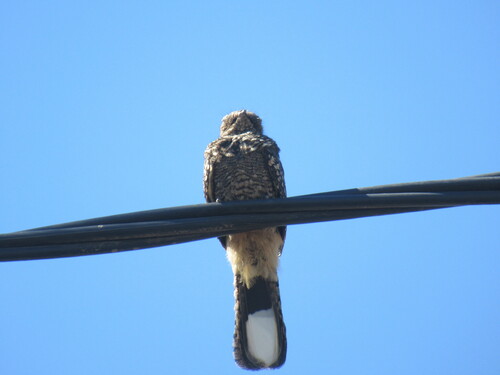
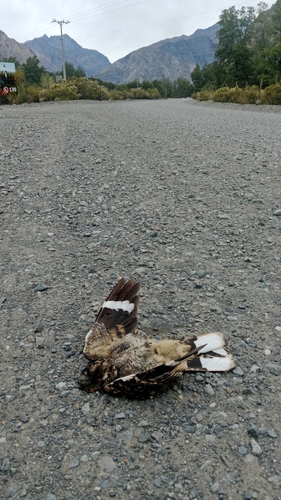
Over its large range, there are significant variations in its morphology, but, as suggested by its common name, it always has a distinctive band in the wing (best visible in flight), which is white in the male and buff in the female. This nightjar has a length that varies from 20 to 27 cm (for Ecuador, 21.5 to 23 cm). The iris, bill, legs, and feet vary from brown to blackish brown. On the upper side, a greyish-brown, blackish-brown, brownish-orange, pale yellowish-brown, and greyish-white coloration can be distinguished. The rear of the neck is from a brownish orange to a yellowish brown. Voice: The species has a variety of calls. The territorial tone is a high-sharp whistle, seeeeert sweeeert seeeet, constantly repeated every 1 to 3 seconds. Whistles can be heard at dusk or dawn. The flight whistle is usually heard during the breeding season as a high cheet. Females when flushed produce a nasal sound like tchree-ee.
Text from Wikipedia, licensed CC BY-SA 4.0.
When to see the Band-winged Nightjar
One bar for each month, and every month is filled: this bird is recorded here in all twelve. The wide bar is May, the month with the most records.
Where to see the Band-winged Nightjar
The map shades 10 countries with regular records. Everything unshaded has no records. Countries are listed below the map.
About the Band-winged Nightjar
The band-winged nightjar or greater band-winged nightjar is a species of nightjar in the family Caprimulgidae. It is the only species now placed in the genus Systellura. It is widespread in South America, where it is found in the Andes, Venezuelan Coastal Range, Santa Marta Mountains, Tepuis, most of Chile, Argentina, Paraguay, Uruguay, and eastern Brazil. It occurs in a wide range of habitats, from the edge of humid montane forests to shrubby semi-deserts and urban rooftops.
Text adapted from Wikipedia, licensed CC BY-SA 4.0.
Easily confused with
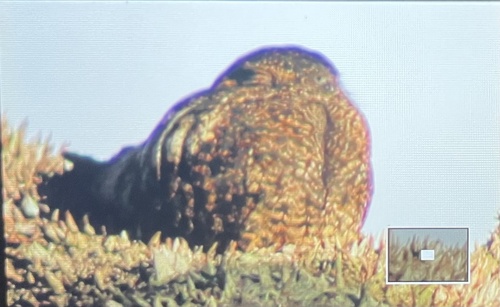 Short-tailed NighthawkLurocalis semitorquatusThe short-tailed nighthawk is 19 to 21 cm (7.5 to 8.3 in) long.
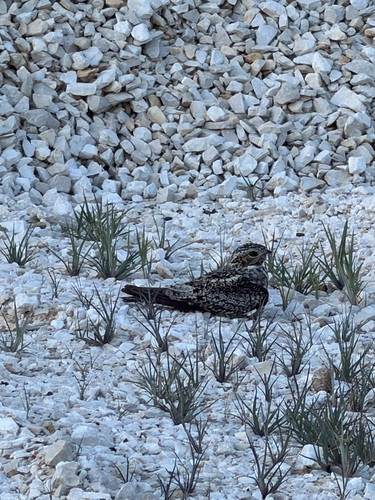 Antillean NighthawkChordeiles gundlachiiThe adults are dark with brown, grey and white patterning on the upperparts and breast; the long wings are black and show a white bar in flight.
 Jerdon's NightjarCaprimulgus atripennisLike other nightjars, it has a wide gape, long wings, soft downy plumage and nocturnal habits.
Side by side: Band-winged Nightjar vs Short-tailed Nighthawk · Antillean Nighthawk vs Band-winged Nightjar · Band-winged Nightjar vs Jerdon's Nightjar
Learn the Band-winged Nightjar in the BeakBrain App
Photo and call practice. Coming soon to iPhone and Android.
Play today's Daily BirdEvery photo and recording on this page is credited to its author under the licence shown. Spotted a problem with this page, or have a better photo? Contribute.