Learn what every symbol on the card means.Full credits and sources at beakbrain.com/symbols
 WoodlandCavity nestMedium · 195 g


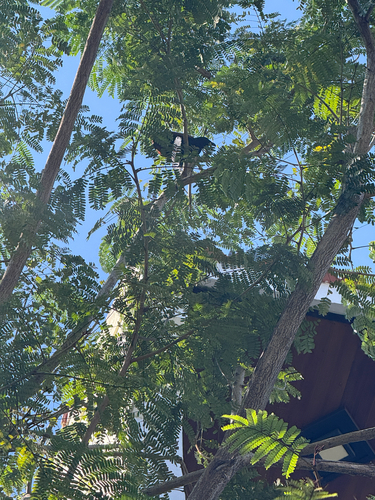
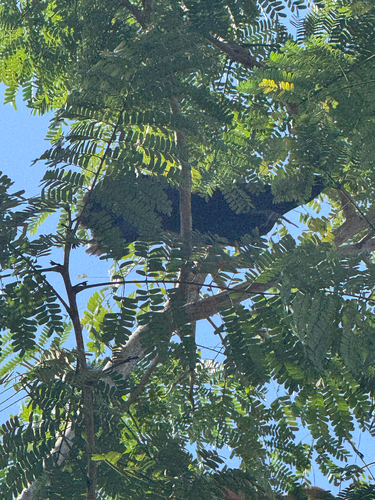
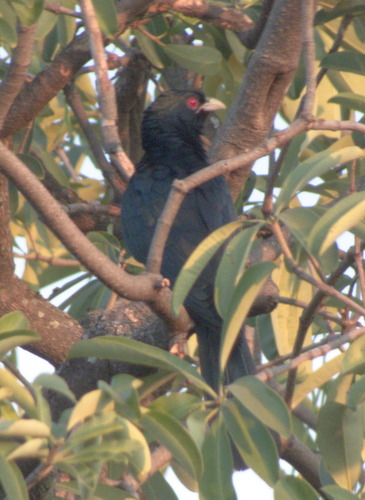
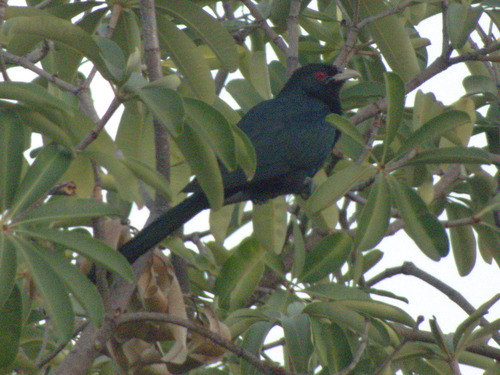
What the Asian Koel sounds like


ID tip
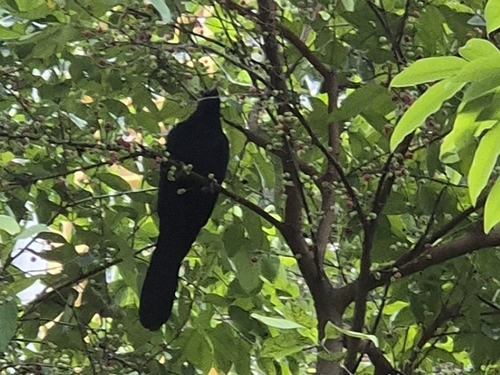
The Asian koel is a large and long-tailed cuckoo measuring 39–46 cm (15–18 in) and weighing 190–327 g (6.7–11.5 oz). The male of the nominate race is glossy bluish-black, with a pale greenish grey bill, the iris is crimson, and it has grey legs and feet. The female of the nominate race is brownish on the crown and has rufous streaks on the head. The back, rump and wing coverts are dark brown with white and buff spots. The underparts are whitish, but is heavily striped. The other subspecies differ in colouration and size.
Text from Wikipedia, licensed CC BY-SA 4.0.
When to see the Asian Koel
One bar for each month, and every month is filled: this bird is recorded here in all twelve. The wide bar is February, the month with the most records.
Where to see the Asian Koel
The map shades 25 countries with regular records, and 4 more in a lighter tone where the bird turns up only as a stray. Everything unshaded has no records. Countries are listed below the map.
Recorded as a rare visitor in Japan, South Korea, Papua New Guinea, Kuwait.
About the Asian Koel
The Asian koel is a member of the cuckoo family of birds, the Cuculidae. It is found in the Indian subcontinent, China, and Southeast Asia. It forms a superspecies with the closely related black-billed koels, and Pacific koels which are sometimes treated as subspecies. The Asian koel, like many of its related cuckoo kin, is a brood parasite that lays its eggs in the nests of crows and other hosts, who raise its young. They are unusual among the cuckoos in being largely frugivorous as adults. The name koel is echoic in origin with several language variants. The bird is a widely used symbol in Indian, Pakistani and Nepali poetry.
Text adapted from Wikipedia, licensed CC BY-SA 4.0.
Easily confused with
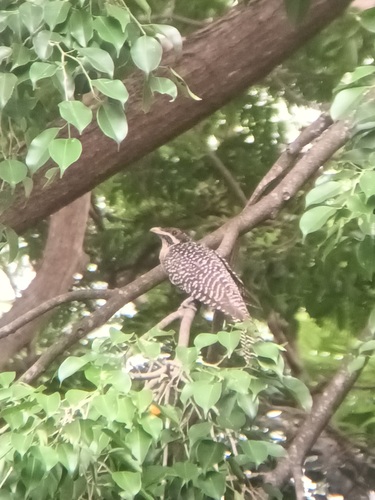 Pacific KoelEudynamys orientalisThe Pacific Koel can be identified by its black plumage, often tinted with blue and green, and red eyes.
 Black-billed KoelEudynamys melanorhynchusThe black-billed koel is a species of cuckoo in the family Cuculidae.
Side by side: Asian Koel vs Pacific Koel
Learn the Asian Koel in the BeakBrain App
Photo and call practice. Coming soon to iPhone and Android.
Play today's Daily BirdEvery photo and recording on this page is credited to its author under the licence shown. Spotted a problem with this page, or have a better photo? Contribute.