Learn what every symbol on the card means.Full credits and sources at beakbrain.com/symbols
 ForestScrapeMedium · 196 g



What the American Woodcock sounds like


ID tip
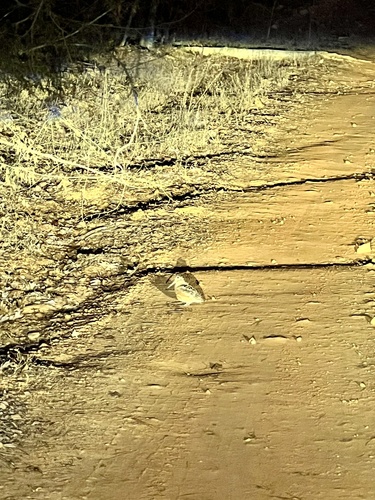
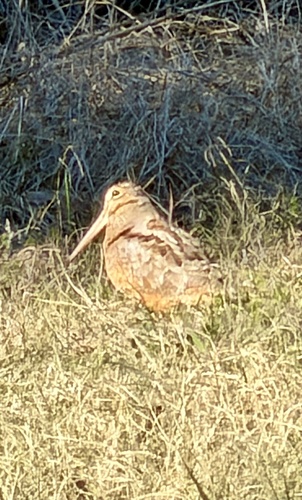
The American woodcock has a plump body, short legs, a large, rounded head, and a long, straight prehensile bill. Adults are 10 to 12 inches (25 to 30 cm) long and weigh 5 to 8 ounces (140 to 230 g). Females are considerably larger than males. The bill is 2.5 to 2.8 inches (6.4 to 7.1 cm) long. Wingspans range from 16.5 to 18.9 inches (42 to 48 cm). The plumage is a cryptic mix of different shades of browns, grays, and black. The chest and sides vary from yellowish-white to rich tans. This mottled coloring provides camouflage against surrounding leaves and earth.
Text from Wikipedia, licensed CC BY-SA 4.0.
When to see the American Woodcock
One bar for each month. Filled bars are the 6 months with records; pale bars are months with none. The wide bar is May, the month with the most records.
Where to see the American Woodcock
The map shades 4 countries with regular records. Everything unshaded has no records. Countries are listed below the map.
About the American Woodcock
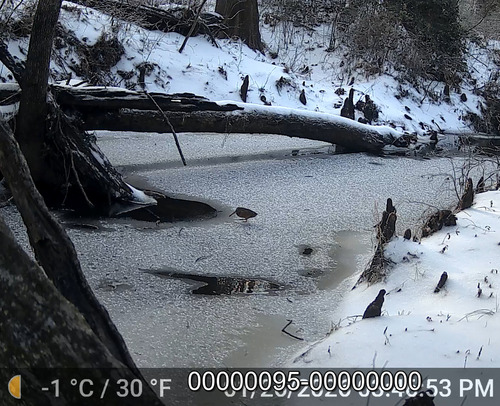
The American woodcock, sometimes colloquially referred to as the timberdoodle, mudbat, becasse, bogsucker, brush snipe, night partridge, or Labrador twister is a small shorebird species found primarily in the eastern half of North America. Woodcocks spend most of their time on the ground in brushy, young-forest habitats, where the birds' brown, black, and gray plumage provides excellent camouflage.
Text adapted from Wikipedia, licensed CC BY-SA 4.0.
Easily confused with
 Eurasian WoodcockScolopax rusticolaAdults are 33–38 cm (13–15 in) in length, including the 6–8 cm (2.4–3.1 in) long straight bill, and have a 55–65 cm (22–26 in) wingspan.
 Bukidnon WoodcockScolopax bukidnonensisThe Bukidnon woodcock, or Philippine woodcock is a medium-sized wader.
 Amami WoodcockScolopax miraThe Amami woodcock is a medium-sized wader.
Side by side: American Woodcock vs Eurasian Woodcock
Learn the American Woodcock in the BeakBrain App
Photo and call practice. Coming soon to iPhone and Android.
Play today's Daily BirdEvery photo and recording on this page is credited to its author under the licence shown. Spotted a problem with this page, or have a better photo? Contribute.