Learn what every symbol on the card means.Full credits and sources at beakbrain.com/symbols
 ForestCup nestTiny · 7 g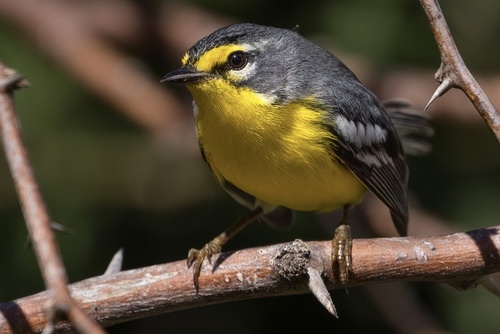


ID tip
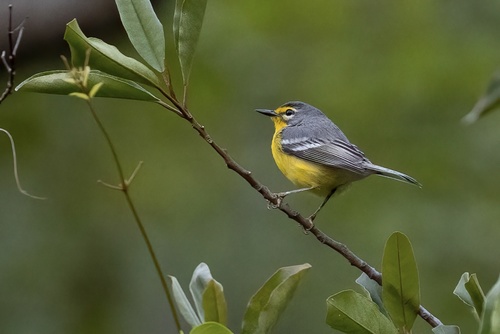
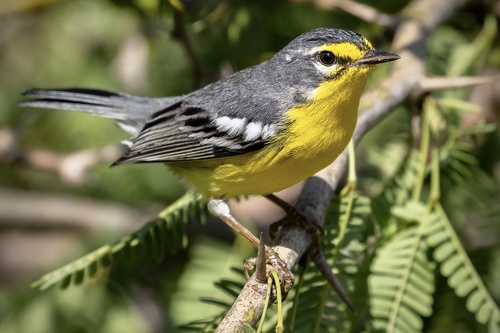
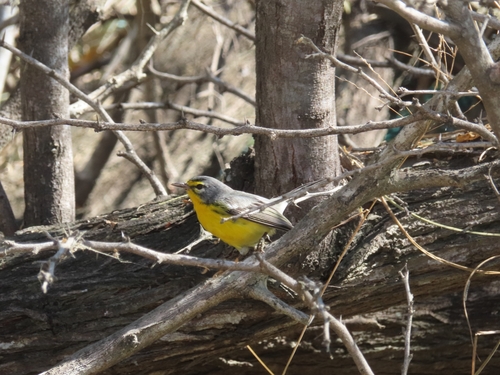
Adelaide's warbler is 12.5 cm (4.9 in) long. Adult males have a slate-gray crown with a thin black stripe below it, a wide yellow supercilium that becomes thin and white behind the eye, a thin gray line through the eye, a white arc below the eye, gray ear coverts. Their upperparts are slate-gray. Their wings are mostly dull black or dusky with slate-gray edges on the flight feathers and white tips on the greater and median upperwing coverts that show as two wing bars. Their tail is dull black or dusky with white ends on the inner webs of the outer three pairs of tail feathers. Voice: Adelaide's warblers sing a "loud trill variable in pitch and speed". Individuals may have more than 20 variations. The species' calls include a quiet high-pitched pip, bursts of a loud harsh chit, and a chip.
Text from Wikipedia, licensed CC BY-SA 4.0.
When to see the Adelaide's Warbler
One bar for each month. Filled bars are the 11 months with records; pale bars are months with none. The wide bar is January, the month with the most records.
Where to see the Adelaide's Warbler
The map shades 2 countries with regular records. Everything unshaded has no records. Countries are listed below the map.
About the Adelaide's Warbler
Adelaide's warbler, or reinita mariposera is a bird endemic to the archipelago of Puerto Rico belonging to the genus Setophaga of the family Parulidae.
Text adapted from Wikipedia, licensed CC BY-SA 4.0.
Easily confused with
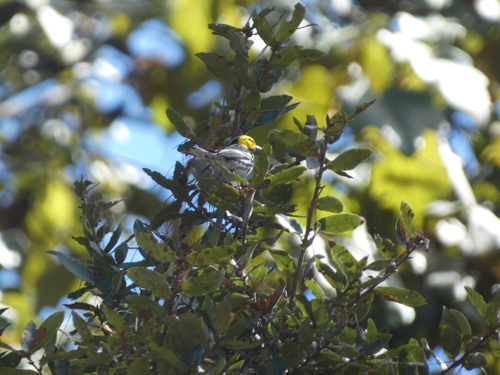 Golden-cheeked WarblerSetophaga chrysopariaThe golden-cheeked warbler is very striking due to its bright yellow cheeks that are contrasted by its black throat and back.
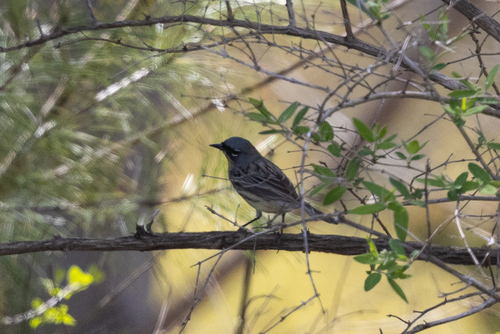 Kirtland's WarblerSetophaga kirtlandiiMale Kirtland's warblers have bluish-grey upper body parts, with dark streaks on the back, yellow bellies, and dark streaks on the flanks and sides.
 American Yellow WarblerSetophaga aestivaOther than in male breeding plumage and body size, all warbler subspecies are very similar.
Side by side: Adelaide's Warbler vs Golden-cheeked Warbler · Adelaide's Warbler vs Kirtland's Warbler · Adelaide's Warbler vs American Yellow Warbler
Learn the Adelaide's Warbler in the BeakBrain App
Photo and call practice. Coming soon to iPhone and Android.
Play today's Daily BirdEvery photo and recording on this page is credited to its author under the licence shown. Spotted a problem with this page, or have a better photo? Contribute.