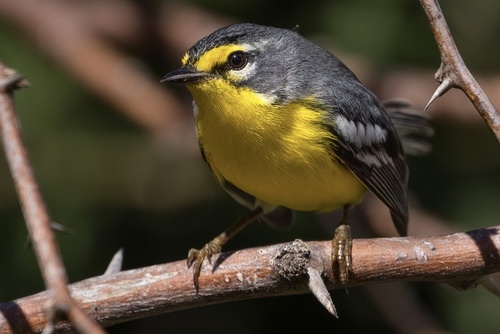
Adelaide's Warbler
Setophaga adelaidae
Adelaide's warbler is 12.5 cm (4.9 in) long. Adult males have a slate-gray crown with a thin black stripe below it, a wide yellow supercilium that becomes thin and white behind the eye, a thin gray line through the eye, a white arc below the eye, gray ear coverts. Their upperparts are slate-gray. Their wings are mostly dull black or dusky with slate-gray edges on the flight feathers and white tips on the greater and median upperwing coverts that show as two wing bars. Their tail is dull black or dusky with white ends on the inner webs of the outer three pairs of tail feathers. Voice: Adelaide's warblers sing a "loud trill variable in pitch and speed". Individuals may have more than 20 variations. The species' calls include a quiet high-pitched pip, bursts of a loud harsh chit, and a chip.
ID text from Wikipedia, CC BY-SA 4.0
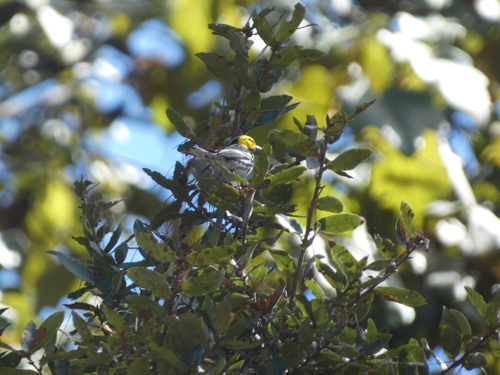
Golden-cheeked Warbler
Setophaga chrysoparia
The golden-cheeked warbler is very striking due to its bright yellow cheeks that are contrasted by its black throat and back. It is also identified by its unique buzzing song emerging from the wooded canyons where it breeds. Golden-cheeked warblers breed in 33 counties in central Texas and are dependent on ashe juniper (blueberry juniper or cedar) for their fine bark strips used as nesting material.
ID text from Wikipedia, CC BY-SA 4.0

Learn this pair in the BeakBrain App
Photo and call practice. Coming soon to iPhone and Android.
Play today's Daily BirdPhotos and recordings are credited to their authors under the licence shown. Full profiles: Adelaide's Warbler and Golden-cheeked Warbler.