Learn what every symbol on the card means.Full credits and sources at beakbrain.com/symbols
 WetlandDomed nestSmall · 26 g
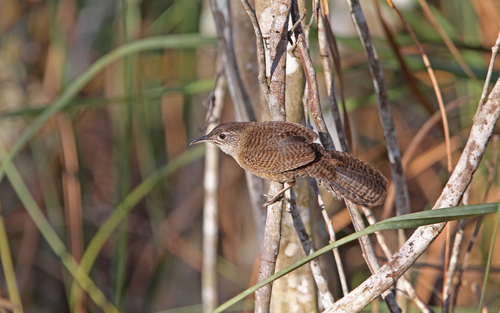
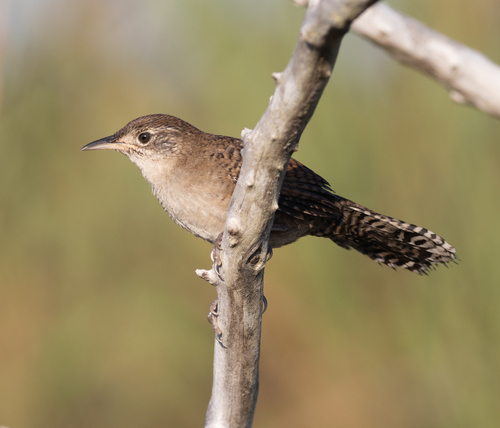
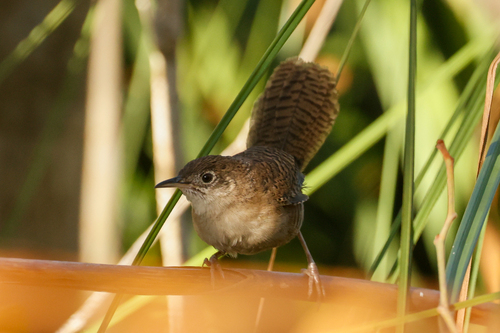
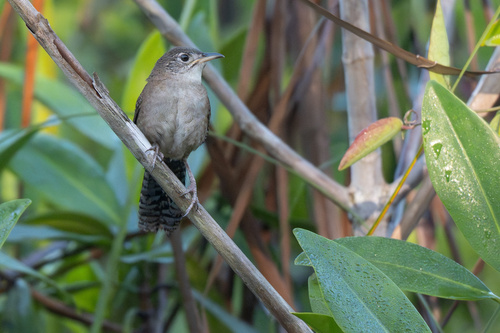
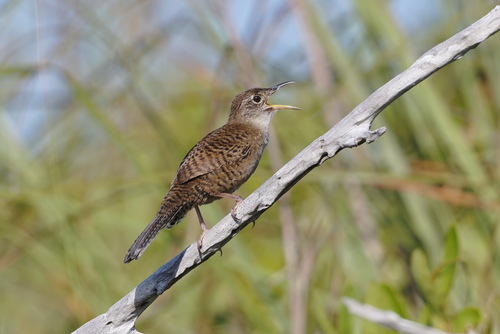
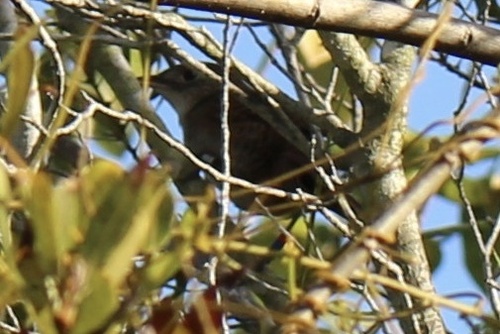
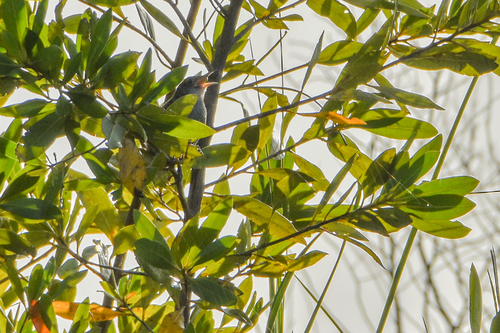
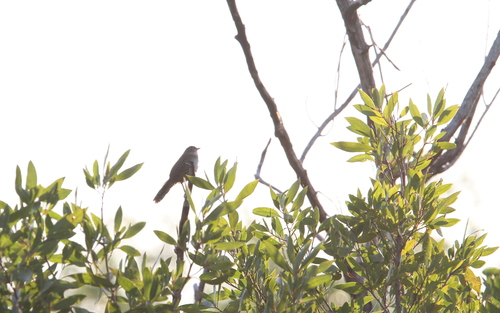
ID tip
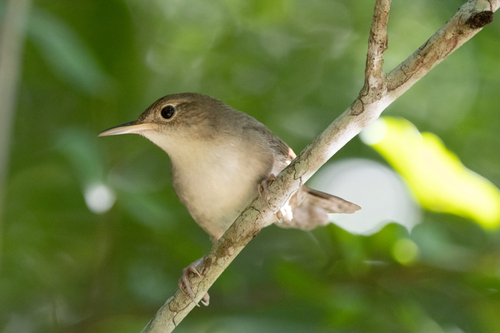
Measuring about 16 centimetres (6.3 in) in length, it is brown overall, though striped with black and with grayish underparts. Its tail is long. The bird's song is similar to that of the house wren, in that it is high-pitched and loud, described as a "musical warble preceded by guttural note, given in series of three or four phrases."
Text from Wikipedia, licensed CC BY-SA 4.0.
When to see the Zapata Wren
One bar for each month. Filled bars are the 6 months with records; pale bars are months with none. The wide bar is March, the month with the most records.
Where to see the Zapata Wren
The map shades 1 country with regular records. Everything unshaded has no records. Countries are listed below the map.
About the Zapata Wren
The Zapata wren is a medium-sized grayish-brown bird that lives in dense shrubs of the Zapata Swamp, Cuba. It is the only member of the monotypical genus Ferminia, which is endemic to Cuba and endangered. This species was first described in 1926 by Thomas Barbour and named after its co-discoverer, Fermín Zanón Cervera.
Text adapted from Wikipedia, licensed CC BY-SA 4.0.
Easily confused with
 Southern Chestnut-breasted WrenCyphorhinus thoracicusThe southern chestnut-breasted wren is 11.5 to 15 cm (4.5 to 5.9 in) long and weighs 26.5 to 41 g (0.93 to 1.45 oz).
 Cozumel WrenTroglodytes beaniThe Cozumel wren is a very small passerine bird in the wren family Troglodytidae that is endemic to the small island of Cozumel off the eastern coast of Mexico.
Tooth-billed WrenOdontorchilus cinereusThe tooth-billed wren is 12 cm (4.7 in) long; one male weighed 11 g (0.39 oz).
Cozumel WrenTroglodytes beaniThe Cozumel wren is a very small passerine bird in the wren family Troglodytidae that is endemic to the small island of Cozumel off the eastern coast of Mexico.
Tooth-billed WrenOdontorchilus cinereusThe tooth-billed wren is 12 cm (4.7 in) long; one male weighed 11 g (0.39 oz).
Learn the Zapata Wren in the BeakBrain App
Photo and call practice. Coming soon to iPhone and Android.
Play today's Daily BirdEvery photo and recording on this page is credited to its author under the licence shown. Spotted a problem with this page, or have a better photo? Contribute.