Learn what every symbol on the card means.Full credits and sources at beakbrain.com/symbols
 WoodlandCup nestSmall · 56 g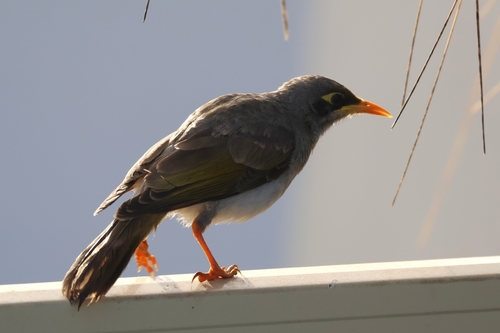
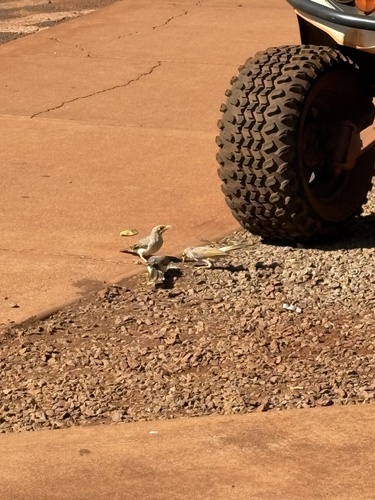
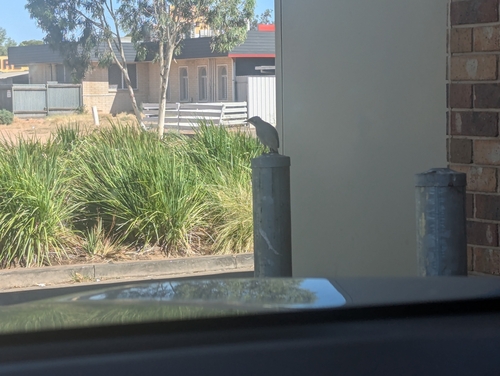
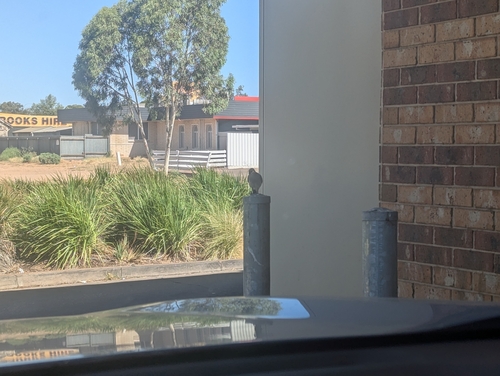
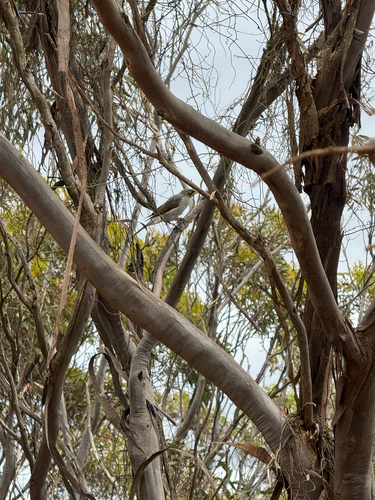
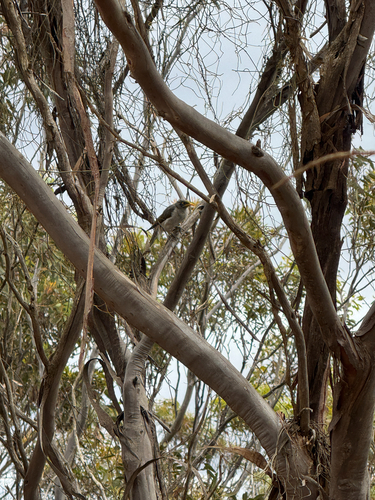
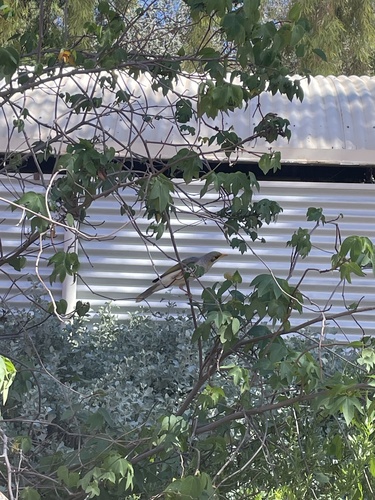
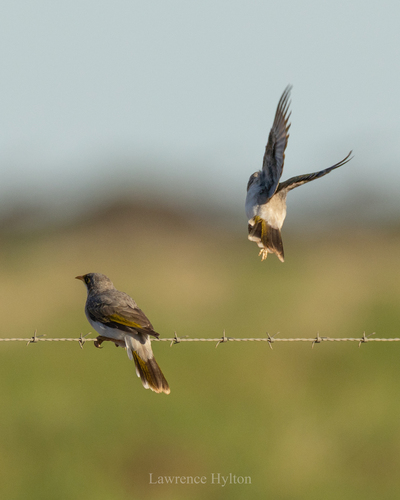


ID tip
The yellow-throated miner's color and shape is very similar to the closely related noisy and black-eared miners. A medium-sized honeyeater, it reaches a total length of 22 to 28 centimetres (8.7–11.0 in), a wing length of 12–13.8 cm (4.7–5.4 in), and a bill length of 25 mm (0.9 in). Adult yellow-throated miners weigh between 50 g (1.8 oz)and 61 g (2.2 oz). Yellow-throated, black-eared and noisy miners share a dark grey dorsal surface with medium grey patterning on the feathers. Wings are dark grey with varying levels of yellow highlighting.
Text from Wikipedia, licensed CC BY-SA 4.0.
When to see the Yellow-throated Miner
One bar for each month. Filled bars are the 11 months with records; pale bars are months with none. The wide bar is September, the month with the most records.
Where to see the Yellow-throated Miner
The map shades 1 country with regular records. Everything unshaded has no records. Countries are listed below the map.
About the Yellow-throated Miner
The yellow-throated miner is a species of colonial honeyeater, endemic to Australia. It is also known as the white-rumped miner. The distinctive white rump is easy to observe in the field and distinguishes it from the other miner species. Yellow-throated miners are medium-sized, grey passerines with yellow throat markings, legs, and bare patches around the eye. The common name 'miner' is an alternative spelling of the word myna, mynah or minah, and is shared with other members of the genus Manorina.
Text adapted from Wikipedia, licensed CC BY-SA 4.0.
Easily confused with
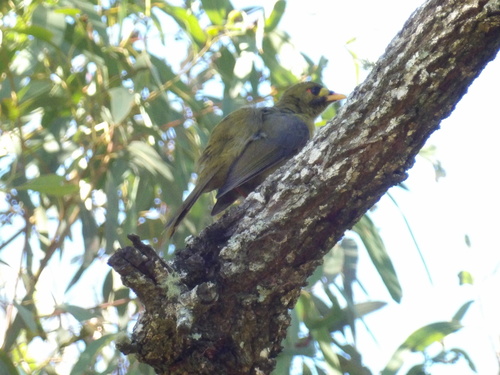 Bell MinerManorina melanophrysBell miners are the smallest of their genus, and differ from the other three predominantly grey miner species in having olive-green plumage, darker on the wings and yellower on the belly.
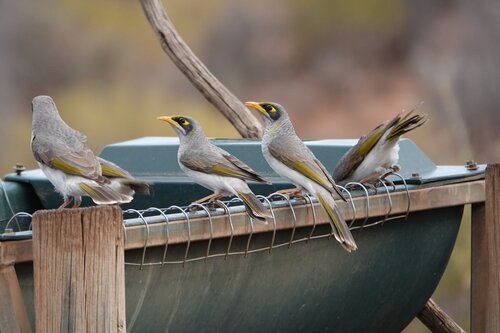 Black-eared MinerManorina melanotisThe black-eared miner is an endangered honeyeater endemic to mallee woodland in south-eastern Australia.
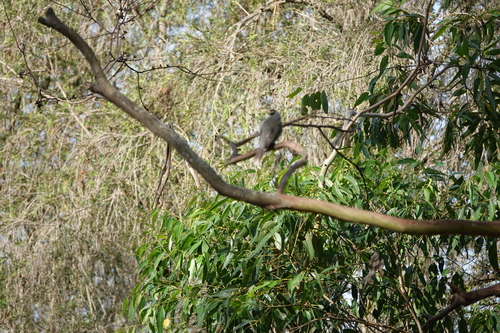 Noisy MinerManorina melanocephalaThe noisy miner is a large honeyeater, 24–28 centimetres (9.4–11.0 in) in length, with a wingspan of 36–45 centimetres (14–18 in), and weighing 70–80 grams (2.5–2.8 oz).
Side by side: Noisy Miner vs Yellow-throated Miner · Bell Miner vs Yellow-throated Miner
Learn the Yellow-throated Miner in the BeakBrain App
Photo and call practice. Coming soon to iPhone and Android.
Play today's Daily BirdEvery photo and recording on this page is credited to its author under the licence shown. Spotted a problem with this page, or have a better photo? Contribute.