Learn what every symbol on the card means.Full credits and sources at beakbrain.com/symbols
 ForestCup nestSmall · 26 g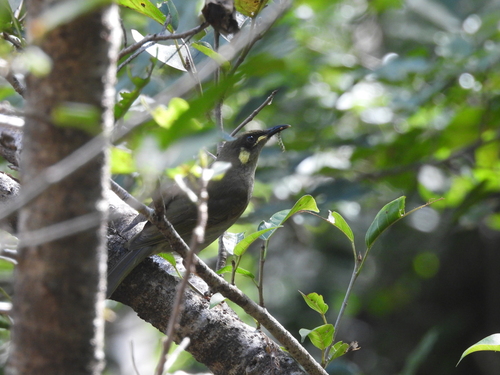
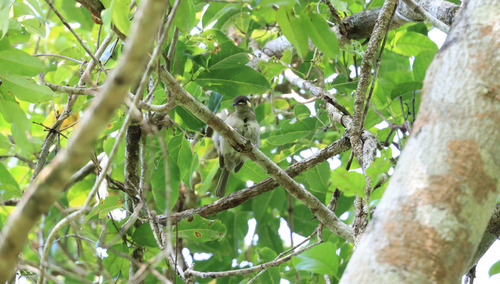
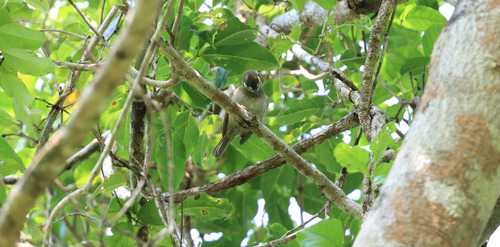

ID tip
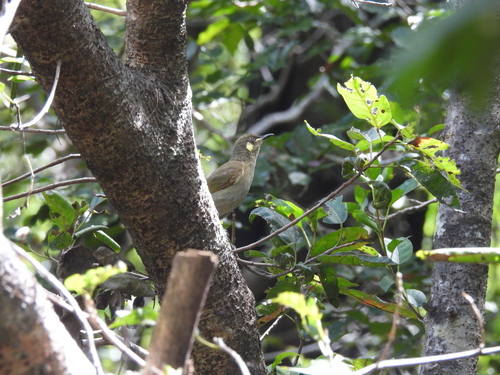
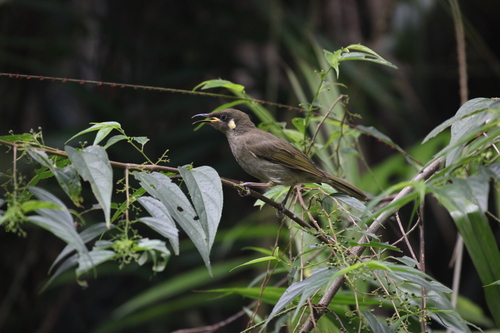
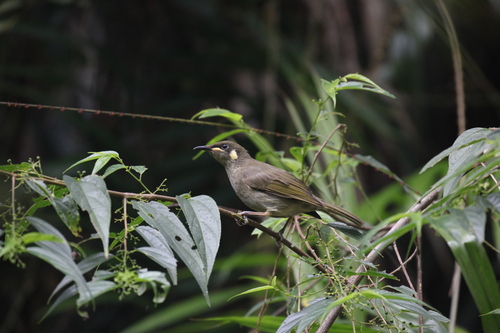
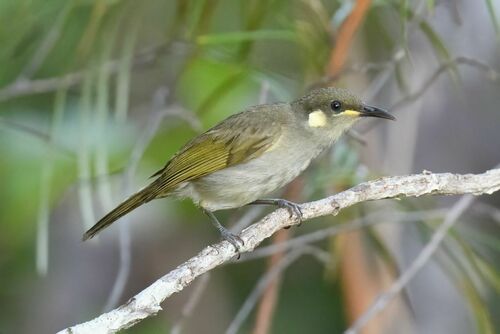
The yellow-spotted honeyeater is olive-brown on the top and olive-gray below. However, there are brighter yellow areas on the bird's head. The bird has brown legs, feet and eyes; the beak is also brown. It is 16 to 20 cm (6.3 to 7.9 in) in size. The mass of male yellow-spotted honeyeaters ranges from 24 to 29.5 grams, and averages at 27 g. Females range from 23.5 to 30 g, and average at 25.9 g. For the subspecies Meliphaga notata notata, the average wingspan is 8.6 to 9.1 cm (3.4 to 3.6 in) for males and 7.9 to 8.3 cm (3.1 to 3.3 in) for females.
Text from Wikipedia, licensed CC BY-SA 4.0.
When to see the Yellow-spotted Honeyeater
One bar for each month, and every month is filled: this bird is recorded here in all twelve. The wide bar is October, the month with the most records.
Where to see the Yellow-spotted Honeyeater
The map shades 1 country with regular records. Everything unshaded has no records. Countries are listed below the map.
About the Yellow-spotted Honeyeater
The yellow-spotted honeyeater is a species of bird in the family Meliphagidae. It is also known as the lesser lewin. The bird is endemic to northern Queensland. The bird's common name refers to the yellow patch that members of the species have behind their eyes.
Text adapted from Wikipedia, licensed CC BY-SA 4.0.
Easily confused with
 Graceful HoneyeaterMeliphaga gracilisThe graceful honeyeater is a species of bird in the family Meliphagidae.
 Mimic HoneyeaterMeliphaga analogaThe mimic honeyeater is a species of bird in the family Meliphagidae.
 Streak-breasted HoneyeaterMeliphaga reticulataThe streak-breasted honeyeater or streaky-breasted honeyeater is a species of bird in the family Meliphagidae.
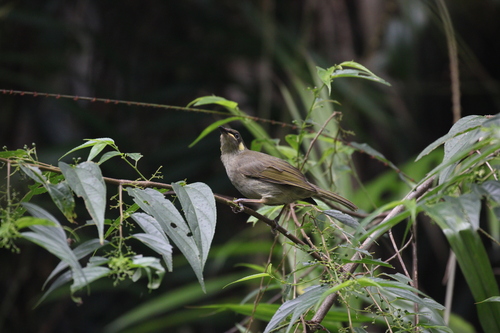
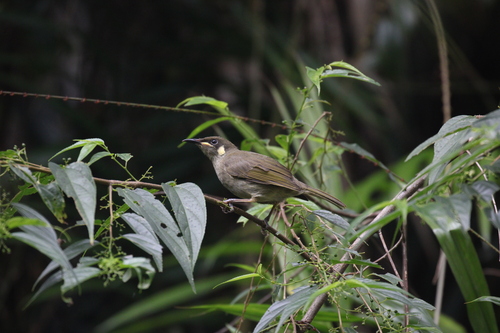
Side by side: Lewin's Honeyeater vs Yellow-spotted Honeyeater
Learn the Yellow-spotted Honeyeater in the BeakBrain App
Photo and call practice. Coming soon to iPhone and Android.
Play today's Daily BirdEvery photo and recording on this page is credited to its author under the licence shown. Spotted a problem with this page, or have a better photo? Contribute.