Learn what every symbol on the card means.Full credits and sources at beakbrain.com/symbols
 ShrublandCup nestSmall · 16 g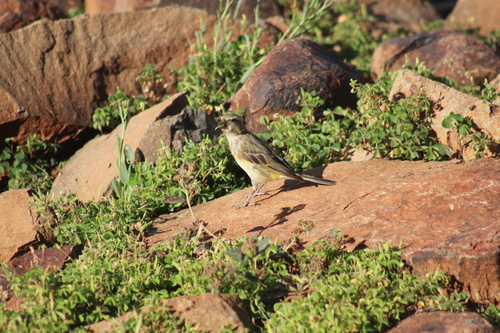


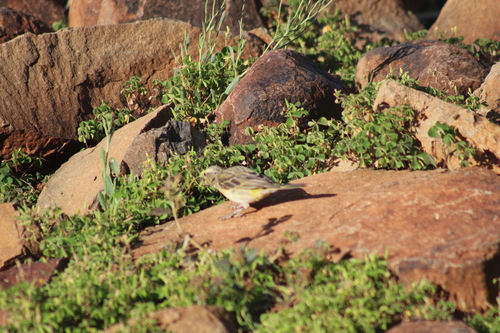
ID tip
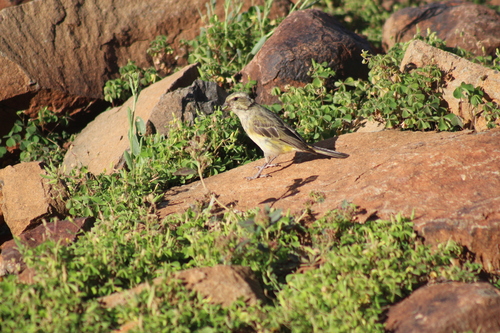
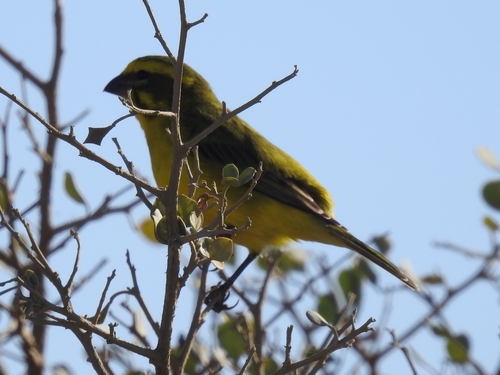
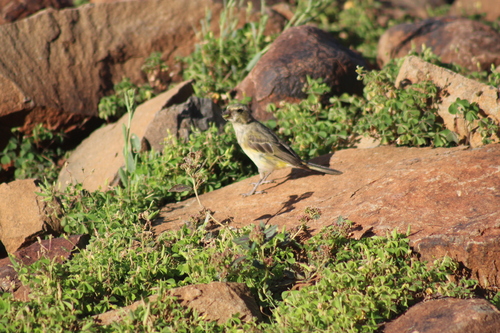
The yellow canary is typically 10 cm in length. The adult male colour ranges from almost uniform yellow in the northwest of its range to streaked, olive backed birds in the southeast. The underparts, rump and tail sides are yellow. The female has grey-brown upperparts, black wings with yellow flight feathers, and a pale supercilium. The underparts are white with brown streaking. The juvenile resembles the female, but has heavier streaking.
Text from Wikipedia, licensed CC BY-SA 4.0.
When to see the Yellow Canary
One bar for each month, and every month is filled: this bird is recorded here in all twelve. The wide bar is February, the month with the most records.
Where to see the Yellow Canary
The map shades 5 countries with regular records, and 2 more in a lighter tone where the bird turns up only as a stray. Everything unshaded has no records. Countries are listed below the map.
About the Yellow Canary
The yellow canary is a small passerine bird in the true finch family. It is a resident breeder in much of the western and central regions of southern Africa and has been introduced to Ascension and St Helena islands.
Text adapted from Wikipedia, licensed CC BY-SA 4.0.
Easily confused with
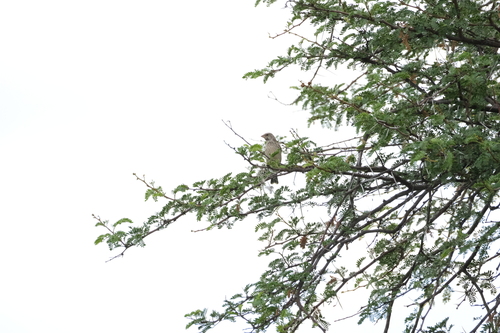 Black-throated CanaryCrithagra atrogularisThe black-throated canary, also known as the black-throated seedeater, is a species of finch in the family Fringillidae.
 Streaky-headed SeedeaterCrithagra gularisThe streaky-headed seedeater is 13–14 cm in length.
 Yellow-fronted CanaryCrithagra mozambicaThe yellow-fronted canary is a small passerine bird in the finch family.
Side by side: Streaky-headed Seedeater vs Yellow Canary
Learn the Yellow Canary in the BeakBrain App
Photo and call practice. Coming soon to iPhone and Android.
Play today's Daily BirdEvery photo and recording on this page is credited to its author under the licence shown. Spotted a problem with this page, or have a better photo? Contribute.