Learn what every symbol on the card means.Full credits and sources at beakbrain.com/symbols
 WoodlandCavity nestSmall · 27 g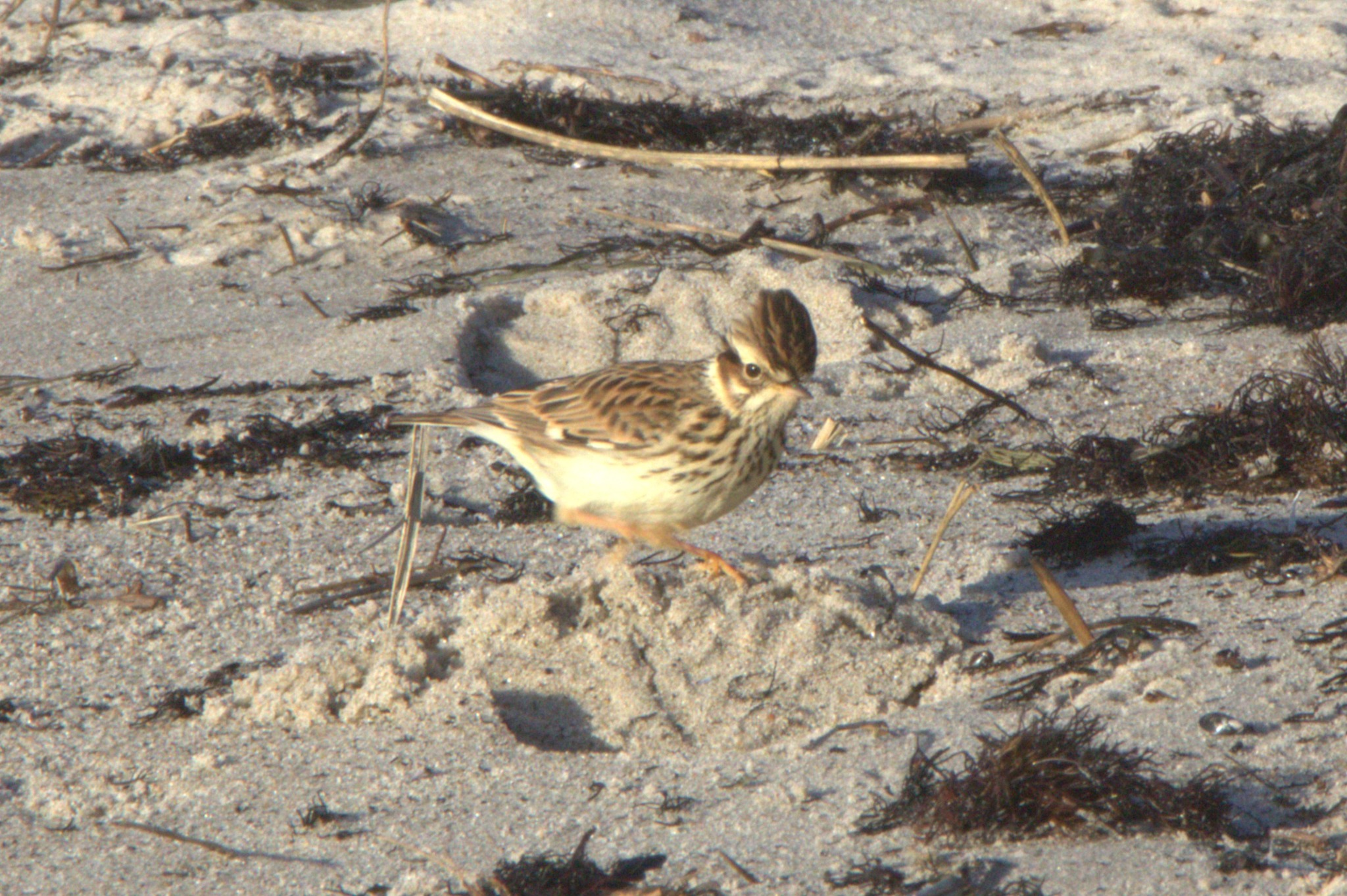


What the Woodlark sounds like


ID tip
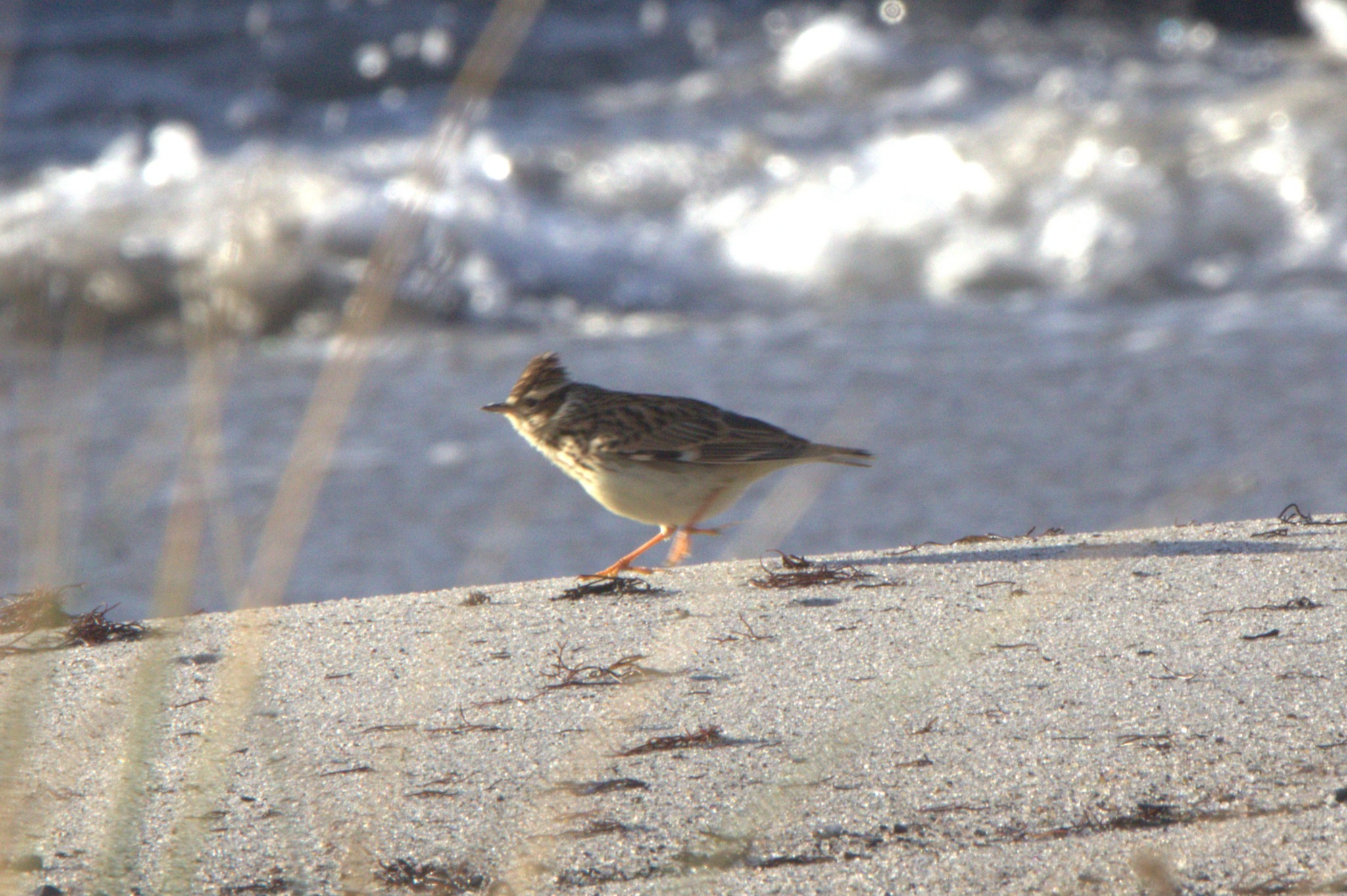
This is a 13.5- to 15-cm-long bird, slightly smaller than the skylark being roughly 20% shorter. The woodlark is mainly brown above and pale below, but with a distinctive white superciliar meeting on the nape. It has a crest which is quite small and at most times inconspicuous. In flight it shows a short tail and short broad wings. The tail is tipped with white, but unlike the skylark, the tail sides and the rear edge of the wings are not edged with white.
Text from Wikipedia, licensed CC BY-SA 4.0.
When to see the Woodlark
One bar for each month. Filled bars are the 7 months with records; pale bars are months with none. The wide bar is May, the month with the most records.
Where to see the Woodlark
The map shades 55 countries with regular records, and 1 more in a lighter tone where the bird turns up only as a stray. Everything unshaded has no records. Countries are listed below the map.
Recorded as a rare visitor in Turkmenistan.
About the Woodlark
The woodlark or wood lark is the only extant species in the lark genus Lullula. It is found across most of Europe, the Middle East, western Asia and the mountains of north Africa. It is mainly resident (non-migratory) in the west of its range, but eastern populations of this passerine bird are more migratory, moving further south in winter.
Text adapted from Wikipedia, licensed CC BY-SA 4.0.
Easily confused with
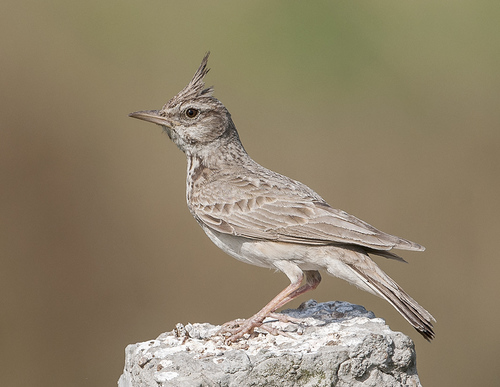 Crested LarkGalerida cristataA fairly small lark, the crested lark is roughly the same size as a Eurasian skylark, but shorter overall and bulkier around the head and body, and very similar in appearance, with a height of 17 cm (6.7 in) and a wingspan of 29 to 38 cm (11 to 15 in), weighing between 37 and 55 g (1.3 and 1.9 oz).
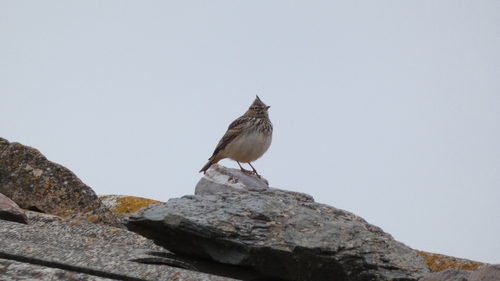 Thekla's LarkGalerida theklaeThis is a smallish lark, slightly smaller than the Eurasian skylark.
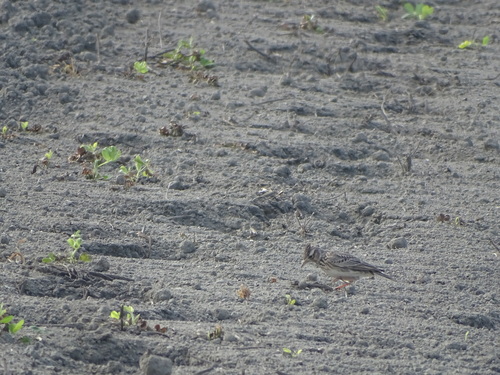 Oriental SkylarkAlauda gulgulaOriental skylarks range from 15.5–18 cm (6.1–7.1 in) long and 24–30 g (0.85–1.06 oz) weight.
Side by side: Crested Lark vs Woodlark · Thekla's Lark vs Woodlark · Oriental Skylark vs Woodlark
Learn the Woodlark in the BeakBrain App
Photo and call practice. Coming soon to iPhone and Android.
Play today's Daily BirdEvery photo and recording on this page is credited to its author under the licence shown. Spotted a problem with this page, or have a better photo? Contribute.