Learn what every symbol on the card means.Full credits and sources at beakbrain.com/symbols
 ForestPlatform nestMedium · 185 g


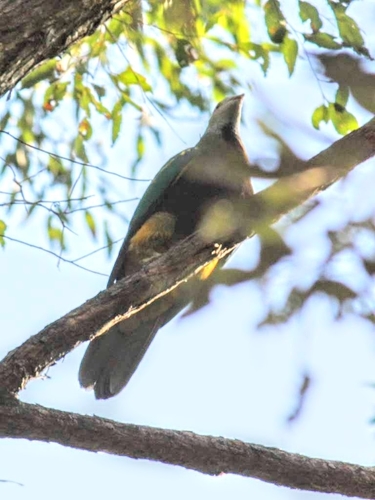
ID tip
The wompoo fruit dove measures up to 45 cm (18 in) in overall length, but is generally far smaller in northern regions. It has purple plumage around its neck, chest and upper belly. Its lower belly is yellow and it has green underparts. The sexes are similar and the juveniles have a duller and greener plumage compared to adults. Notwithstanding their bright plumage, they are hard to see amongst the forest canopy, thanks to their unobtrusive, quiet habits. Their call sounds like wollack-wa-hoo and often sounds very human.
Text from Wikipedia, licensed CC BY-SA 4.0.
When to see the Wompoo Fruit Dove
One bar for each month. Filled bars are the 11 months with records; pale bars are months with none. The wide bar is October, the month with the most records.
Where to see the Wompoo Fruit Dove
The map shades 3 countries with regular records. Everything unshaded has no records. Countries are listed below the map.
About the Wompoo Fruit Dove
The wompoo fruit dove, also known as wompoo pigeon and "magnificent fruit dove" among others, is one of the larger fruit doves native to New Guinea and eastern Australia.
Text adapted from Wikipedia, licensed CC BY-SA 4.0.
Easily confused with
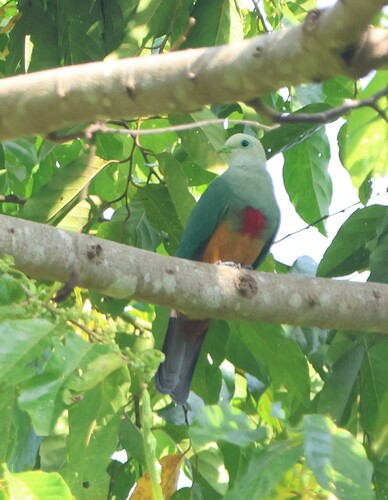
Side by side: Topknot Pigeon vs Wompoo Fruit Dove
Learn the Wompoo Fruit Dove in the BeakBrain App
Photo and call practice. Coming soon to iPhone and Android.
Play today's Daily BirdEvery photo and recording on this page is credited to its author under the licence shown. Spotted a problem with this page, or have a better photo? Contribute.