Learn what every symbol on the card means.Full credits and sources at beakbrain.com/symbols
 WoodlandCup nestSmall · 29 g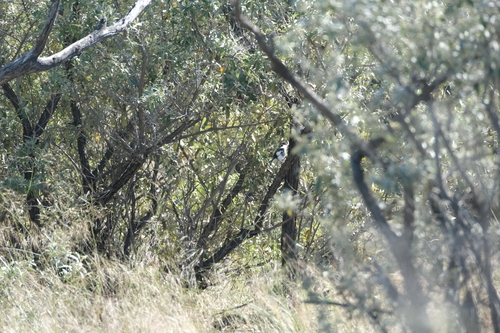


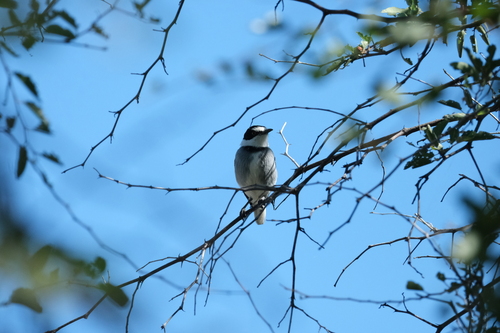
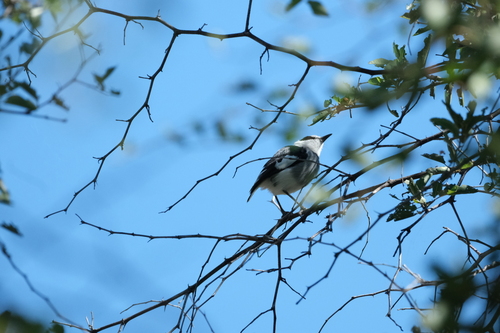
When to see the White-tailed Shrike
One bar for each month. Filled bars are the 11 months with records; pale bars are months with none. The wide bar is November, the month with the most records.
Where to see the White-tailed Shrike
The map shades 2 countries with regular records. Everything unshaded has no records. Countries are listed below the map.
About the White-tailed Shrike
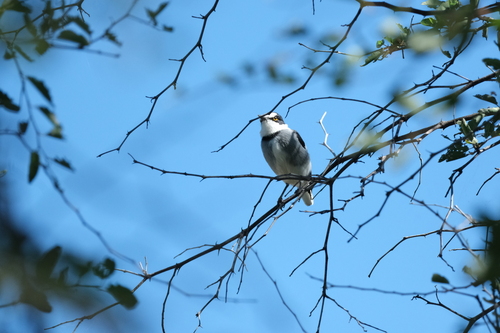
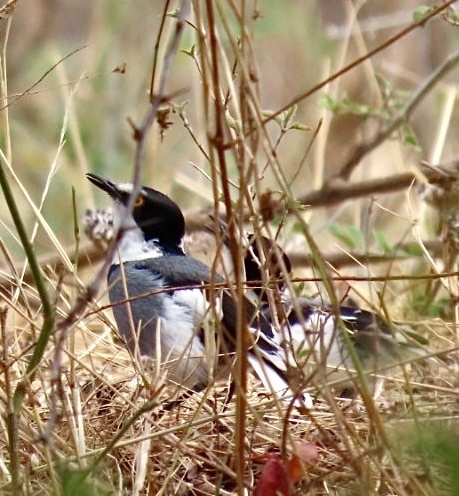
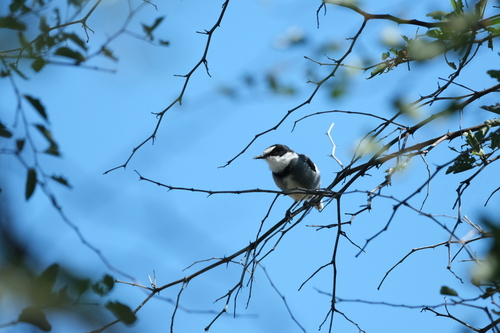
The white-tailed shrike is a small passerine bird from the family Platysteiridae. It is also known as the chatshrike or ground batis. It occurs only in western Angola and Namibia in thorn scrub. It forages from ground level, where it hops about in large bounds and upright posture, to 25m above ground, scanning for insects. The very short tail, with a small black mark at the tip of the central two feathers, is always carried down, never sticking up. Its range of calls includes loud ringing territorial whistles.
Text adapted from Wikipedia, licensed CC BY-SA 4.0.
Easily confused with
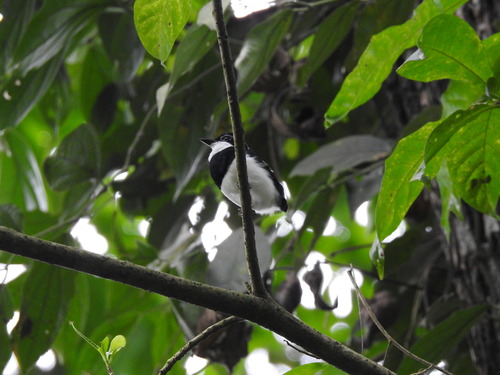 Chestnut Wattle-eyeDyaphorophyia castaneaThe chestnut wattle-eye is a species of bird in the family Platysteiridae.
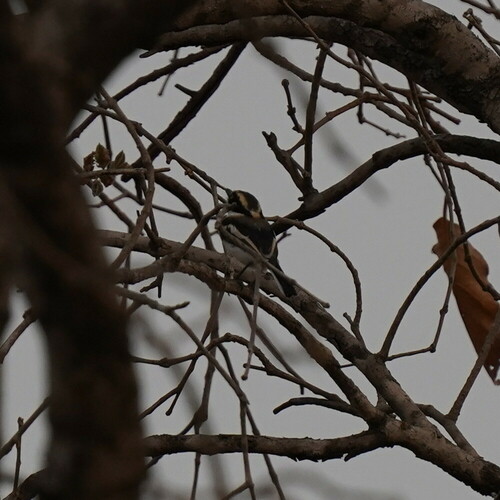 Senegal BatisBatis senegalensisThe Senegal batis is a restless flycatcher-like small bird with the distinctive black, white and grey colours and plumage patterns which are typical of the batises.
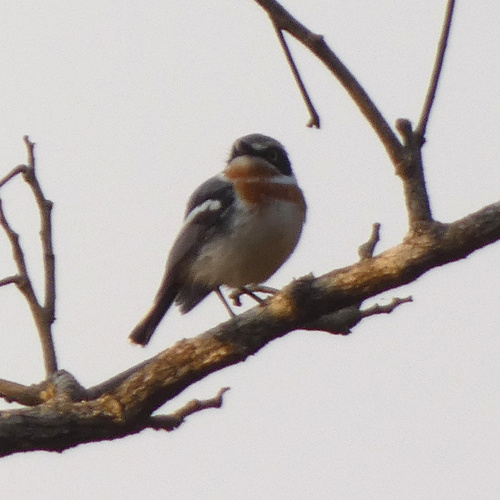 Pale BatisBatis sororThe pale batis is an active, black, white and grey bird which is pale grey above with a black face mask bordered by a thin white supercilium, yellow eye and a pale grey back, mottled with faint white spots.
Learn the White-tailed Shrike in the BeakBrain App
Photo and call practice. Coming soon to iPhone and Android.
Play today's Daily BirdEvery photo and recording on this page is credited to its author under the licence shown. Spotted a problem with this page, or have a better photo? Contribute.