Learn what every symbol on the card means.Full credits and sources at beakbrain.com/symbols
 WoodlandMedium · 154 g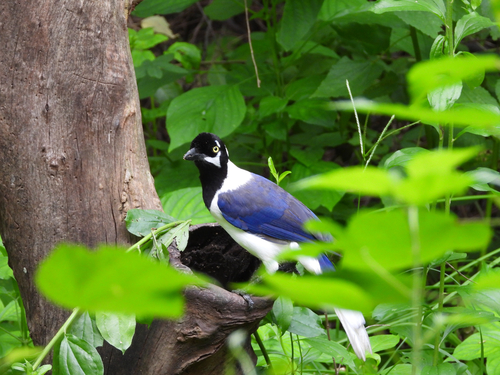
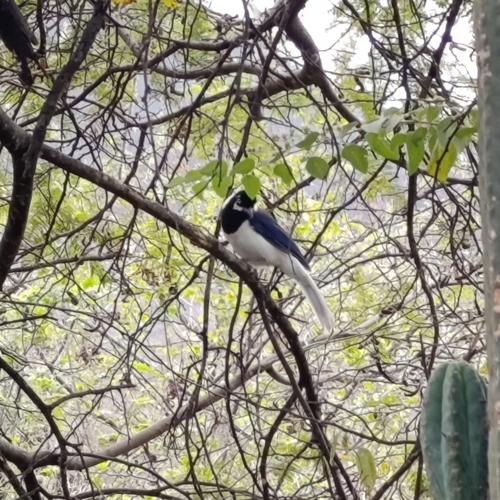
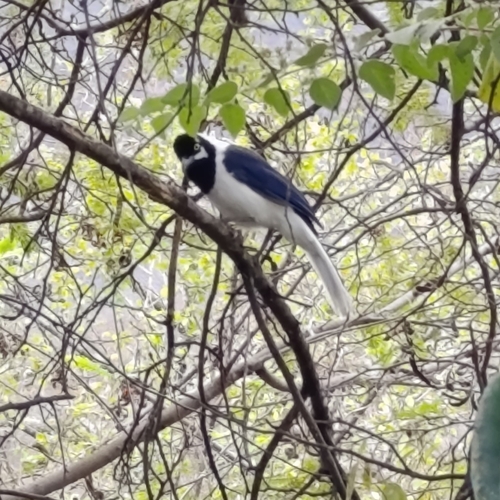


What the White-tailed Jay sounds like


ID tip
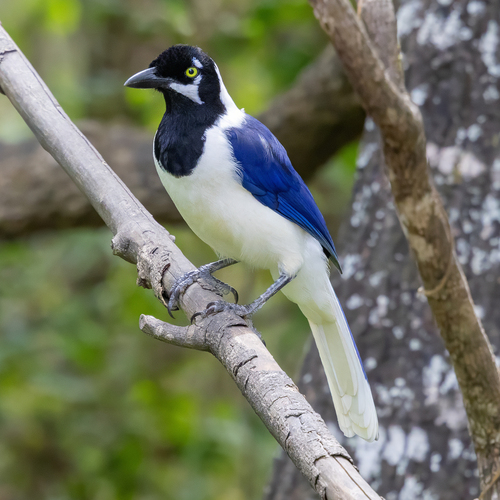
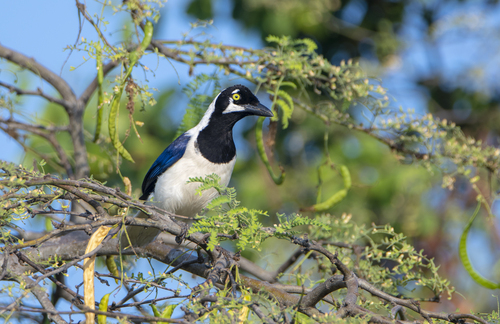
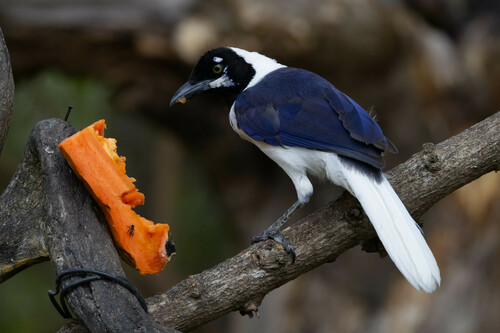
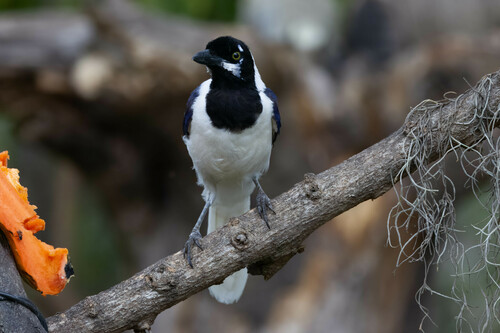
The white-tailed jay is overall white and bluish, with a black head. Its face is mostly black, with a small white spot above the eye, a small white moustachial stripe, and a somewhat larger white spot on the cheek. It has a white nape and belly. The back and wings are a greyish-blue, which extends down the top of the tail. The rectrices, tail tip, and underside of the tail are white. It has bright yellow irises. There are no visual differences between the sexes. Juveniles have brown irises and lack both the white spot above the eye and the moustachial stripe.
Text from Wikipedia, licensed CC BY-SA 4.0.
When to see the White-tailed Jay
One bar for each month, and every month is filled: this bird is recorded here in all twelve. The wide bar is October, the month with the most records.
Where to see the White-tailed Jay
The map shades 2 countries with regular records. Everything unshaded has no records. Countries are listed below the map.
About the White-tailed Jay
The white-tailed jay, also known as the moustached jay, is a species of bird in the crow family Corvidae. It is found in Ecuador and Peru. It has a black face with white spots above and below the eyes, and a small white moustachial stripe. It has a white nape, belly, and underparts. Its back and wings are greyish-blue, extending most of the way down the tail. The rectrices and tail tip are white. It has several calls, the most common being described as "cha-cha-cha-cha".
Text adapted from Wikipedia, licensed CC BY-SA 4.0.
Easily confused with
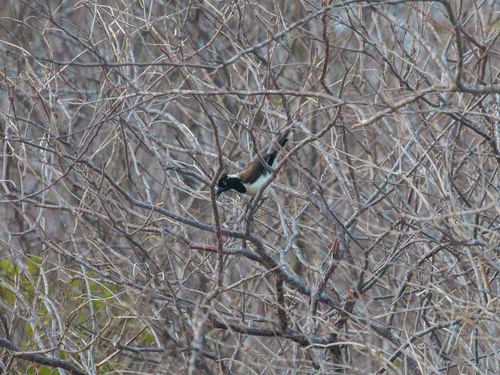 White-naped JayCyanocorax cyanopogonThe white-naped jay is a species of bird in the family Corvidae.
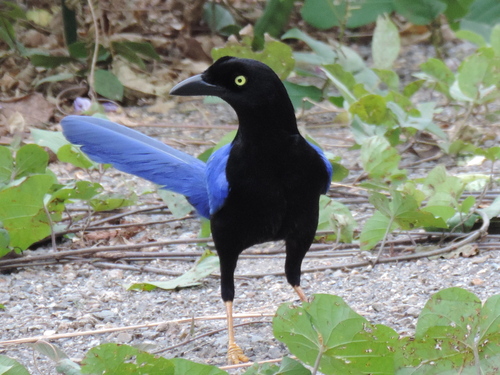 Purplish-backed JayCyanocorax beecheiiThe purplish-backed jay is a purple and black bird with a powerful bill and a long tail.
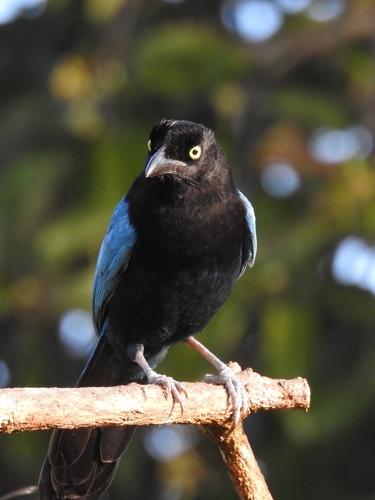 San Blas JayCyanocorax sanblasianusThe adult San Blas jay is between 27 and 35 cm (11 and 14 in) long and weighs between 92 and 122 g (3 and 4 oz).
Side by side: San Blas Jay vs White-tailed Jay
Learn the White-tailed Jay in the BeakBrain App
Photo and call practice. Coming soon to iPhone and Android.
Play today's Daily BirdEvery photo and recording on this page is credited to its author under the licence shown. Spotted a problem with this page, or have a better photo? Contribute.