Learn what every symbol on the card means.Full credits and sources at beakbrain.com/symbols
 ForestCavity nestMedium · 172 g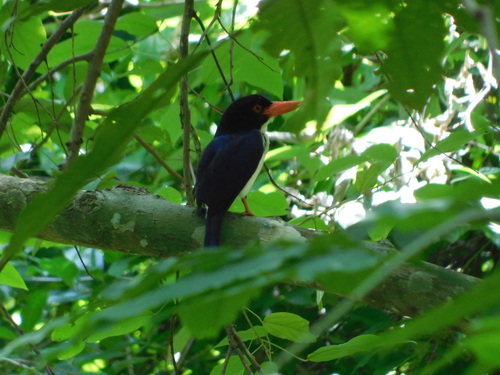


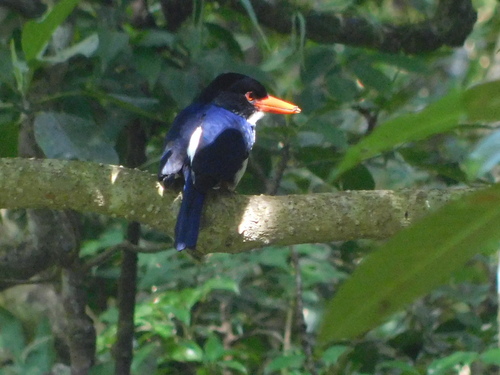

ID tip
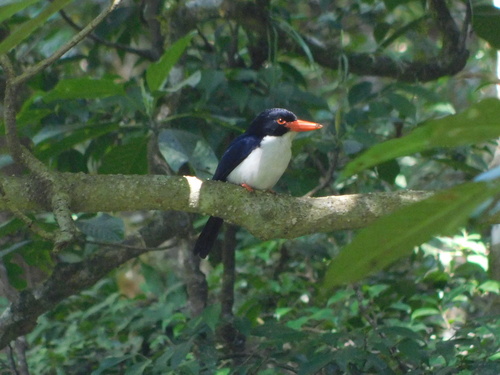
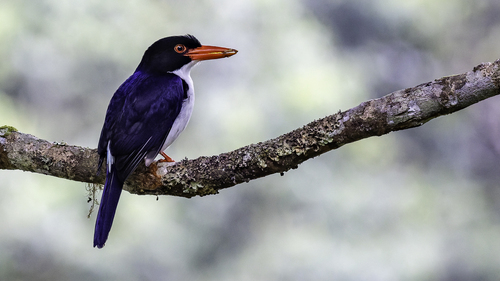
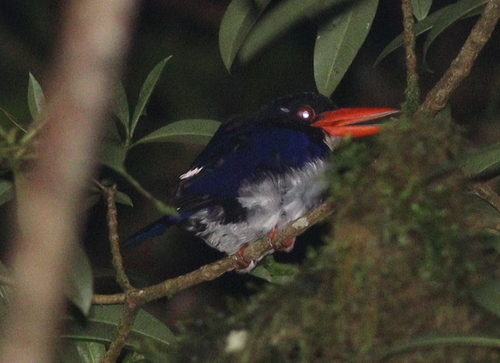
It is dark blue all over, except its underside and rump, which are white. It has a red bill and feet. Its eyes are dark brown.
Text from Wikipedia, licensed CC BY-SA 4.0.
When to see the White-rumped Kingfisher
One bar for each month. Filled bars are the 8 months with records; pale bars are months with none. The wide bar is August, the month with the most records.
Where to see the White-rumped Kingfisher
The map shades 1 country with regular records. Everything unshaded has no records. Countries are listed below the map.
About the White-rumped Kingfisher
The white-rumped kingfisher or glittering kingfisher is a species of bird in the family Alcedinidae. It is monotypic within the genus Caridonax. It is endemic to Indonesia, where its natural habitats are subtropical or tropical moist lowland forest and subtropical or tropical moist montane forest.
Text adapted from Wikipedia, licensed CC BY-SA 4.0.
Easily confused with
 Rufous-lored KingfisherTodiramphus winchelliThe rufous-lored kingfisher is about 25 cm (9.8 in) long.
 Melanesian KingfisherTodiramphus tristramiThe Melanesian kingfisher is a species of bird in the family Alcedinidae.
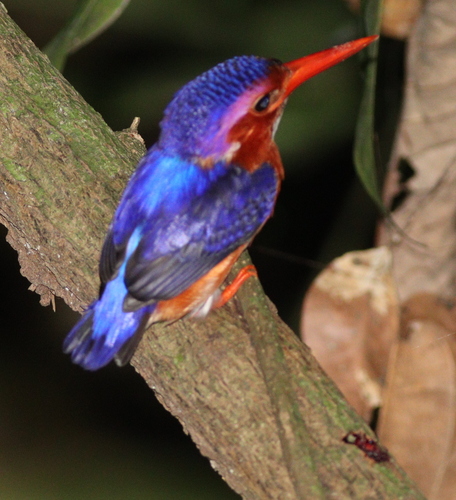 White-bellied KingfisherCorythornis leucogasterThe white-bellied kingfisher is a species of kingfisher in the subfamily Alcedininae that occurs in Mali and throughout the African tropical rainforest.
Learn the White-rumped Kingfisher in the BeakBrain App
Photo and call practice. Coming soon to iPhone and Android.
Play today's Daily BirdEvery photo and recording on this page is credited to its author under the licence shown. Spotted a problem with this page, or have a better photo? Contribute.