Learn what every symbol on the card means.Full credits and sources at beakbrain.com/symbols
 MarineCavity nestLarge · 698 g


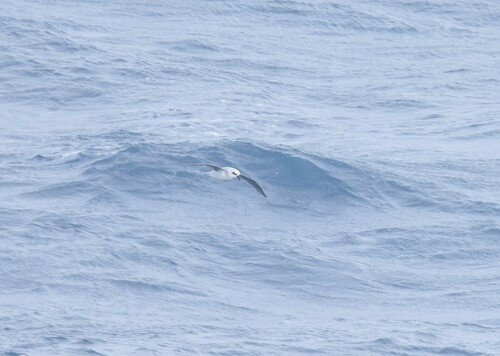
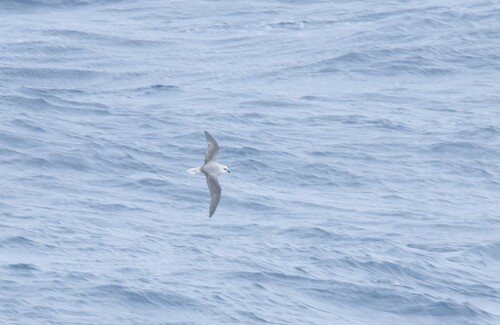


ID tip
The white-headed petrel distinct with a pale white head and prominent dark eye patch. It has long narrow wings and long pointed tail. The upper surface is pale grey which is contrasting with darker grey on the upper wings and the rump. The underside is mostly white. The bill is stout black with a large sharp hook. Green glands are prominent. The legs are pinkish to whitish with black patches on the toes. Voice: The calls are mainly higher-pitched shrill whistles ti-ti-ti or wik-wik-wik and lower-pitched moans ooo-er and or-wik sounds.
Text from Wikipedia, licensed CC BY-SA 4.0.
When to see the White-headed Petrel
One bar for each month. Filled bars are the 9 months with records; pale bars are months with none. The wide bar is December, the month with the most records.
Where to see the White-headed Petrel
The map shades 4 countries with regular records, and 2 more in a lighter tone where the bird turns up only as a stray. Everything unshaded has no records. Countries are listed below the map.
Recorded as a rare visitor in Argentina, Pitcairn Islands.
About the White-headed Petrel
The white-headed petrel, also known as the white-headed fulmar, is a species of seabird in the petrel family, Procellariidae. It is about 400 mm (16 in) in length.
Text adapted from Wikipedia, licensed CC BY-SA 4.0.
Easily confused with
 Mottled PetrelPterodroma inexpectataThe mottled petrel or kōrure is a species of seabird and a member of the gadfly petrels.
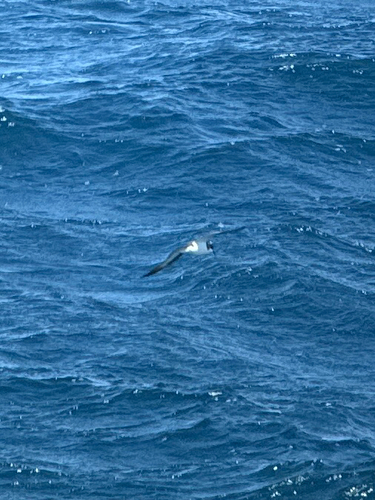 Hawaiian PetrelPterodroma sandwichensisThe Hawaiian petrel or ʻuaʻu is a large, dark grey-brown and white petrel that is endemic to Hawaiʻi.
 Murphy's PetrelPterodroma ultimaMurphy's petrel is a species of seabird and a member of the gadfly petrels.
Side by side: Galapagos Petrel vs White-headed Petrel · Soft-plumaged Petrel vs White-headed Petrel
Learn the White-headed Petrel in the BeakBrain App
Photo and call practice. Coming soon to iPhone and Android.
Play today's Daily BirdEvery photo and recording on this page is credited to its author under the licence shown. Spotted a problem with this page, or have a better photo? Contribute.