Learn what every symbol on the card means.Full credits and sources at beakbrain.com/symbols
 WetlandDomed nestTiny · 14 g


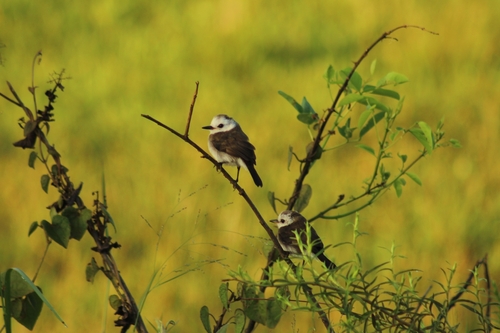
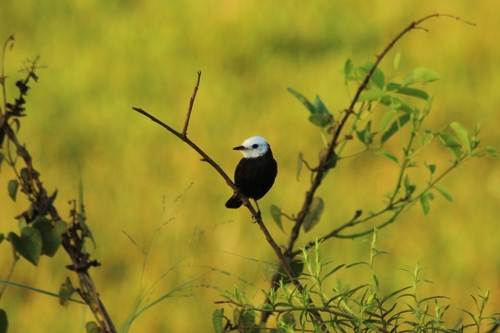
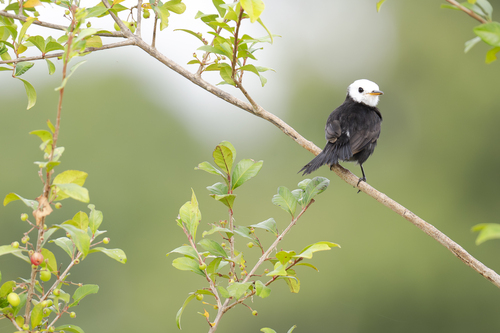
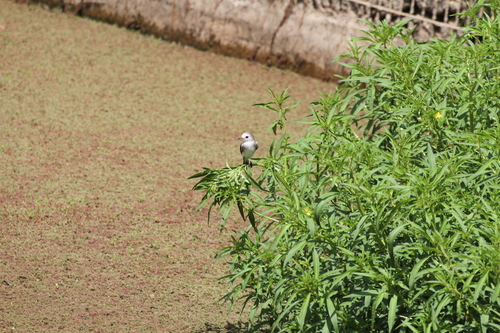
ID tip
Voice: They are usually quiet, but they do emit a high-pitched call "sedik!". During courtship, they produce a deeper call "dew-de-lewde", which is repeated at short intervals.
Text from Wikipedia, licensed CC BY-SA 4.0.
When to see the White-headed Marsh Tyrant
One bar for each month, and every month is filled: this bird is recorded here in all twelve. The wide bar is October, the month with the most records.
Where to see the White-headed Marsh Tyrant
The map shades 11 countries with regular records. Everything unshaded has no records. Countries are listed below the map.
About the White-headed Marsh Tyrant
The white-headed marsh tyrant, commonly referred to as the marsh tyrant, is a small passerine bird belonging to the tyrant flycatcher family. It is the sole species within the genus Arundinicola. This diurnal bird, exclusively found in South America, exhibits sexual dimorphism and is known to have monogamous mating behavior.
Text adapted from Wikipedia, licensed CC BY-SA 4.0.
Easily confused with
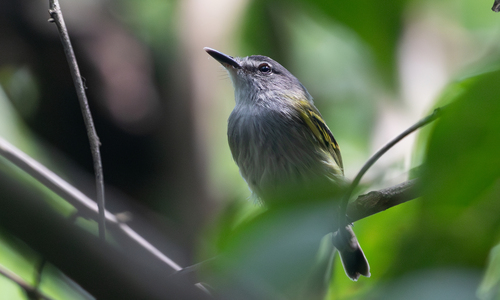 Slaty-headed Tody-FlycatcherPoecilotriccus sylviaThe slaty-headed tody-flycatcher is about 9 to 10 cm (3.5 to 3.9 in) long and weighs 6.7 to 8.5 g (0.24 to 0.30 oz).
 Many-colored Rush TyrantTachuris rubrigastraThe many-colored rush tyrant is "the most colourful of all tyrannids".
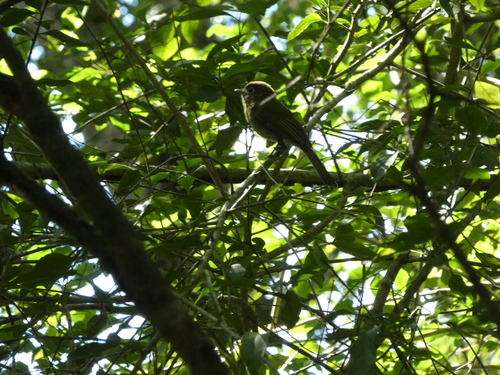 Eye-ringed FlatbillRhynchocyclus brevirostrisThe eye-ringed flatbill is 15 to 17 cm (5.9 to 6.7 in) long and weighs 21 to 23 g (0.74 to 0.81 oz).
Side by side: Slaty-headed Tody-Flycatcher vs White-headed Marsh Tyrant · Many-colored Rush Tyrant vs White-headed Marsh Tyrant · Eye-ringed Flatbill vs White-headed Marsh Tyrant
Learn the White-headed Marsh Tyrant in the BeakBrain App
Photo and call practice. Coming soon to iPhone and Android.
Play today's Daily BirdEvery photo and recording on this page is credited to its author under the licence shown. Spotted a problem with this page, or have a better photo? Contribute.