Learn what every symbol on the card means.Full credits and sources at beakbrain.com/symbols
 ForestCavity nestSmall · 40 g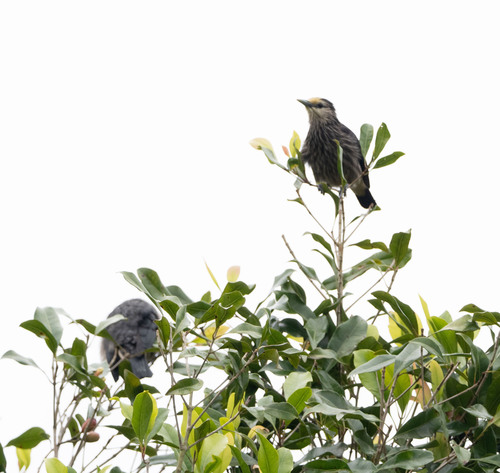
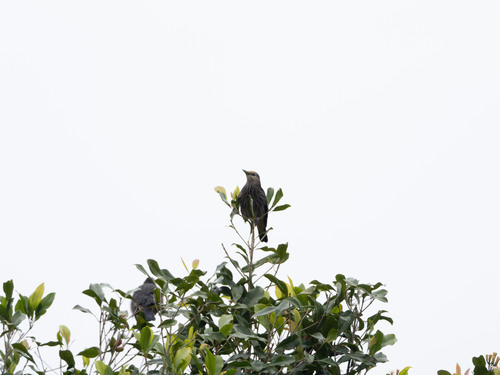
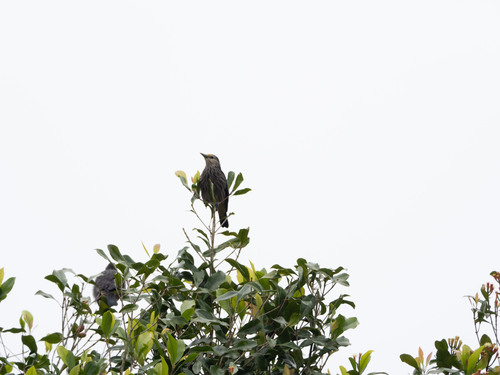
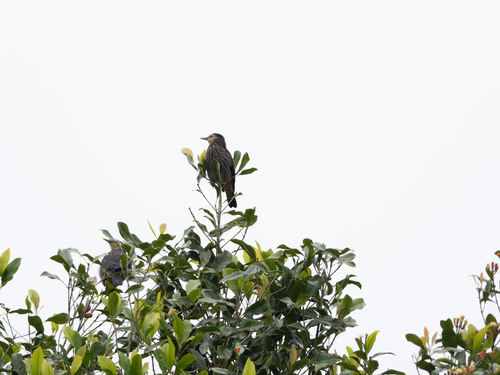
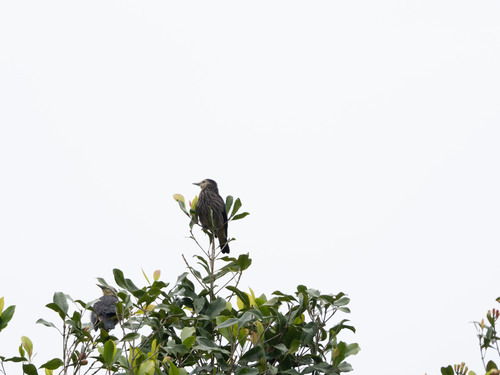
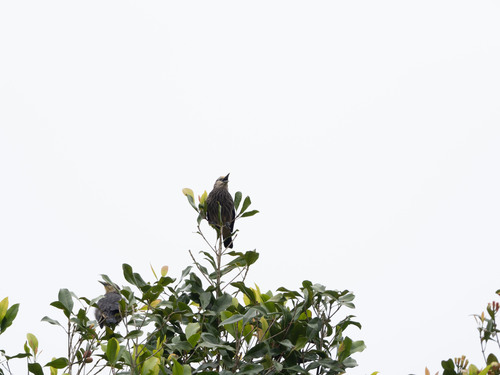
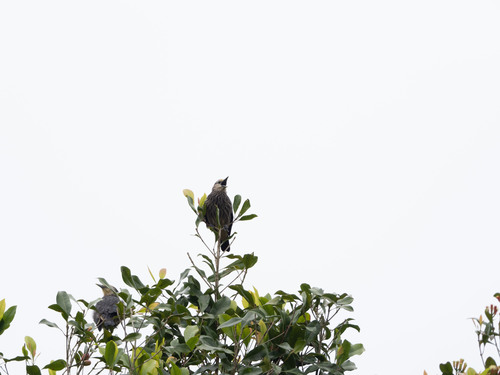
ID tip
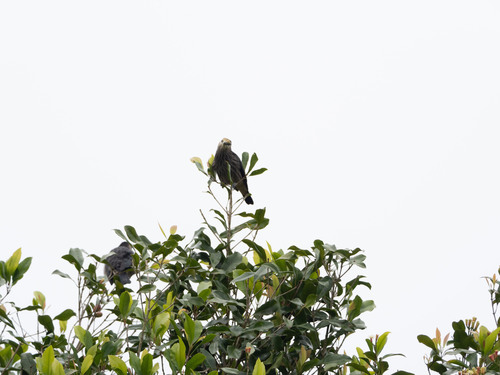
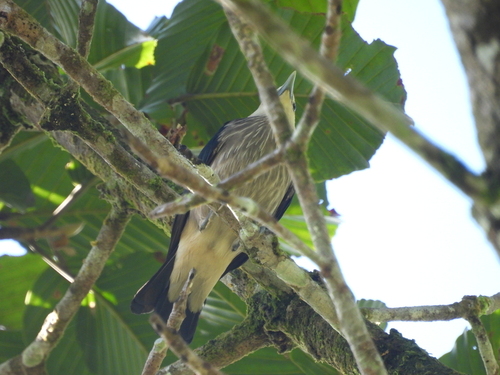
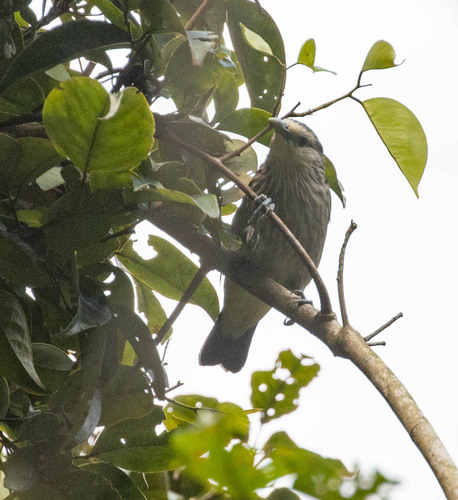
The adults of these 22 cm-long birds have green-glossed dark grey upperparts and whitish underparts. The head is paler than the underparts. The sexes are similar, but juveniles are duller, with brown upperparts and greyer underparts. This passerine is typically found in tall forest, usually high in the canopy. The white-faced starling builds its nest in a hole. The normal clutch is two eggs. Like most starlings, the white-faced starling is fairly omnivorous, eating fruit, nectar and insects.
Text from Wikipedia, licensed CC BY-SA 4.0.
When to see the White-faced Starling
One bar for each month. Filled bars are the 7 months with records; pale bars are months with none. The wide bar is January, the month with the most records.
Where to see the White-faced Starling
The map shades 1 country with regular records. Everything unshaded has no records. Countries are listed below the map.
About the White-faced Starling
The white-faced starling is a member of the starling family of birds. It is an endemic resident breeder in Sri Lanka.
Text adapted from Wikipedia, licensed CC BY-SA 4.0.
Easily confused with
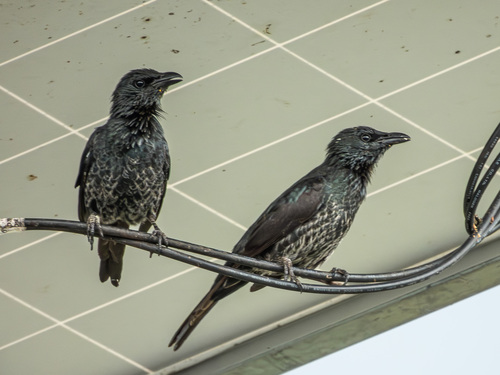 Moluccan StarlingAplonis mysolensisThe Moluccan starling is a species of starling in the family Sturnidae.
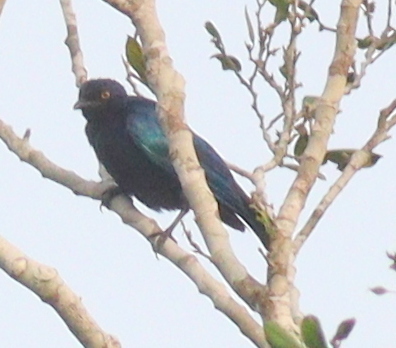 Copper-tailed StarlingHylopsar cupreocaudaThe copper-tailed starling or copper-tailed glossy-starling is a species of starling in the family Sturnidae.
 Sharpe's StarlingPholia sharpiiSharpe's starling is a species of starling in the family Sturnidae.
Learn the White-faced Starling in the BeakBrain App
Photo and call practice. Coming soon to iPhone and Android.
Play today's Daily BirdEvery photo and recording on this page is credited to its author under the licence shown. Spotted a problem with this page, or have a better photo? Contribute.