Learn what every symbol on the card means.Full credits and sources at beakbrain.com/symbols
 RiverineCup nestSmall · 34 g
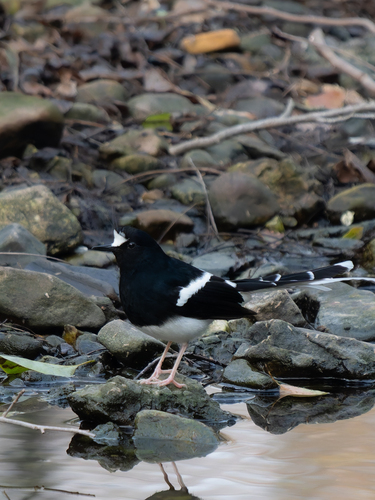


ID tip
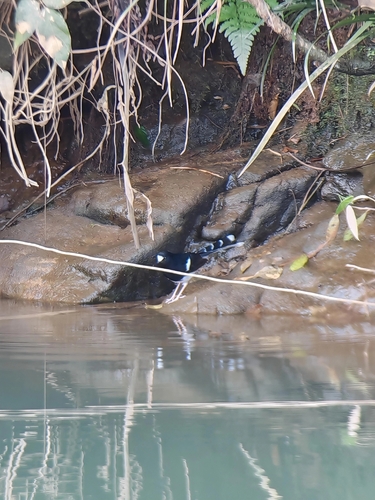
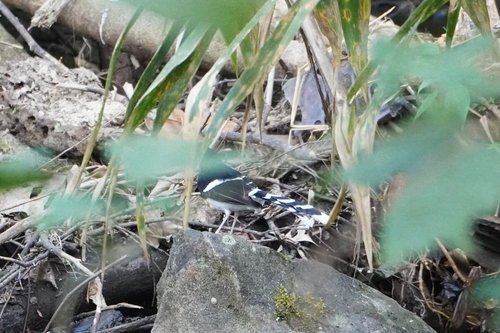
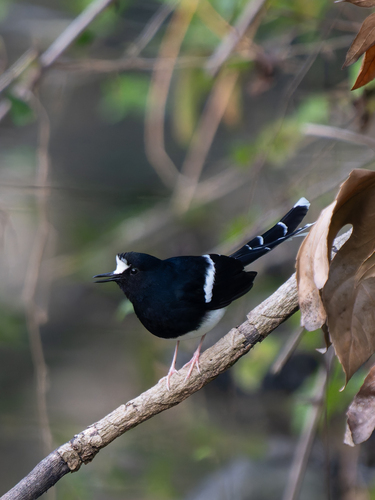
The white-crowned forktail is the largest of the forktails. Between 25 and 28 centimetres (9.8 and 11.0 in) long, the white-crowned forktail typically weighs between 27 and 38 grams (0.95 and 1.34 oz), though specimens weighing up to 53 grams (1.9 oz) have been reported. It has black feathering on its throat extending down to its breast, as well as a black face and scapulars. The crown and forehead have a prominent white patch, sometimes visible as a slight crest, from which the bird gets its name. The belly of the bird is white, and is sharply delineated from the throat and face.
Text from Wikipedia, licensed CC BY-SA 4.0.
When to see the White-crowned Forktail
One bar for each month, and every month is filled: this bird is recorded here in all twelve. The wide bar is January, the month with the most records.
Where to see the White-crowned Forktail
The map shades 8 countries with regular records, and 1 more in a lighter tone where the bird turns up only as a stray. Everything unshaded has no records. Countries are listed below the map.
Recorded as a rare visitor in Bhutan.
About the White-crowned Forktail
The white-crowned forktail is a species of forktail in the family Muscicapidae. Formally described in 1818, it has five subspecies, each occupying a different geographic range. The largest of the forktails, Enicurus leschenaulti, is between 25 and 28 centimetres long. It has a black throat and breast, black mantle, and largely black wings. The rump and lower back are white, and the bird has a prominent white crown, from which it gets its name. As with other forktails, the tail is long, deeply forked, and banded in black and white. A variety of whistling and clicking calls have been described. Slight morphological differences have been observed between subspecies.
Text adapted from Wikipedia, licensed CC BY-SA 4.0.
Easily confused with
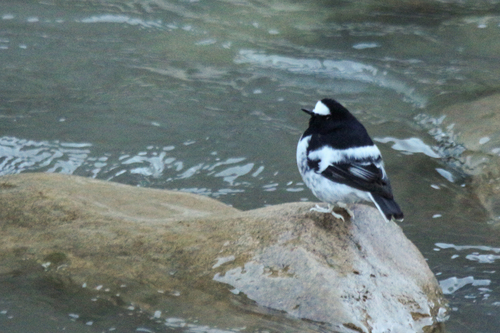 Little ForktailEnicurus scouleriThe sexes are alike, with black and white plumage.
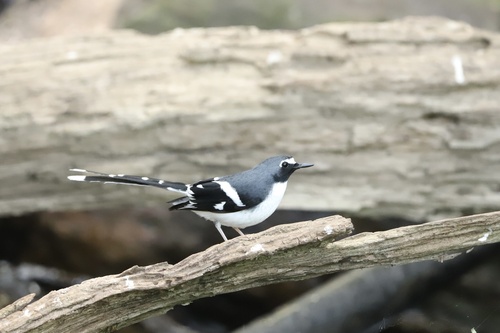 Slaty-backed ForktailEnicurus schistaceusThe slaty-backed forktail is a slim, medium-sized forktail between 22 and 25 centimetres (8+5⁄8 and 9+7⁄8 in) long, and weighs between 26 and 38 grams (0.92 and 1.34 oz).
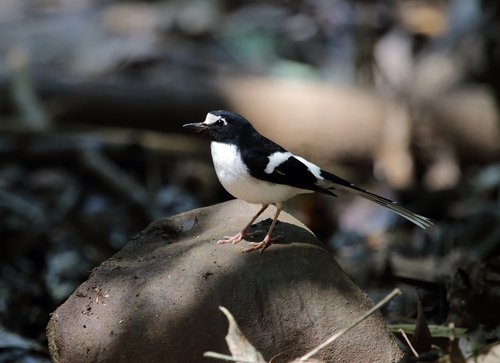 Black-backed ForktailEnicurus immaculatusA medium-sized forktail, the black-backed forktail is between 20.5 and 23 centimetres (8+1⁄8 and 9 in).
Side by side: Slaty-backed Forktail vs White-crowned Forktail · Little Forktail vs White-crowned Forktail · Black-backed Forktail vs White-crowned Forktail
Learn the White-crowned Forktail in the BeakBrain App
Photo and call practice. Coming soon to iPhone and Android.
Play today's Daily BirdEvery photo and recording on this page is credited to its author under the licence shown. Spotted a problem with this page, or have a better photo? Contribute.