Learn what every symbol on the card means.Full credits and sources at beakbrain.com/symbols
 ForestCup nestMedium · 114 g


What the White-capped Tanager sounds like


ID tip
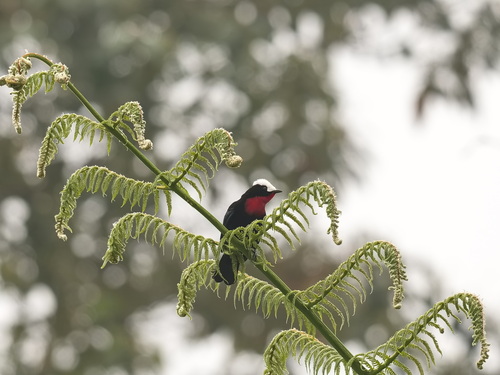
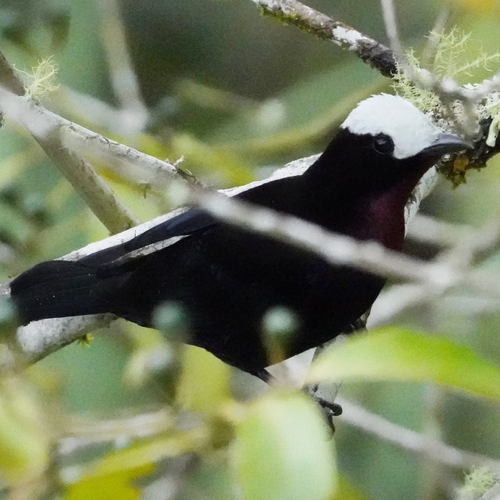
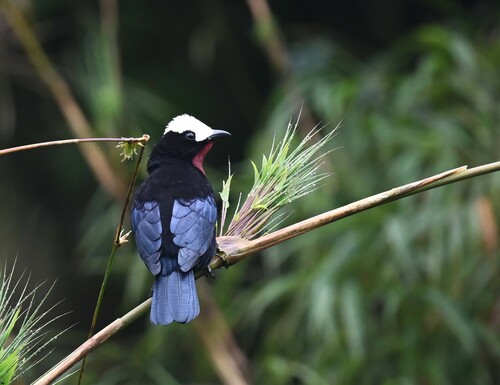
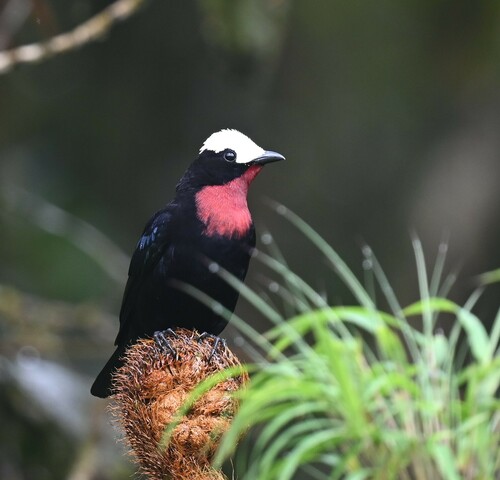
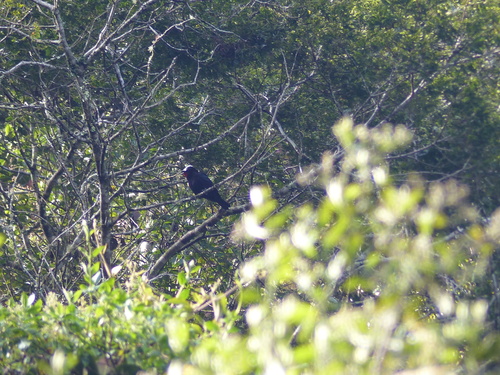
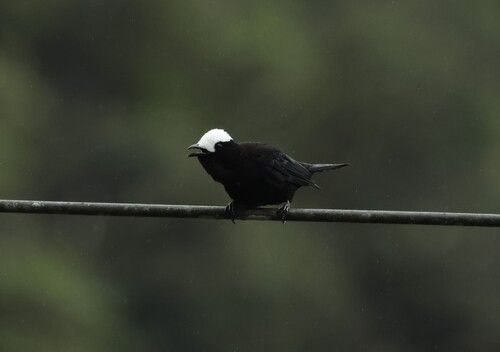
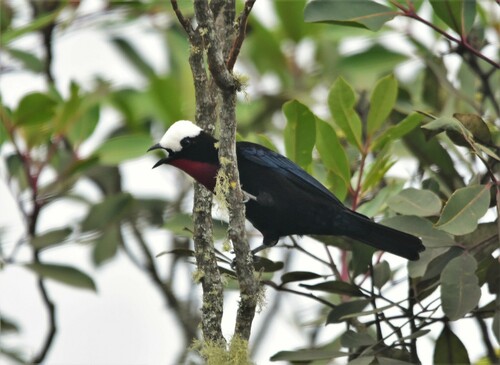
The white-capped tanager is one of the largest tanagers, being the heaviest bird in the family, but not the longest. It weighs in at 114 g (4 oz) and reaches a length of 24 cm (9.5 in). This species is glossy black overall with a large white crown and a red throat. It has a striking and unmistakable coloration, with an overall glossy black plumage, contrasting with a bright red throat and large white crown. The throat is brightest in adult males, with females having duskier throats that approach purple in their coloration.
Text from Wikipedia, licensed CC BY-SA 4.0.
When to see the White-capped Tanager
One bar for each month, and every month is filled: this bird is recorded here in all twelve. The wide bar is May, the month with the most records.
Where to see the White-capped Tanager
The map shades 4 countries with regular records. Everything unshaded has no records. Countries are listed below the map.
About the White-capped Tanager
The white-capped tanager is a South American bird in the tanager family Thraupidae. It is the only member of the genus Sericossypha. It lives in humid Andean forest in groups of up to 20 individuals. Flocks of these tanagers stay in tight formation, often foraging from tree to tree together. They may eat fruits, seeds, hymenoptera, and coleoptera.
Text adapted from Wikipedia, licensed CC BY-SA 4.0.
Easily confused with
 Orange-eared TanagerChlorochrysa calliparaeaThe orange-eared tanager is a species of bird in the family Thraupidae.
 Fulvous-crested TanagerTachyphonus surinamusThe fulvous-crested tanager is a species of bird in the family Thraupidae, the tanagers.
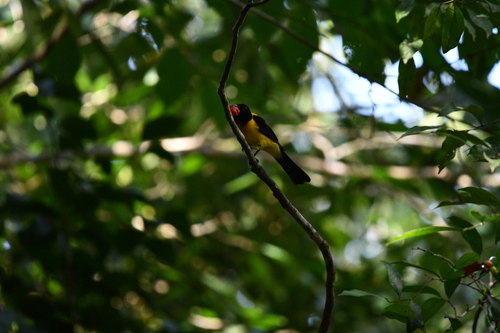 Black-throated Shrike-TanagerLanio aurantiusThe black-throated shrike-tanager is a species of bird in the family Thraupidae.
Learn the White-capped Tanager in the BeakBrain App
Photo and call practice. Coming soon to iPhone and Android.
Play today's Daily BirdEvery photo and recording on this page is credited to its author under the licence shown. Spotted a problem with this page, or have a better photo? Contribute.