Learn what every symbol on the card means.Full credits and sources at beakbrain.com/symbols
 RiverineCavity nestTiny · 14 g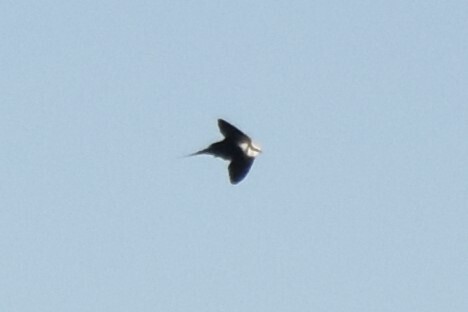
ID tip
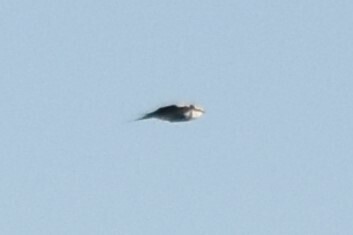
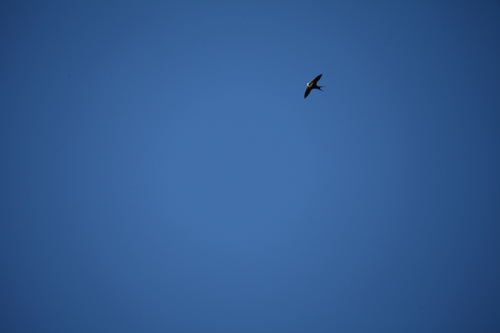
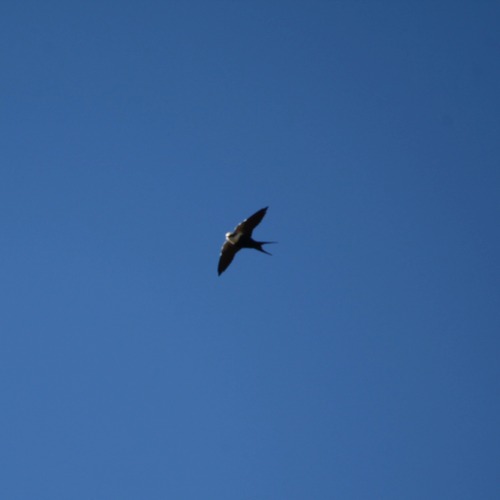
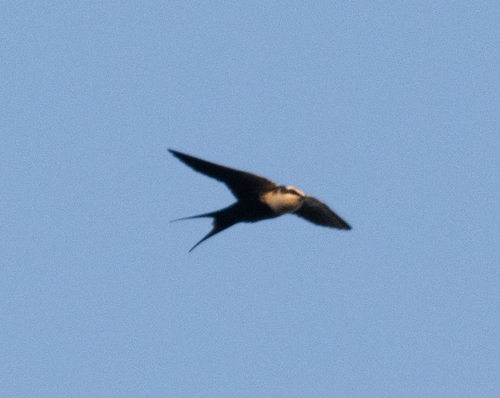
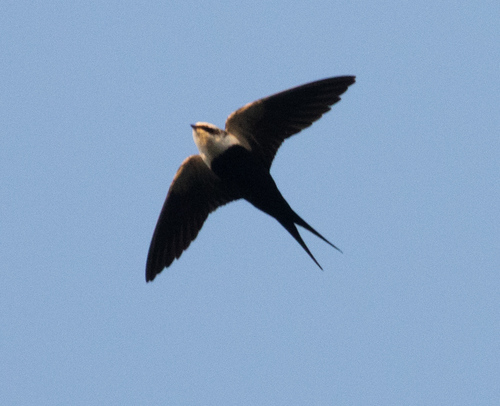
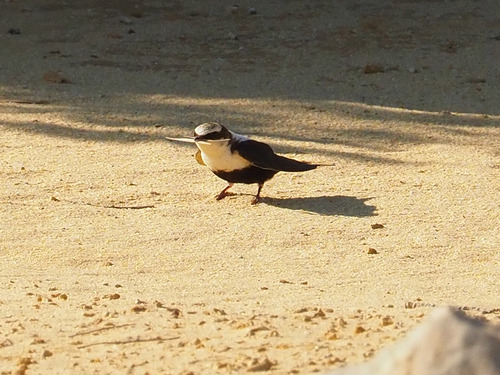
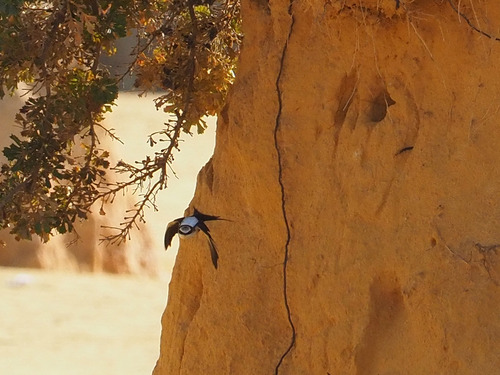
An adult white-backed swallow averages 15 cm long, similar in size to other swallows found in Australia. The adult has a mottled grey cap above white eyebrows and a grey eye. It has a dark stripe running from the lores and across the nape of the neck. The back and most of the breast is white. The belly, wings and tail are black. The white-backed swallow has a deeply forked tail, with curved and pointed wings. The short bill is black; the legs and feet are grey. It has a slender, streamlined body. The eyes consist of a prominent, dark iris.
Text from Wikipedia, licensed CC BY-SA 4.0.
When to see the White-backed Swallow
One bar for each month. Filled bars are the 11 months with records; pale bars are months with none. The wide bar is September, the month with the most records.
Where to see the White-backed Swallow
The map shades 1 country with regular records. Everything unshaded has no records. Countries are listed below the map.
About the White-backed Swallow
The white-backed swallow is a member of the swallow family Hirundinidae and is endemic to Australia. It is the only species placed in the genus Cheramoeca. As with all swallows, it is characterised by adaptation to aerial feeding. It can be identified by its white back, surrounded by black wings and tail. It has a wide distribution, from the southern part of the Australian continent, up to the Tropic of Capricorn. The white-backed swallow prefers grasslands and will create a burrow nest.
Text adapted from Wikipedia, licensed CC BY-SA 4.0.
Easily confused with
 White-thighed SwallowAtticora tibialisThe white-thighed swallow averages about 12 cm (4.7 in) long and weighs 8.5 to 14 g (0.30 to 0.49 oz).
 Black-capped SwallowAtticora pileataThe black-capped swallow is about 11.5 to 13.5 cm (4.5 to 5.3 in) long and weighs about 12 g (0.42 oz).
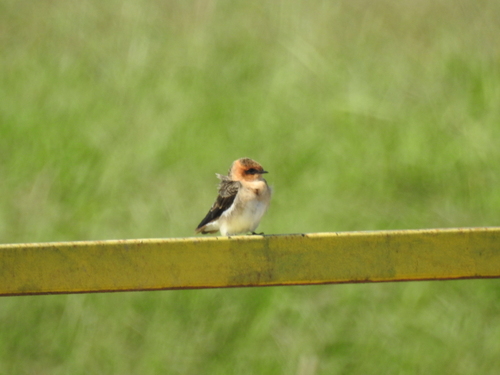 Tawny-headed SwallowAlopochelidon fucataThis swallow is relatively small, usually measuring 12 cm (4.7 in) and weighing 13–15 g (0.46–0.53 oz).
Side by side: White-backed Swallow vs White-thighed Swallow · Black-capped Swallow vs White-backed Swallow · Tawny-headed Swallow vs White-backed Swallow
Learn the White-backed Swallow in the BeakBrain App
Photo and call practice. Coming soon to iPhone and Android.
Play today's Daily BirdEvery photo and recording on this page is credited to its author under the licence shown. Spotted a problem with this page, or have a better photo? Contribute.