Learn what every symbol on the card means.Full credits and sources at beakbrain.com/symbols
 WoodlandCup nestMedium · 75 g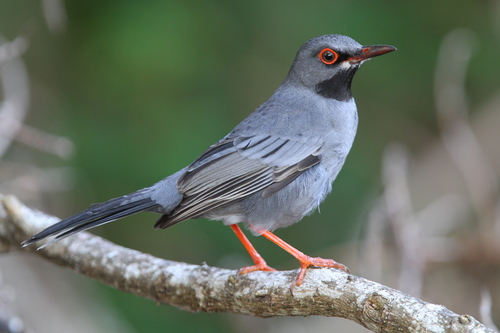


ID tip
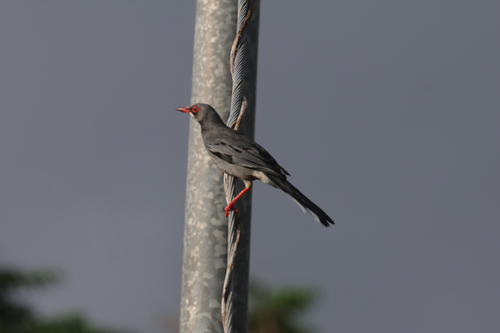
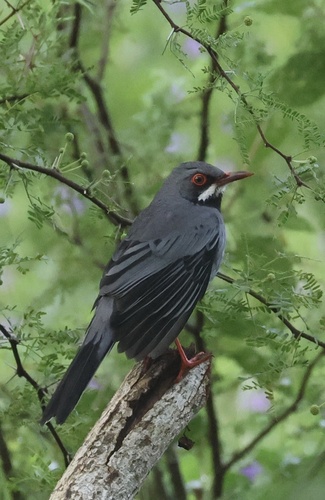
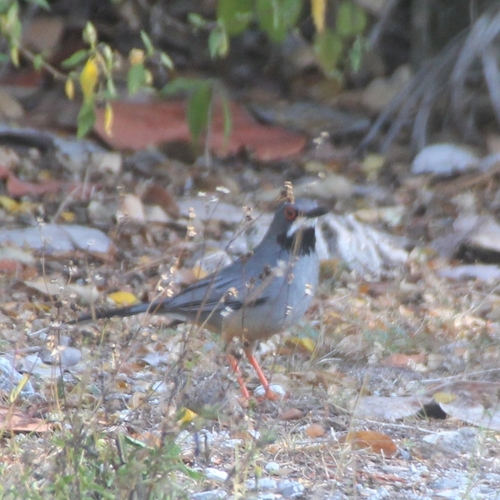
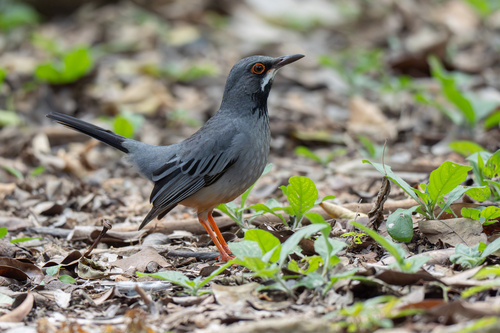
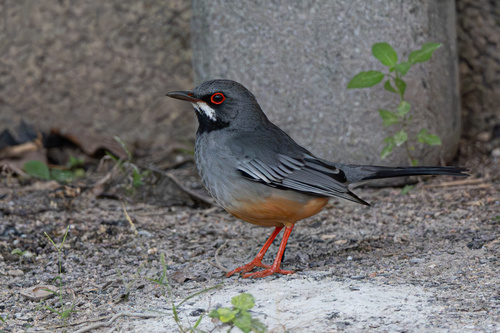
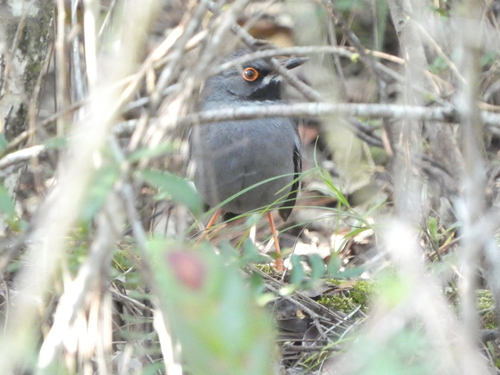
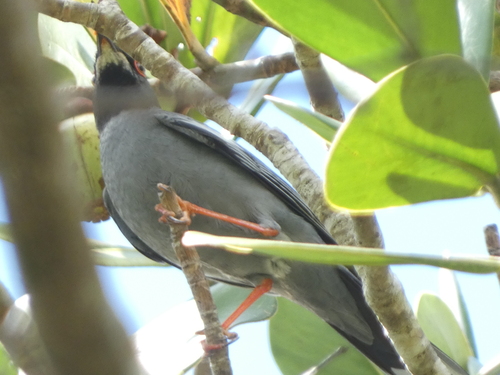
The western red-legged thrush is mainly slaty above with an either pale or rufous belly depending on the subspecies and a variably white and black throat. The legs, bill and eye ring are bright orange-red. There is notable variation in plumage between the subspecies.
Text from Wikipedia, licensed CC BY-SA 4.0.
When to see the Western Red-legged Thrush
One bar for each month, and every month is filled: this bird is recorded here in all twelve. The wide bar is March, the month with the most records.
Where to see the Western Red-legged Thrush
The map shades 7 countries with regular records, and 2 more in a lighter tone where the bird turns up only as a stray. Everything unshaded has no records. Countries are listed below the map.
Recorded as a rare visitor in United States, Martinique.
About the Western Red-legged Thrush
The Western red-legged thrush is a species of bird in the family Turdidae. Native to the Caribbean, it is found in the Bahamas, Cayman Islands, and Cuba. It formerly occurred on the Swan Islands, Honduras, but was extirpated there.
Text adapted from Wikipedia, licensed CC BY-SA 4.0.
Easily confused with
 Karoo ThrushTurdus smithiThis medium-sized bird has a length of about 24 cm.
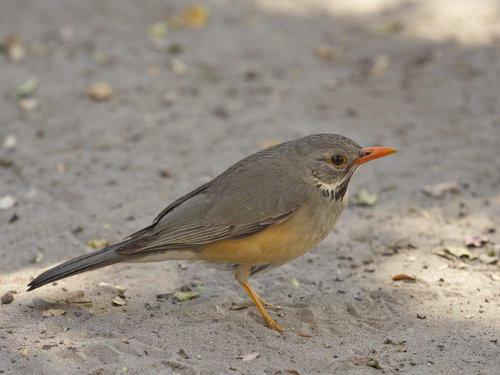 Kurrichane ThrushTurdus libonyanaThe Kurrichane thrush is 21 to 23 cm (8.3–9.1 in) long and weighs around 46–82 g (1.6–2.9 oz).
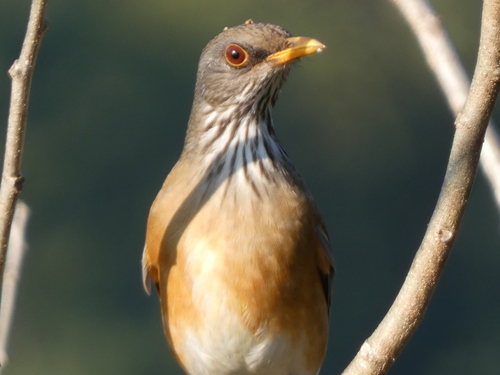 Rufous-backed ThrushTurdus rufopalliatusThe rufous-backed thrush is similar in size and shape to the American robin (T. migratorius).
Side by side: Chiguanco Thrush vs Western Red-legged Thrush · Kurrichane Thrush vs Western Red-legged Thrush · Karoo Thrush vs Western Red-legged Thrush · Rufous-backed Thrush vs Western Red-legged Thrush
Learn the Western Red-legged Thrush in the BeakBrain App
Photo and call practice. Coming soon to iPhone and Android.
Play today's Daily BirdEvery photo and recording on this page is credited to its author under the licence shown. Spotted a problem with this page, or have a better photo? Contribute.