Learn what every symbol on the card means.Full credits and sources at beakbrain.com/symbols
 ForestSmall · 31 g
What the Western Fire-eye sounds like


ID tip
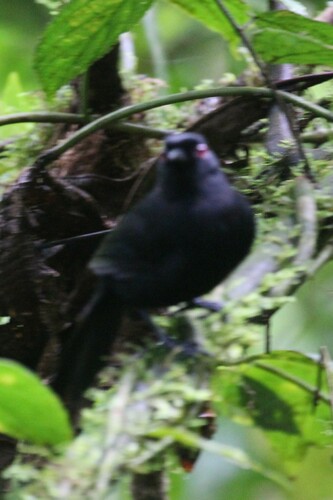
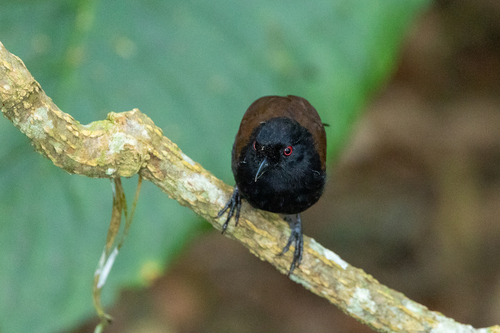
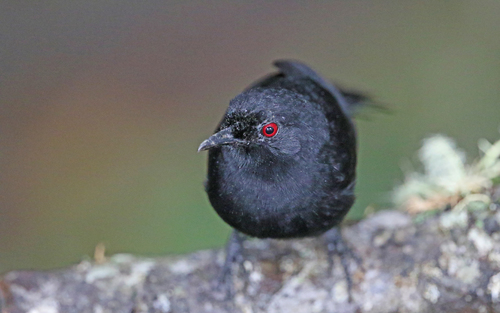
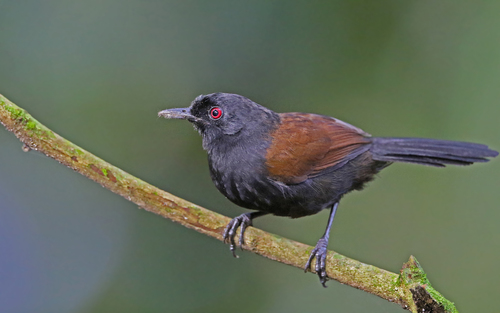
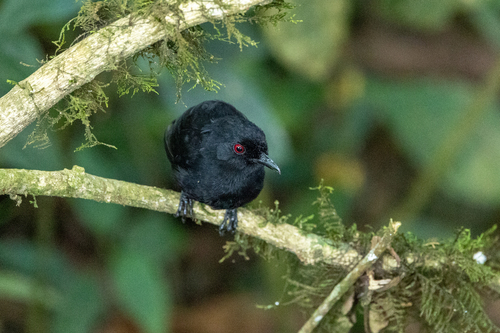
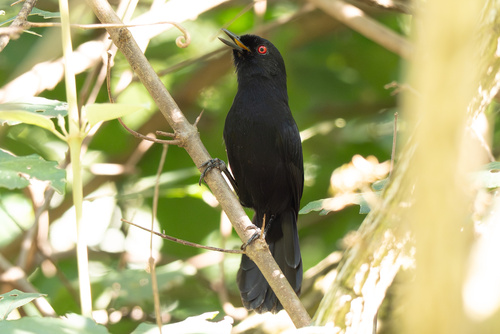
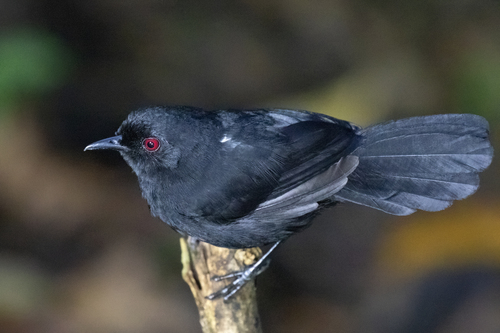
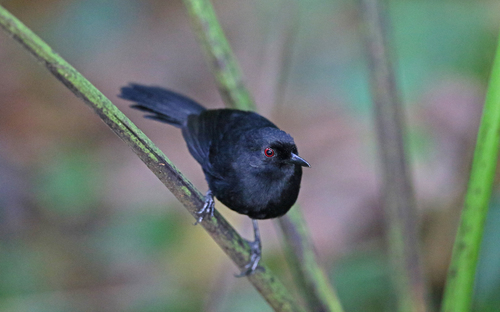
The western fire-eye is 16 to 18 cm (6.3 to 7.1 in) long and weighs 26 to 36 g (0.92 to 1.3 oz); the subspecies' weights apparently vary. Both sexes of all subspecies have bright red irises. Males of all the subspecies are mostly glossy black with a partially hidden white patch between their scapulars and blackish gray underwing coverts. The females of the subspecies have different plumages. Females of the nominate subspecies P. m. maura have light rufescent brown crown and upperparts. Voice: The song of male western fire-eyes is "a medium-length (e.g. 2 seconds) series of evenly paced short whistles that usually rise and fall slightly in pitch, sometimes also in intensity" and appears to vary somewhat among the subspecies. That of the two subspecies found in Ecuador has been written as a series of "peer" notes "fading and descending at the end".
Text from Wikipedia, licensed CC BY-SA 4.0.
When to see the Western Fire-eye
One bar for each month, and every month is filled: this bird is recorded here in all twelve. The wide bar is October, the month with the most records.
Where to see the Western Fire-eye
The map shades 6 countries with regular records. Everything unshaded has no records. Countries are listed below the map.
About the Western Fire-eye
The western fire-eye is an insectivorous bird in subfamily Thamnophilinae of family Thamnophilidae, the "typical antbirds". It is found in Bolivia, Brazil, Colombia, Ecuador, Paraguay, and Peru.
Text adapted from Wikipedia, licensed CC BY-SA 4.0.
Easily confused with
 Fringe-backed Fire-eyePyriglena atraThe fringe-backed fire-eye is 16 to 18 cm (6.3 to 7.1 in) long; one individual weighed 32 g (1.1 oz).
 East Amazonian Fire-eyePyriglena leuconotaThe Tapajos fire-eye is 16 to 18 cm (6.3 to 7.1 in) long and weighs 26 to 36 g (0.92 to 1.3 oz); the subspecies' weights apparently vary.
Learn the Western Fire-eye in the BeakBrain App
Photo and call practice. Coming soon to iPhone and Android.
Play today's Daily BirdEvery photo and recording on this page is credited to its author under the licence shown. Spotted a problem with this page, or have a better photo? Contribute.