Learn what every symbol on the card means.Full credits and sources at beakbrain.com/symbols
 ForestDomed nestSmall · 49 g
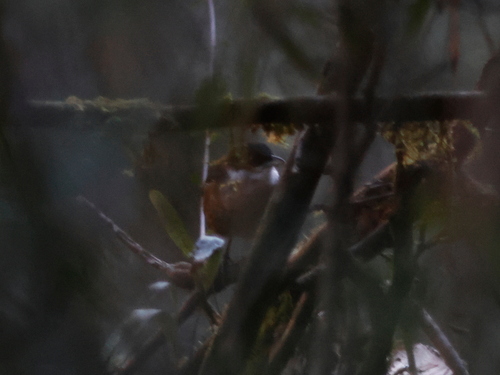
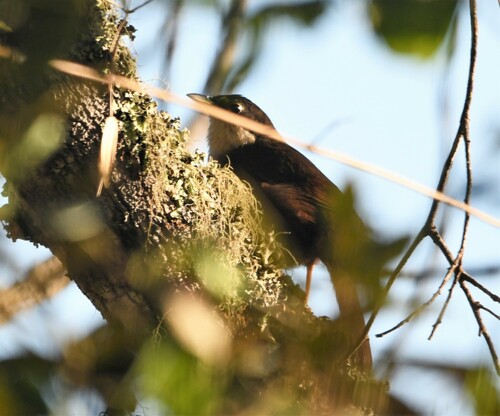
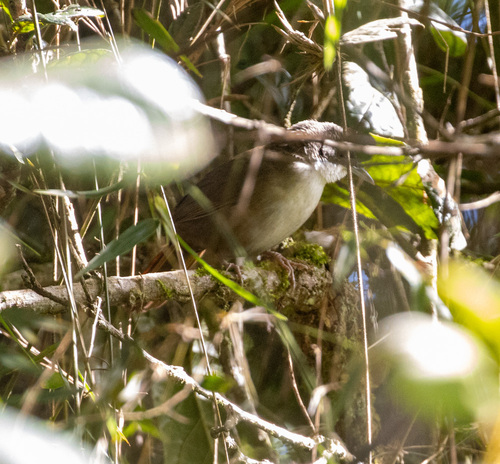
ID tip
The western chat-tanager is 20 to 21 cm (7.9 to 8.3 in) long and weighs about 40 to 55 g (1.4 to 1.9 oz). It has a long bill and tail, so it somewhat resembles a mockingbird's shape. The sexes have the same plumage. Adults have a dark olive-brown head, with a blackish crown and a small rusty spot between the eye and bill. The rest of their upperparts are dark reddish brown. Their throat and underparts are white, with a heavy wash of grayish brown on the flanks and lower belly. Voice: Both sexes of the western chat-tanager sing, usually at dawn. Their song is described as a buzzy "wee-chee-chee-chee". Their calls include a "chip-chip" and a "tick, tick, tick, tick...".
Text from Wikipedia, licensed CC BY-SA 4.0.
When to see the Western Chat-Tanager
One bar for each month. Filled bars are the 8 months with records; pale bars are months with none. The wide bar is March, the month with the most records.
Where to see the Western Chat-Tanager
The map shades 2 countries with regular records. Everything unshaded has no records. Countries are listed below the map.
About the Western Chat-Tanager
The western chat-tanager is a Vulnerable species of passerine bird belonging to the family Calyptophilidae. It is endemic to the island of Hispaniola which is shared by the Dominican Republic and Haiti.
Text adapted from Wikipedia, licensed CC BY-SA 4.0.
Easily confused with

Learn the Western Chat-Tanager in the BeakBrain App
Photo and call practice. Coming soon to iPhone and Android.
Play today's Daily BirdEvery photo and recording on this page is credited to its author under the licence shown. Spotted a problem with this page, or have a better photo? Contribute.