Learn what every symbol on the card means.Full credits and sources at beakbrain.com/symbols
 ShrublandDomed nestSmall · 33 g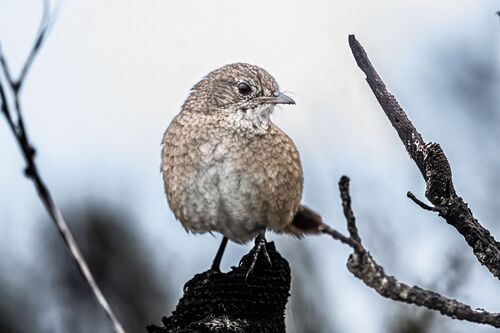
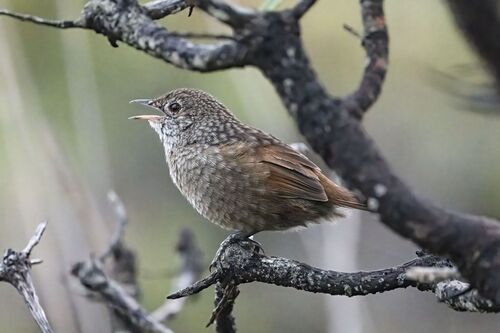

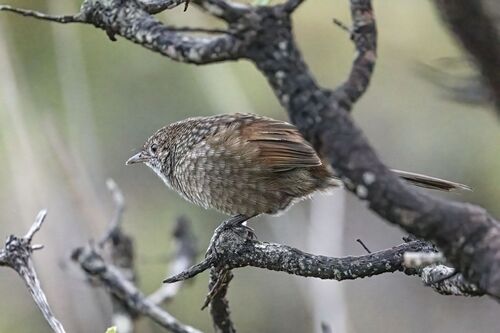
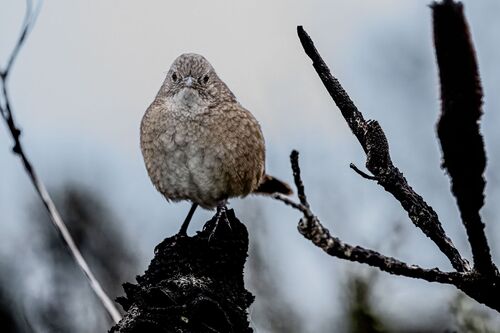
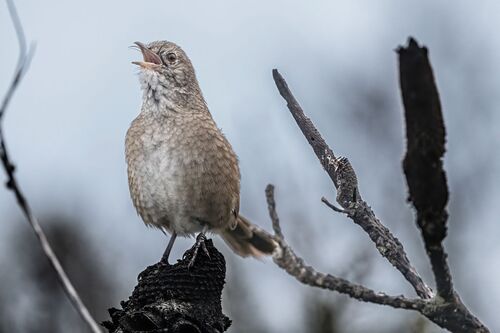
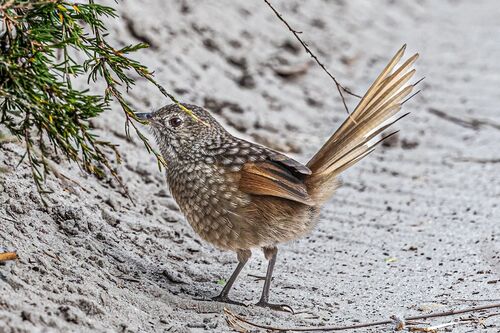
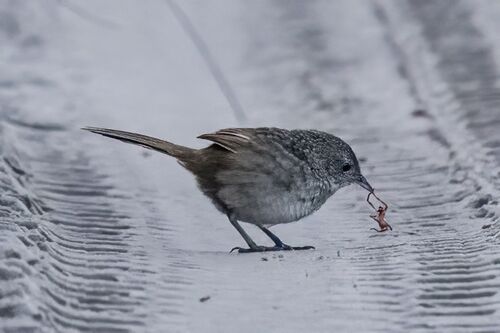
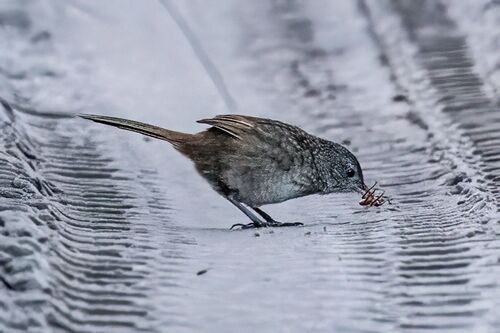
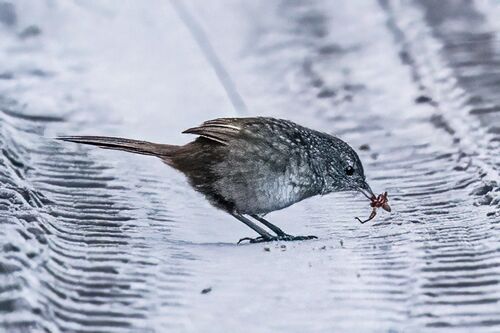
ID tip
Adults are 18–22 cm long. Its plumage is grey-brown. It has a shorter tail than other bristlebirds, yet it is still quite long tail is rufous, with darker brown stripes. Its body is rufous with dark brown under-surface feathers, giving it a scalloped look. It has a red eye, and the front of neck and face is off-white. Its natural habitat is temperate shrubland, particularly low, dense shrubland. It prefers coastal dunes and cliffs. It is threatened by habitat loss. It can survive fire and relocate to the fire boundary, and will occupy regrowth when this becomes suitable.
Text from Wikipedia, licensed CC BY-SA 4.0.
When to see the Western Bristlebird
One bar for each month. Filled bars are the 11 months with records; pale bars are months with none. The wide bar is October, the month with the most records.
Where to see the Western Bristlebird
The map shades 1 country with regular records. Everything unshaded has no records. Countries are listed below the map.
About the Western Bristlebird
The western bristlebird is a species of bird in the family Dasyornithidae. It is endemic to the coastal heaths of western Australia.
Text adapted from Wikipedia, licensed CC BY-SA 4.0.
Easily confused with
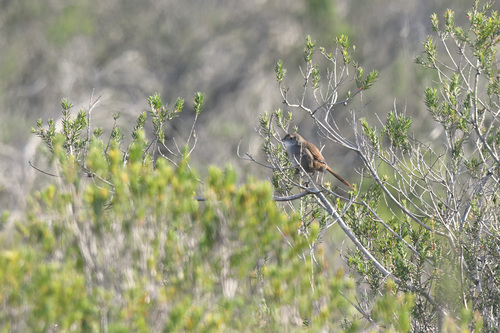 Eastern BristlebirdDasyornis brachypterusThe eastern bristlebird is a species of bird in the bristlebird family, Dasyornithidae.
 Rufous BristlebirdDasyornis broadbentiThe rufous bristlebird is a medium-sized bird (approximately 77g) that is predominantly brown, with a long tail and short rounded wings.
Learn the Western Bristlebird in the BeakBrain App
Photo and call practice. Coming soon to iPhone and Android.
Play today's Daily BirdEvery photo and recording on this page is credited to its author under the licence shown. Spotted a problem with this page, or have a better photo? Contribute.