Learn what every symbol on the card means.Full credits and sources at beakbrain.com/symbols
 RockyCavity nestSmall · 18 g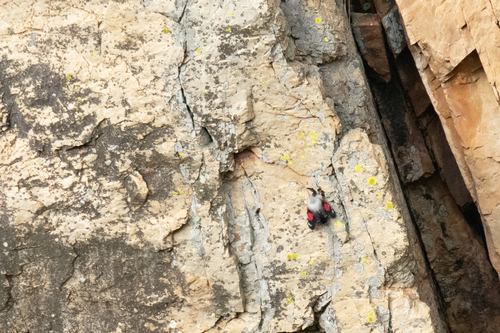

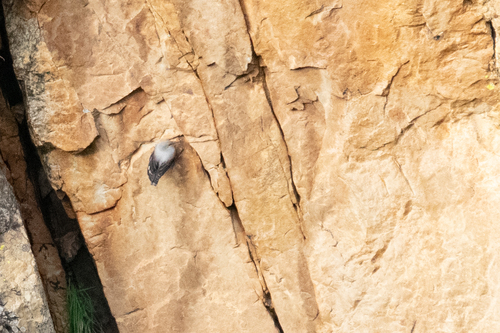
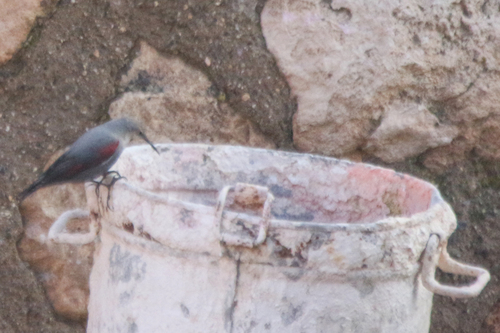
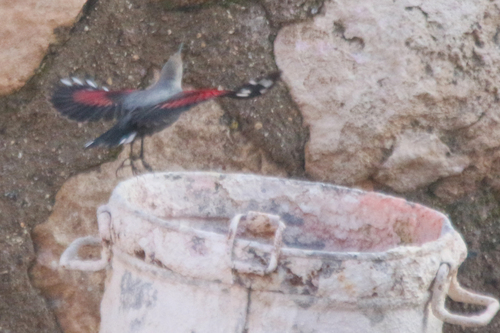
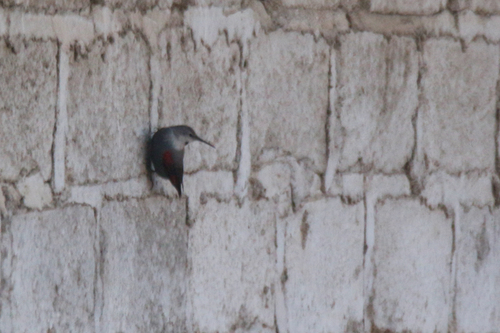
ID tip
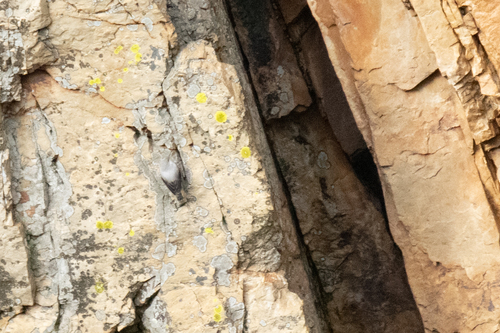
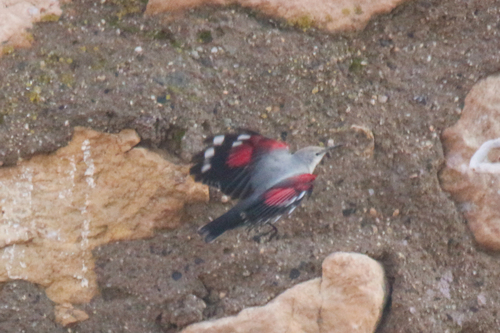
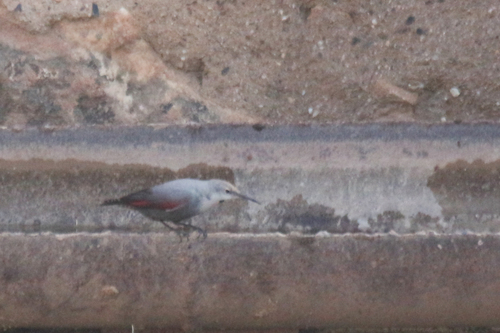
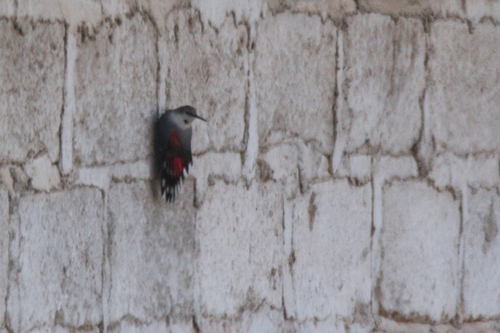
The wallcreeper is 15.5–17 centimetres (6.1–6.7 in) long, with a weight of 17–19 grams (0.60–0.67 oz). Its plumage is primarily blue-grey, with darker flight and tail feathers. In summer, the males have a black throat grading into the grey of the rest of the body, and females can have either a white throat or a small dark patch on the throat; in autumn and winter, both sexes have a white throat. Its most striking plumage feature, though, are its extraordinary crimson wings with white spots. Voice: Though largely silent, both male and female wallcreepers sing, the females generally only while defending feeding territories in the winter. The song is a high-pitched, drawn-out whistle, with notes that alternately rise and fall. During the breeding season, the male sings while perched or climbing.
Text from Wikipedia, licensed CC BY-SA 4.0.
When to see the Wallcreeper
One bar for each month, and every month is filled: this bird is recorded here in all twelve. The wide bar is December, the month with the most records.
Where to see the Wallcreeper
The map shades 42 countries with regular records, and 10 more in a lighter tone where the bird turns up only as a stray. Everything unshaded has no records. Countries are listed below the map.
Recorded as a rare visitor in Belgium, United Kingdom, Netherlands, Poland, Thailand, Luxembourg, San Marino, Ukraine, Vietnam, Liechtenstein.
About the Wallcreeper
The wallcreeper is a small passerine bird found throughout the high mountains of the Palearctic from southern Europe to central China. It is the only extant member of both the genus Tichodroma and the family Tichodromidae.
Text adapted from Wikipedia, licensed CC BY-SA 4.0.
Learn the Wallcreeper in the BeakBrain App
Photo and call practice. Coming soon to iPhone and Android.
Play today's Daily BirdEvery photo and recording on this page is credited to its author under the licence shown. Spotted a problem with this page, or have a better photo? Contribute.