Learn what every symbol on the card means.Full credits and sources at beakbrain.com/symbols
 WoodlandCup nestTiny · 7 g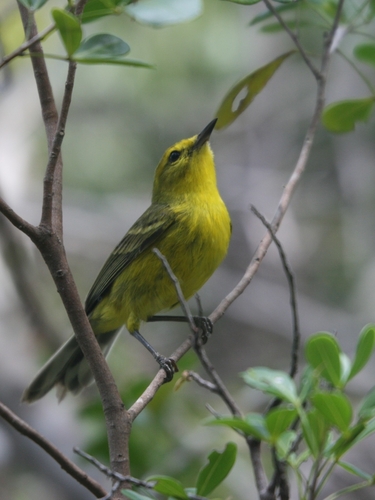
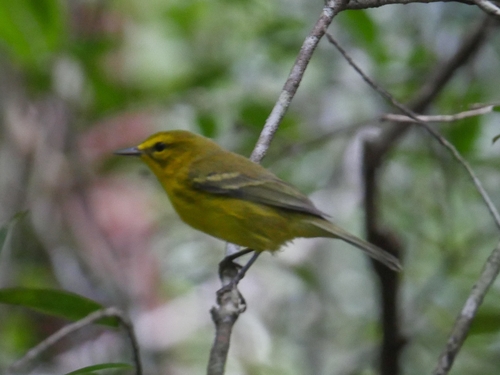
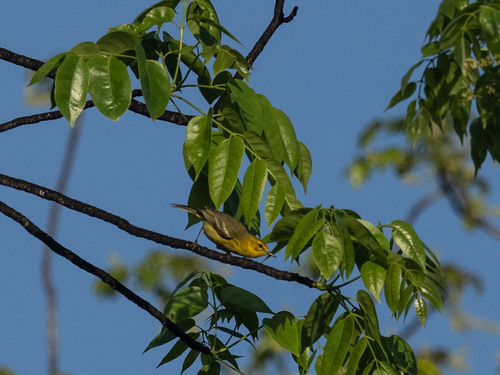
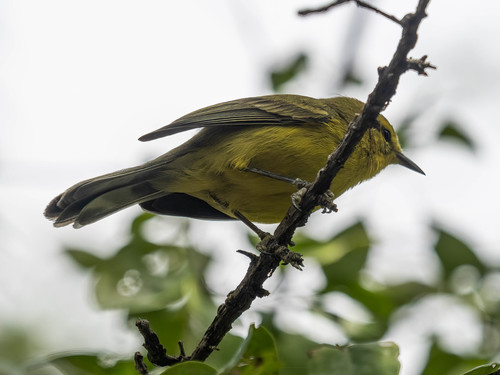

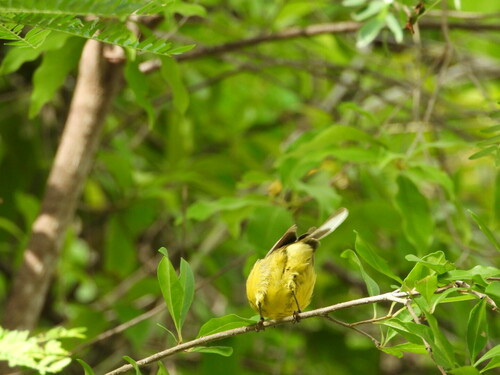
ID tip
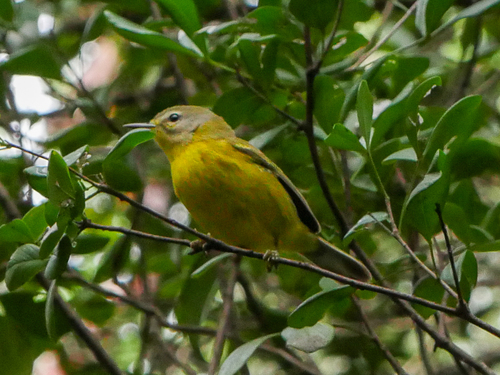
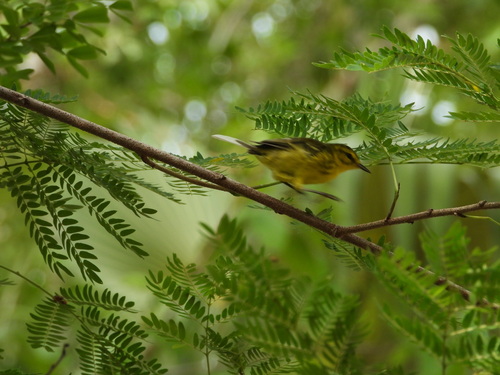
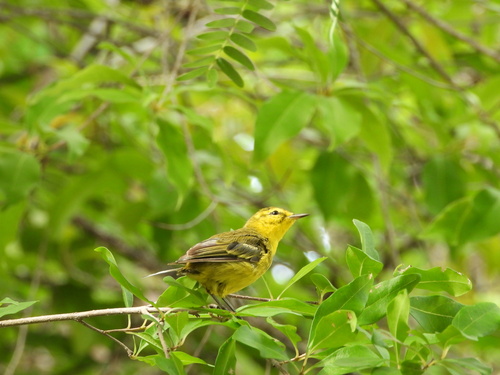
The vitelline warbler is 13 cm (5.1 in) long and weighs 6.2 to 7.5 g (0.22 to 0.26 oz). Adult males of the nominate subspecies S. v. vitellina have an olive-green crown and nape, a wide yellow supercilium, a thin olive-green line through the eye, and yellow ear coverts with a thin olive-green lower and back border. Their upperparts are bright olive-green and their wings and tail mostly so. Their greater and median upperwing coverts have yellowish ends that show as two wing bars. Their outer three pairs of tail feathers have white tips. Voice: The vitelline warbler's song is "a series of 4–5 wheezy and slightly grating notes which rise in pitch". Its call is not known but is assumed to be similar to the chek of the prairie warbler.
Text from Wikipedia, licensed CC BY-SA 4.0.
When to see the Vitelline Warbler
One bar for each month. Filled bars are the 9 months with records; pale bars are months with none. The wide bar is March, the month with the most records.
Where to see the Vitelline Warbler
The map shades 2 countries with regular records. Everything unshaded has no records. Countries are listed below the map.
About the Vitelline Warbler
The vitelline warbler is a songbird species in the New World warbler family (Parulidae). It is found in the Cayman Islands and on the Swan Islands in Honduras.
Text adapted from Wikipedia, licensed CC BY-SA 4.0.
Easily confused with
 Arrowhead WarblerSetophaga pharetraThe arrowhead warbler is 12.5 to 13 cm (4.9 to 5.1 in) long and weighs 9.1 to 10.5 g (0.32 to 0.37 oz).
 Olive-capped WarblerSetophaga pityophilaThe olive-capped warbler is about 12.5 to 13 cm (4.9 to 5.1 in) long and weighs 7.2 to 8.7 g (0.25 to 0.31 oz).
 Elfin Woods WarblerSetophaga angelaeThe elfin woods warbler is a small passerine, averaging 12.5 cm (5 in) in length and 8.4 g (0.30 oz) in weight.
Learn the Vitelline Warbler in the BeakBrain App
Photo and call practice. Coming soon to iPhone and Android.
Play today's Daily BirdEvery photo and recording on this page is credited to its author under the licence shown. Spotted a problem with this page, or have a better photo? Contribute.