Learn what every symbol on the card means.Full credits and sources at beakbrain.com/symbols
 WetlandCavity nestLarge · 637 g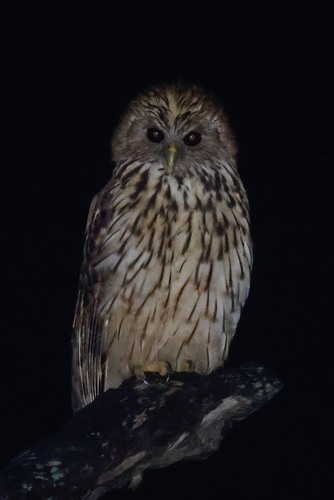


ID tip
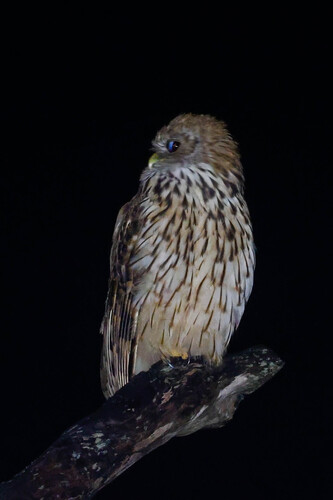
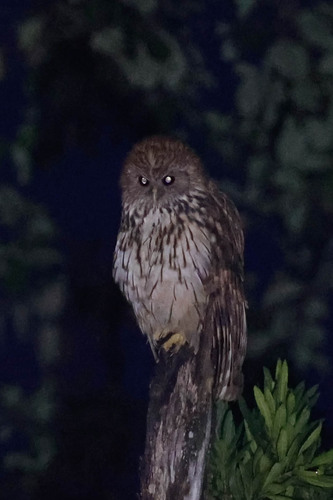
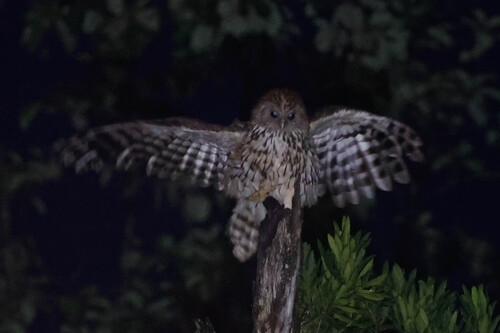
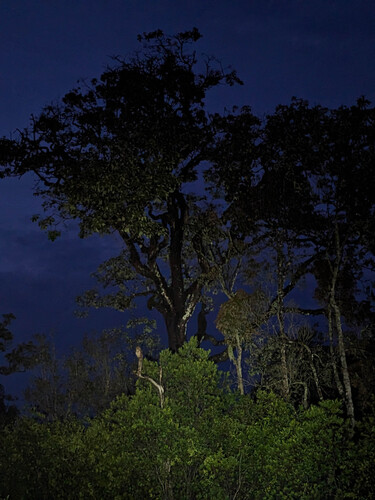
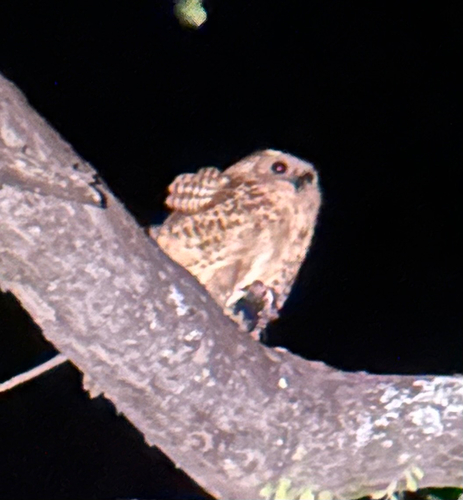
The vermiculated fishing owl is a large, earless owl with a total length of 46 to 51 cm (18 to 20 in). The facial disc is a pale reddish-brown with an inconspicuous darker brown rim. The eyes are dark brown and the bill yellowish-brown with a darker tip. The crown is streaked with dark brown. The upper parts are cinnamon-brown finely marked with dark brown vermiculations. Across the shoulders, the outer webs of the feathers are whitish making a pale horizontal streak. The flight feathers and the tail feathers are barred. The underparts are whitish, heavily marked with dark streaks.
Text from Wikipedia, licensed CC BY-SA 4.0.
When to see the Vermiculated Fishing Owl
One bar for each month. Filled bars are the 9 months with records; pale bars are months with none. The wide bar is October, the month with the most records.
Where to see the Vermiculated Fishing Owl
The map shades 8 countries with regular records, and 1 more in a lighter tone where the bird turns up only as a stray. Everything unshaded has no records. Countries are listed below the map.
Recorded as a rare visitor in Benin.
About the Vermiculated Fishing Owl
The vermiculated fishing owl is a species of owl in the family Strigidae. It is found within riverine forest in Angola, Cameroon, Central African Republic, Republic of the Congo, Democratic Republic of the Congo, Gabon, and Nigeria. This species was first described by British zoologist Richard Bowdler Sharpe in 1875 and named in honour of French naturalist Eugène Louis Bouvier.
Text adapted from Wikipedia, licensed CC BY-SA 4.0.
Easily confused with
Learn the Vermiculated Fishing Owl in the BeakBrain App
Photo and call practice. Coming soon to iPhone and Android.
Play today's Daily BirdEvery photo and recording on this page is credited to its author under the licence shown. Spotted a problem with this page, or have a better photo? Contribute.