Learn what every symbol on the card means.Full credits and sources at beakbrain.com/symbols
 ForestDomed nestSmall · 35 g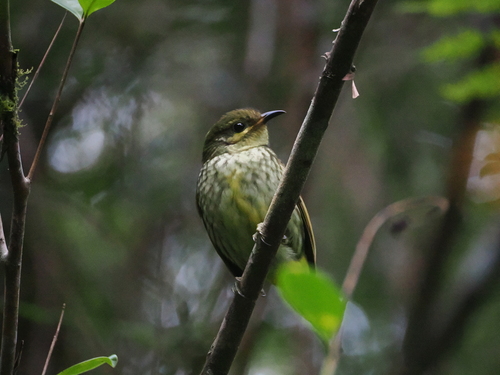
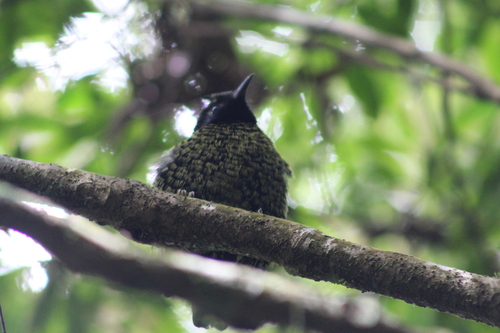
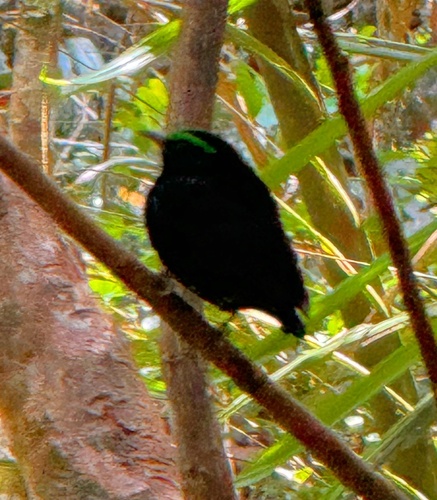
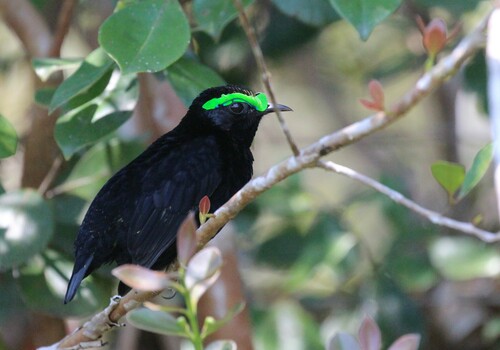
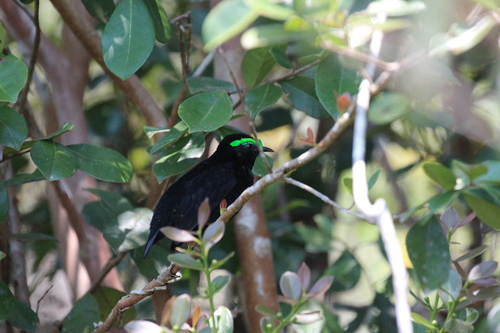


ID tip
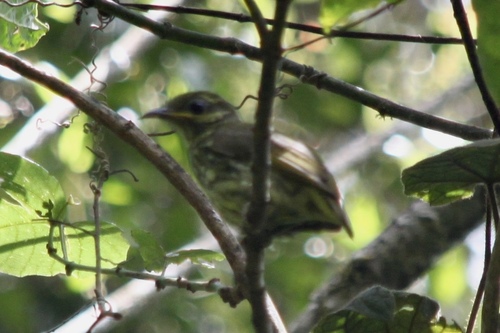
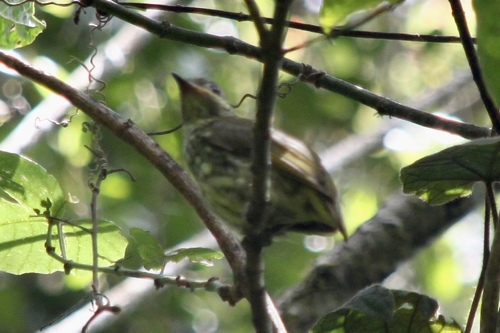
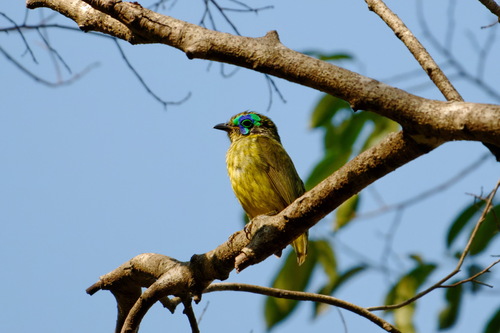
The velvet asity has a minimum longevity of about 7 years. Its body is small and plump, measuring ~14–16.5 cm in length and weighing ~38.9 g. The tail (~42.5 mm) and wings (~82.1 mm) are rounded and short. The bill is slightly decurved and narrow, measuring ~18.1 mm in length and ~6.0 mm in width. The legs are relatively short. The morphology of the velvet asity is not suited for strong or sustained flight because of its poor wing structure and chunky body. Instead, it is well adapted for perch foraging, where its short and narrow bill allows it to easily pick fruit from a perch. Voice: Males produce a high-pitched advertisement call, consisting of a pair or short series of “whee-doo” with an emphasis on the first syllable. A “whee-doo” phrase typically has an initial note that increases from 5.5–6.3 kHz over 100 ms, followed by a 50 ms pause, and a final note that decreases from 5.4–4.8 kHz over 150–190 ms.
Text from Wikipedia, licensed CC BY-SA 4.0.
When to see the Velvet Asity
One bar for each month. Filled bars are the 6 months with records; pale bars are months with none. The wide bar is November, the month with the most records.
Where to see the Velvet Asity
The map shades 2 countries with regular records. Everything unshaded has no records. Countries are listed below the map.
About the Velvet Asity
The velvet asity is a bird species in the family Philepittidae that is endemic to Madagascar. Its natural habitat is subtropical or tropical moist lowland forests. Non-breeding males have yellow-tipped feathers, while breeding males have a velvety black plumage with a pair of green fleshy supraorbital caruncles above the eyes. Adult females are greenish and have underparts striped with pale yellow-green longitudinal lines. Velvet asities eat berries and other fruits in the undergrowth. They build hanging nests with a little roof over the entrance. The species is listed as “Least Concern” on the IUCN Red List.
Text adapted from Wikipedia, licensed CC BY-SA 4.0.
Easily confused with
Learn the Velvet Asity in the BeakBrain App
Photo and call practice. Coming soon to iPhone and Android.
Play today's Daily BirdEvery photo and recording on this page is credited to its author under the licence shown. Spotted a problem with this page, or have a better photo? Contribute.