Learn what every symbol on the card means.Full credits and sources at beakbrain.com/symbols
 ShrublandDomed nestTiny · 8 g


ID tip
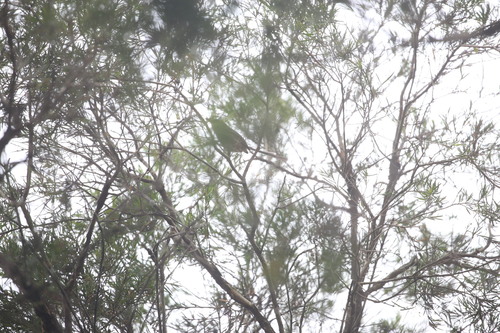
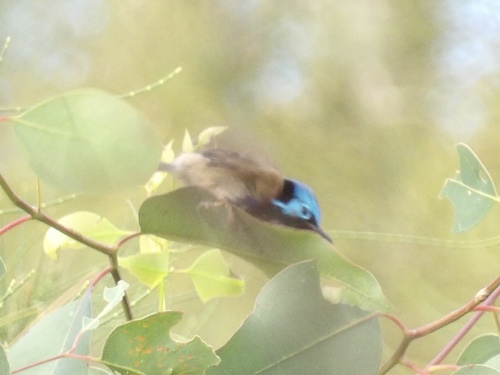
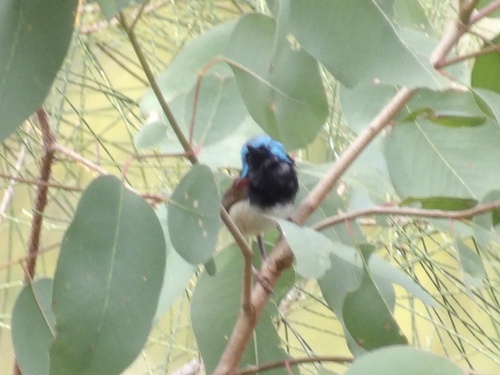
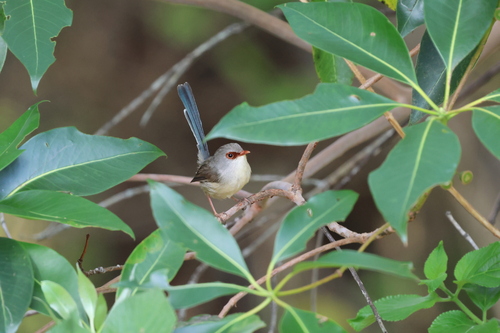
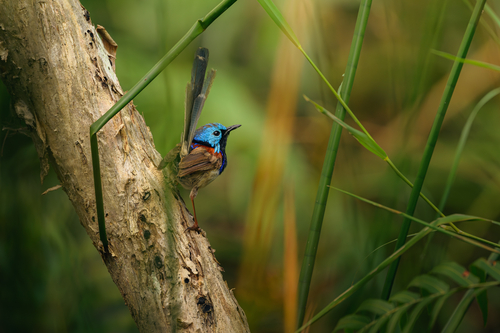
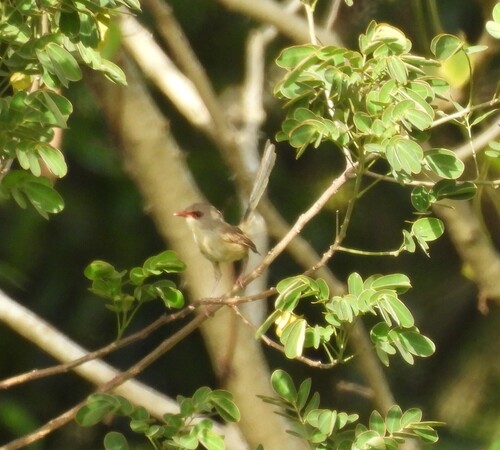
The variegated fairywren is 14–15 cm (5.5–6 in) long and weighs 6–11 g (0.21–0.39 oz). Like other fairywrens, it is notable for its marked sexual dimorphism, males adopting a highly visible breeding plumage of brilliant iridescent blue and chestnut contrasting with black and grey-brown. The brightly coloured crown and ear tufts are prominently featured in breeding displays. The male in breeding plumage has striking bright blue ear coverts, with the crown often slightly darker, a black throat and nape, a royal blue upper back, chestnut shoulders and a bluish-grey tail. Voice: Vocal communication among variegated fairywrens is used primarily for communication between birds in a social group and for advertising and defending a territory. The basic song type is a high-pitched reel of a large number of short elements (10–20 per second); this lasts 1–4 seconds. The reel of the variegated fairywren is the softest of all malurids.
Text from Wikipedia, licensed CC BY-SA 4.0.
When to see the Variegated Fairywren
One bar for each month, and every month is filled: this bird is recorded here in all twelve. The wide bar is October, the month with the most records.
Where to see the Variegated Fairywren
The map shades 1 country with regular records. Everything unshaded has no records. Countries are listed below the map.
About the Variegated Fairywren
The variegated fairywren is a fairywren that lives in eastern Australia. As a species that exhibits sexual dimorphism, the brightly coloured breeding male has chestnut shoulders and azure crown and ear coverts, while non-breeding males, females and juveniles have predominantly grey-brown plumage, although females of two subspecies have mainly blue-grey plumage.
Text adapted from Wikipedia, licensed CC BY-SA 4.0.
Easily confused with
 Red-backed FairywrenMalurus melanocephalusThe smallest member of the genus Malurus, the red-backed fairywren measures 11.5 centimetres (4.5 in) and weighs 5–10 g (0.18–0.35 oz), averaging around 8 g (0.28 oz).
 Splendid FairywrenMalurus splendensThe splendid fairywren is a small, long-tailed bird 14 cm (5.5 in) long.
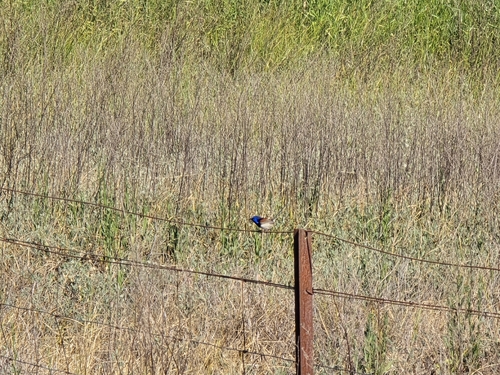 Purple-backed FairywrenMalurus assimilisThe purple-backed fairywren is on average 14.5 cm (5.5 in) long.
Side by side: Superb Fairywren vs Variegated Fairywren · Red-backed Fairywren vs Variegated Fairywren · Splendid Fairywren vs Variegated Fairywren · Purple-backed Fairywren vs Variegated Fairywren
Learn the Variegated Fairywren in the BeakBrain App
Photo and call practice. Coming soon to iPhone and Android.
Play today's Daily BirdEvery photo and recording on this page is credited to its author under the licence shown. Spotted a problem with this page, or have a better photo? Contribute.