Learn what every symbol on the card means.Full credits and sources at beakbrain.com/symbols
 ForestCup nestTiny · 11 g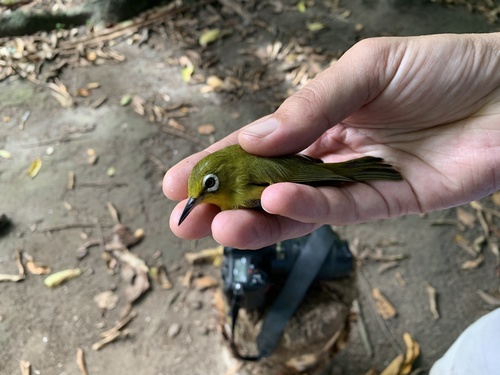
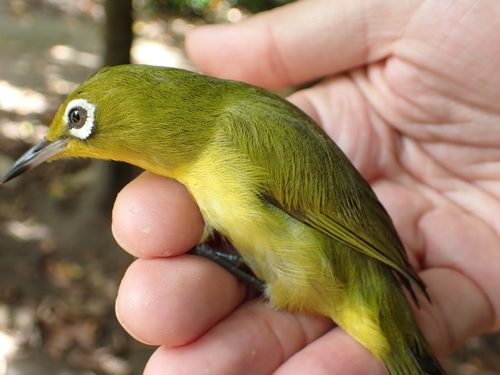
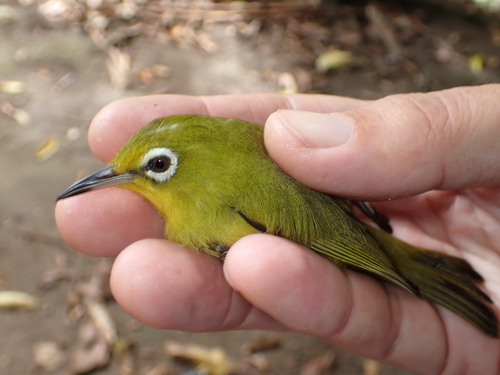

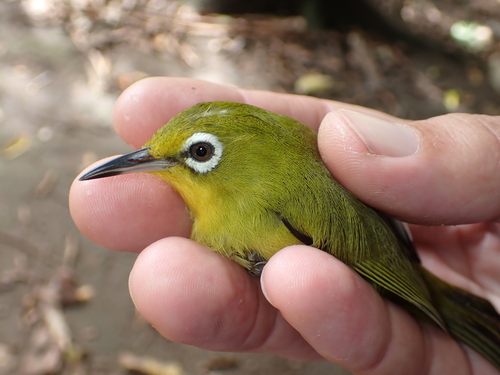
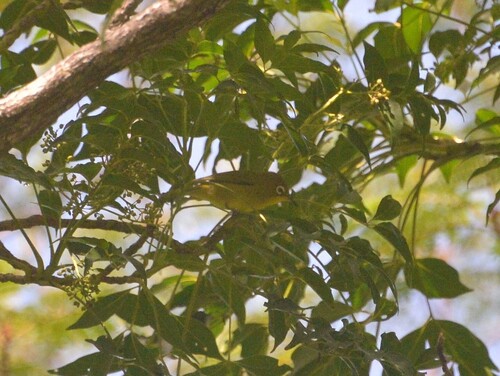
ID tip
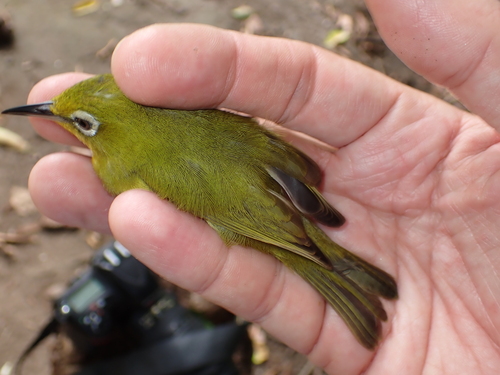
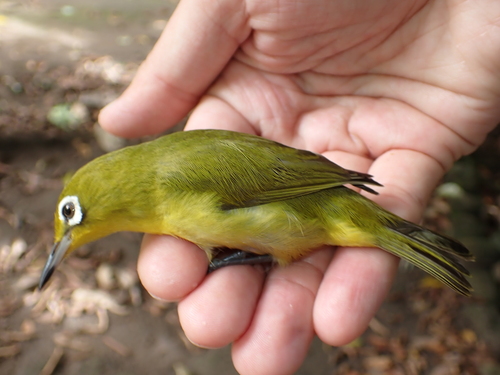
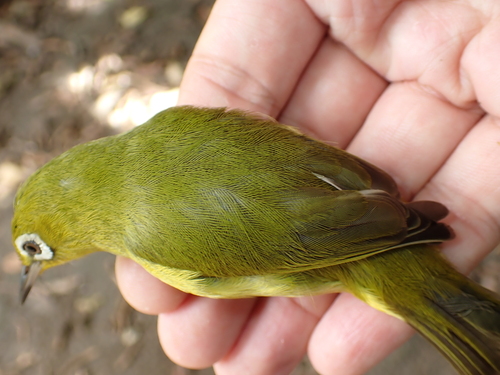
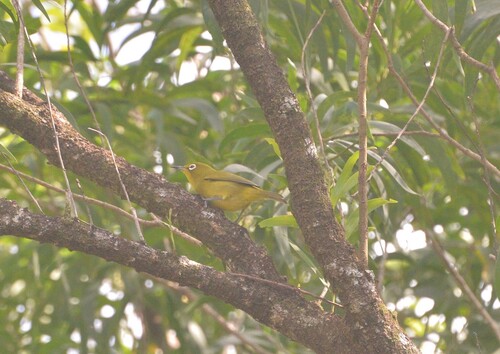
The Vanuatu white-eye is 11–12 cm (4.3–4.7 in) in overall length. The adult male is yellow-green above while the underparts are bright yellow or yellow-green depending on the subspecies. The forehead is yellow and there is a white ring around the eye. The legs and feet are dark grey and the bill is brown above and pinkish below. Female and immature birds are similar to the male but paler. The immatures also have a narrower eye-ring. The contact call is short and high-pitched. The song is a repeated warbling.
Text from Wikipedia, licensed CC BY-SA 4.0.
When to see the Vanuatu White-eye
One bar for each month, and every month is filled: this bird is recorded here in all twelve. The wide bar is October, the month with the most records.
Where to see the Vanuatu White-eye
The map shades 1 country with regular records. Everything unshaded has no records. Countries are listed below the map.
About the Vanuatu White-eye
The Vanuatu white-eye or yellow-fronted white-eye is a small passerine bird belonging to the genus Zosterops in the white-eye family Zosteropidae. It is endemic to Vanuatu, where it is one of the most common birds.
Text adapted from Wikipedia, licensed CC BY-SA 4.0.
Easily confused with
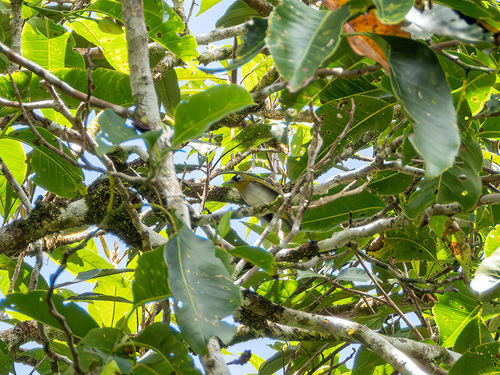 Black-crowned White-eyeZosterops atrifronsThe black-crowned white-eye is a songbird species.
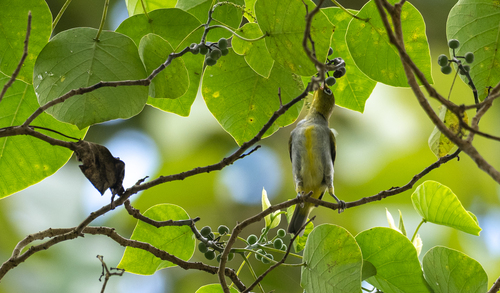 Everett's White-eyeZosterops everettiEverett's white-eye is a bird species in the disputed family Zosteropidae, which might belong with the Old World babblers (Timaliidae).
Learn the Vanuatu White-eye in the BeakBrain App
Photo and call practice. Coming soon to iPhone and Android.
Play today's Daily BirdEvery photo and recording on this page is credited to its author under the licence shown. Spotted a problem with this page, or have a better photo? Contribute.