Learn what every symbol on the card means.Full credits and sources at beakbrain.com/symbols
 ForestPlatform nestLarge · 394 g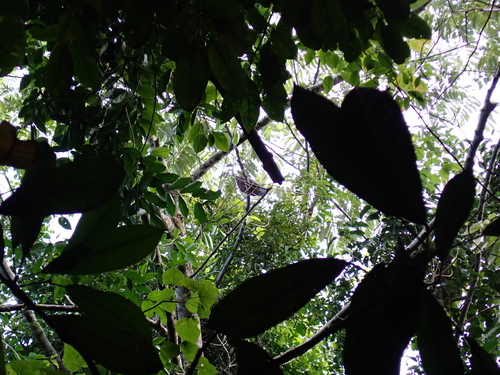


ID tip
The Vanuatu imperial pigeon is about 40 cm (16 in) long. The head and nape are sooty blue-grey, and the neck is dark purplish-maroon. The mantle, back and wing coverts are sooty-grey and have a steely sheen. The underwing coverts are chestnut, and the flight feathers are rufous. The throat is dark grey. The breast is dark purplish-maroon with a slight gloss, and the belly is deep chestnut. The uppertail coverts are black, and the undertail coverts are rufous. The eyes are yellow, the beak is black, and the feet are pinkish-red. The female is a little smaller and duller than the male.
Text from Wikipedia, licensed CC BY-SA 4.0.
When to see the Vanuatu Imperial Pigeon
One bar for each month. Filled bars are the 6 months with records; pale bars are months with none. The wide bar is August, the month with the most records.
Where to see the Vanuatu Imperial Pigeon
The map shades 1 country with regular records. Everything unshaded has no records. Countries are listed below the map.
About the Vanuatu Imperial Pigeon
The Vanuatu imperial pigeon or Baker's imperial pigeon is a species of bird in the family Columbidae. It is endemic to Vanuatu and lives in forests. It is threatened by forest clearing, and although it has a restricted range the International Union for Conservation of Nature (IUCN) has assessed it as a least concern species.
Text adapted from Wikipedia, licensed CC BY-SA 4.0.
Easily confused with
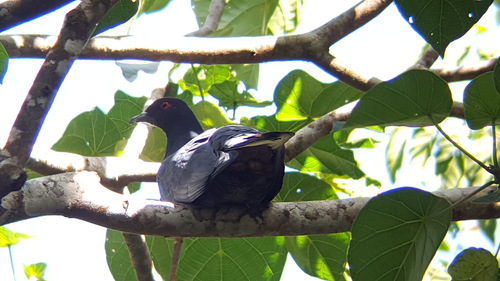 Black Imperial PigeonDucula melanochroaThe black imperial pigeon is a large, heavily built, long-tailed species for its genus, with a length of 38–43 cm (15–17 in) and a weight of 661–665 g (23.3–23.5 oz).
 Spotted Imperial PigeonDucula carolaThe spotted imperial pigeon, also known as the grey-necked imperial pigeon, is a species of bird in the family Columbidae.
Chestnut-bellied Imperial PigeonDucula brenchleyiThe chestnut-bellied imperial pigeon is a species of bird in the family Columbidae.
Spotted Imperial PigeonDucula carolaThe spotted imperial pigeon, also known as the grey-necked imperial pigeon, is a species of bird in the family Columbidae.
Chestnut-bellied Imperial PigeonDucula brenchleyiThe chestnut-bellied imperial pigeon is a species of bird in the family Columbidae.
Learn the Vanuatu Imperial Pigeon in the BeakBrain App
Photo and call practice. Coming soon to iPhone and Android.
Play today's Daily BirdEvery photo and recording on this page is credited to its author under the licence shown. Spotted a problem with this page, or have a better photo? Contribute.