Learn what every symbol on the card means.Full credits and sources at beakbrain.com/symbols
 GrasslandPlatform nestLarge · 1.4 kg


ID tip
This is the largest buzzard and the largest member of the genus Buteo in the world based on total length and wingspan. However, it is roughly equaled in bulk by the North American ferruginous hawk (Buteo regalis), which is also only marginally smaller going on mean standard measurements. The total length of the upland buzzard is 57 to 72 cm (22 to 28 in) and wingspan is 143 to 161 cm (4 ft 8 in to 5 ft 3 in). Body mass is known to range from 950 to 1,400 g (2.09 to 3.09 lb) in males, with three averaging 1,168 g (2.575 lb), and from 970 to 2,050 g (2.14 to 4.
Text from Wikipedia, licensed CC BY-SA 4.0.
When to see the Upland Buzzard
One bar for each month. Filled bars are the 11 months with records; pale bars are months with none. The wide bar is June, the month with the most records.
Where to see the Upland Buzzard
The map shades 12 countries with regular records. Everything unshaded has no records. Countries are listed below the map.
About the Upland Buzzard
The upland buzzard is a species of bird of prey in the family Accipitridae. The largest species of the Buteo genus, this buzzard lives in mountainous grassy and rocky areas in areas of Central Asia, northern South Asia and East Asia from Kazakhstan to Korea. The upland buzzard is migratory but typically covers a short distance apparently to avoid snow cover that may hamper prey capture. This species primarily subsists on small mammals but does not shun alternate prey from small to large birds and insects. This little-known raptor has a large range, and though generally uncommon, it is not thought to be rare or declining as a species.
Text adapted from Wikipedia, licensed CC BY-SA 4.0.
Easily confused with
 Himalayan BuzzardButeo refectusThe Himalayan buzzard is a medium to large bird of prey that is sometimes considered a subspecies of the widespread common buzzard.
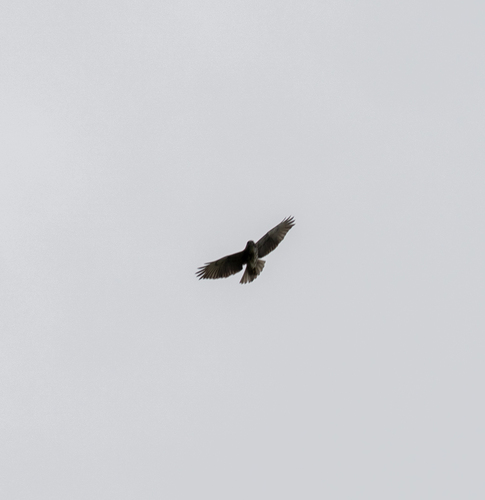 Hawaiian HawkButeo solitariusThe Hawaiian hawk measures approximately 40 to 46 centimetres (16 to 18 in) in length.
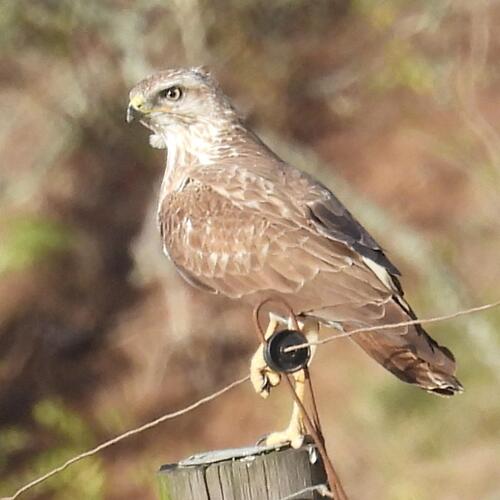 Forest BuzzardButeo trizonatusThe forest buzzard is very similar to the abundant summer migrant steppe buzzard Buteo buteo vulpinus, the head, the back and upperwings are brown, marked out with rufous edges to the feathers the amount of which varies between individuals.
Side by side: Augur Buzzard vs Upland Buzzard · Hawaiian Hawk vs Upland Buzzard · Forest Buzzard vs Upland Buzzard
Learn the Upland Buzzard in the BeakBrain App
Photo and call practice. Coming soon to iPhone and Android.
Play today's Daily BirdEvery photo and recording on this page is credited to its author under the licence shown. Spotted a problem with this page, or have a better photo? Contribute.