Learn what every symbol on the card means.Full credits and sources at beakbrain.com/symbols
 ForestMedium · 84 g
ID tip
The unicolored thrush is 23 to 24 cm (9.1 to 9.4 in) long and weighs about 84 g (3.0 oz). The sexes have the same plumage. Adults have an olive-brown head, upperparts, wings, and tail. Their chin and throat are whitish with dark streaks. Their underparts are a slightly paler olive-brown than their upperparts. They have a dark iris, a brownish yellow bill, and brown legs and feet. Voice: The unicolored thrush appears to be mostly silent in the dry season except perhaps at dawn and dusk, but responds readily to playback. It makes a "mewing" call that is similar to those of the other members of the T. nudigenis complex. Its song is "a series of whistled phrases, similar to that of T. hauxwelli", which see here.
Text from Wikipedia, licensed CC BY-SA 4.0.
When to see the Unicolored Thrush
One bar for each month. Filled bars are the 5 months with records; pale bars are months with none. The wide bar is September, the month with the most records.
Where to see the Unicolored Thrush
The map shades 1 country with regular records. Everything unshaded has no records. Countries are listed below the map.
About the Unicolored Thrush
The unicolored thrush is a Near Threatened species of bird in the family Turdidae. It is endemic to Bolivia.
Text adapted from Wikipedia, licensed CC BY-SA 4.0.
Easily confused with
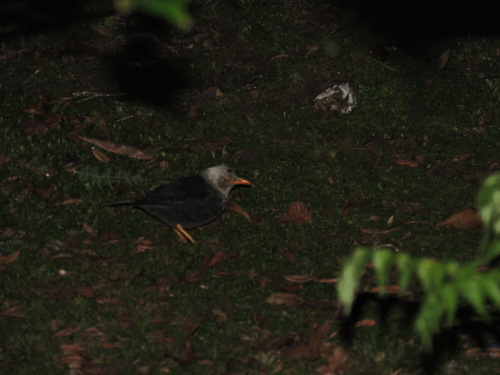 Sula Island ThrushTurdus deningeriThe Moluccan island thrush, also known as the Sula island thrush, is a species of passerine bird in the thrush family Turdidae.
Dagua ThrushTurdus daguaeThe Dagua thrush is 21.5 to 23 cm (8.5 to 9.1 in) long.
Sula Island ThrushTurdus deningeriThe Moluccan island thrush, also known as the Sula island thrush, is a species of passerine bird in the thrush family Turdidae.
Dagua ThrushTurdus daguaeThe Dagua thrush is 21.5 to 23 cm (8.5 to 9.1 in) long.
Learn the Unicolored Thrush in the BeakBrain App
Photo and call practice. Coming soon to iPhone and Android.
Play today's Daily BirdEvery photo and recording on this page is credited to its author under the licence shown. Spotted a problem with this page, or have a better photo? Contribute.