Learn what every symbol on the card means.Full credits and sources at beakbrain.com/symbols
 ForestMedium · 82 g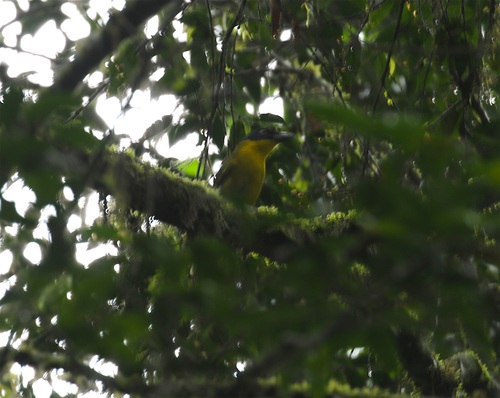

When to see the Uluguru Bushshrike
One bar for each month. Filled bars are the 6 months with records; pale bars are months with none. The wide bar is October, the month with the most records.
Where to see the Uluguru Bushshrike
The map shades 1 country with regular records. Everything unshaded has no records. Countries are listed below the map.
About the Uluguru Bushshrike
The Uluguru bushshrike is a species of rare bird occurring only in the Uluguru Mountains in Morogoro Region of Tanzania. It was discovered in 1926 and was known to be confined to a single site in the Uluguru North Forest Reserve of about 84 km2. However, in March 2007, a team of Wildlife Conservation Society of Tanzania discovered its presence in the Uluguru South Forest Reserve in Morogoro Region. There are an estimated 1200 pairs remaining and the population trend is stable.
Text adapted from Wikipedia, licensed CC BY-SA 4.0.
Easily confused with
 Fiery-breasted BushshrikeMalaconotus cruentusThe fiery-breasted bushshrike is a species of bird in the family Malaconotidae.
Learn the Uluguru Bushshrike in the BeakBrain App
Photo and call practice. Coming soon to iPhone and Android.
Play today's Daily BirdEvery photo and recording on this page is credited to its author under the licence shown. Spotted a problem with this page, or have a better photo? Contribute.