Learn what every symbol on the card means.Full credits and sources at beakbrain.com/symbols
 ForestCavity nestTiny · 8 g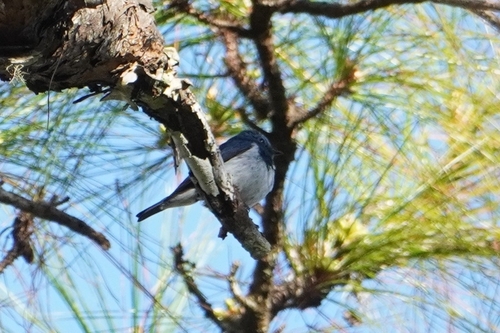
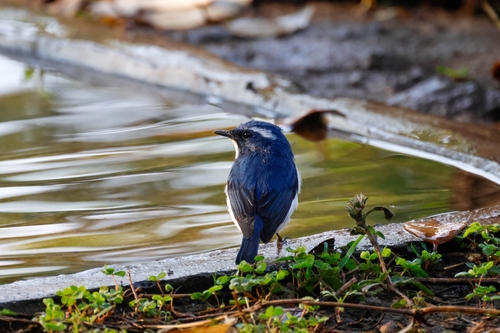
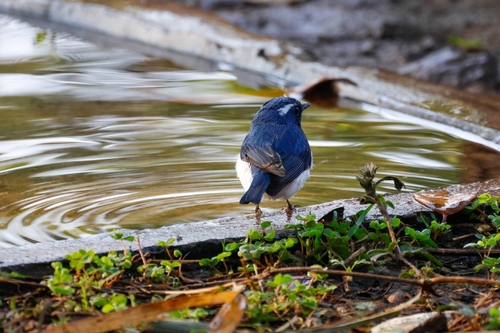


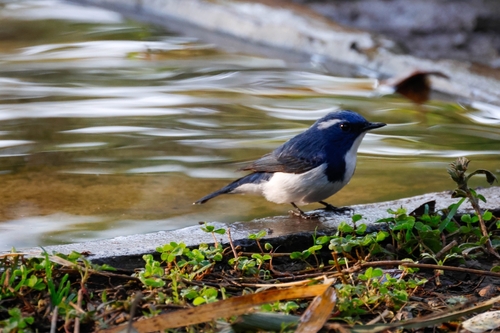
ID tip
Somewhat smaller in size than a sparrow (c. 10 cm) and with a stocky build. The male is deep blue above, sides of head and neck are deep blue, and a prominent white patch runs from centre of throat, through breast to belly. The amount of white on the brow and tail show clinal variation from West to East along the Himalayan foothills, which is sometimes taken to distinguish three subspecies: The western subspecies from the western Himalayas has a distinctive white supercilium and white bases to the outer tail feathers.
Text from Wikipedia, licensed CC BY-SA 4.0.
When to see the Ultramarine Flycatcher
One bar for each month. Filled bars are the 9 months with records; pale bars are months with none. The wide bar is April, the month with the most records.
Where to see the Ultramarine Flycatcher
The map shades 9 countries with regular records. Everything unshaded has no records. Countries are listed below the map.
About the Ultramarine Flycatcher
The ultramarine flycatcher or the white-browed blue flycatcher is a small arboreal Old World flycatcher in the Ficedula genus. Its breeding range extends from eastern Afghanistan to the Hengduan Mountains; it winters in India and northwestern Indochina.
Text adapted from Wikipedia, licensed CC BY-SA 4.0.
Easily confused with
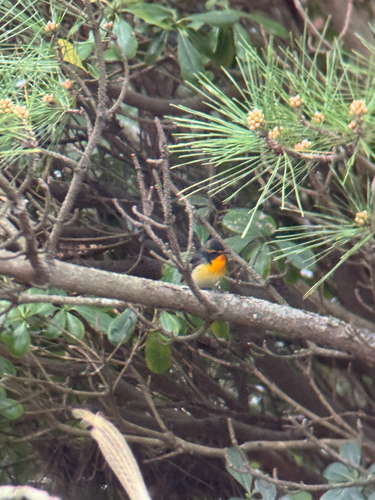 Narcissus FlycatcherFicedula narcissinaThe narcissus flycatcher is a passerine bird in the Old World flycatcher family.
 Rufous-gorgeted FlycatcherFicedula strophiataThe rufous-gorgeted flycatcher is a species of bird in the family Muscicapidae.
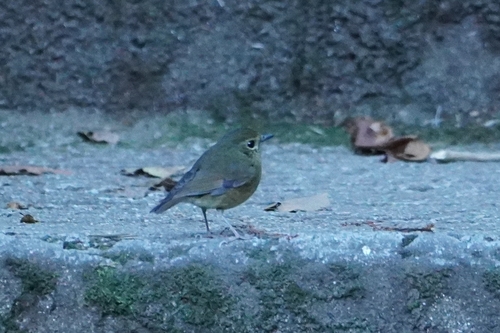 Snowy-browed FlycatcherFicedula hyperythraThe snowy-browed flycatcher is a species of bird in the Old World flycatcher family Muscicapidae.
Learn the Ultramarine Flycatcher in the BeakBrain App
Photo and call practice. Coming soon to iPhone and Android.
Play today's Daily BirdEvery photo and recording on this page is credited to its author under the licence shown. Spotted a problem with this page, or have a better photo? Contribute.