Learn what every symbol on the card means.Full credits and sources at beakbrain.com/symbols
 ForestDomed nestTiny · 7 g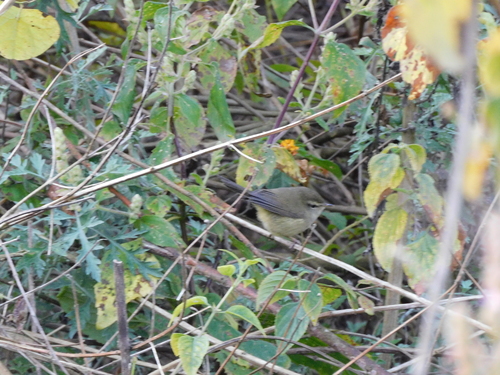
What the Tytler's Leaf Warbler sounds like

ID tip
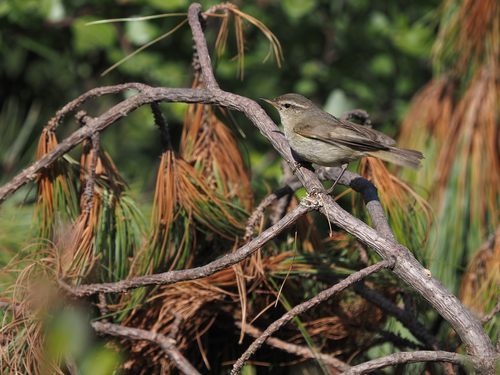
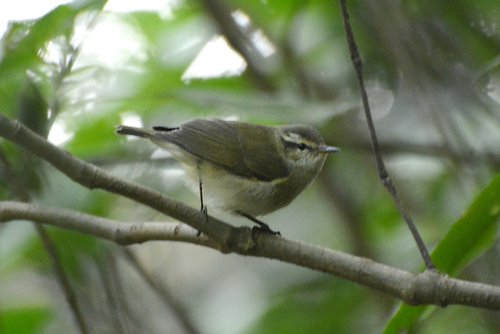
In museum specimens, the thin bill is clear and there is a long exposed nasal groove along the bill. The rictal bristles are short and few and the feathering at the base of the beak is reduced giving a very pointed face profile. The lower mandible is not flesh coloured in tytleri as in most trochiloides and it is not dark black as in Phylloscopus collybita tristis. They do not have any wing bars.
Text from Wikipedia, licensed CC BY-SA 4.0.
When to see the Tytler's Leaf Warbler
One bar for each month. Filled bars are the 7 months with records; pale bars are months with none. The wide bar is February, the month with the most records.
Where to see the Tytler's Leaf Warbler
The map shades 2 countries with regular records. Everything unshaded has no records. Countries are listed below the map.
About the Tytler's Leaf Warbler
Tytler's leaf warbler is a songbird species. Like all leaf warblers, it was formerly placed in the "Old World warbler" assemblage, but now belongs to the new leaf-warbler family Phylloscopidae.
Text adapted from Wikipedia, licensed CC BY-SA 4.0.
Easily confused with
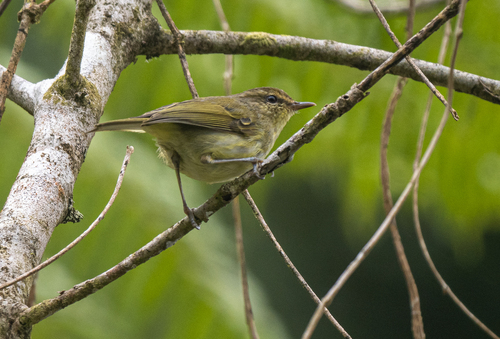 Negros Leaf WarblerPhylloscopus nigrorumThe Negros leaf warbler is a songbird species from the leaf warbler family (Phylloscopidae).
 Sunda WarblerPhylloscopus grammicepsThe Sunda warbler is a species of Old World warbler in the family Phylloscopidae.
 Hartert's Leaf WarblerPhylloscopus goodsoniHartert's leaf warbler is a leaf warbler found only in China.
Learn the Tytler's Leaf Warbler in the BeakBrain App
Photo and call practice. Coming soon to iPhone and Android.
Play today's Daily BirdEvery photo and recording on this page is credited to its author under the licence shown. Spotted a problem with this page, or have a better photo? Contribute.