Learn what every symbol on the card means.Full credits and sources at beakbrain.com/symbols
 ForestCup nestMedium · 104 g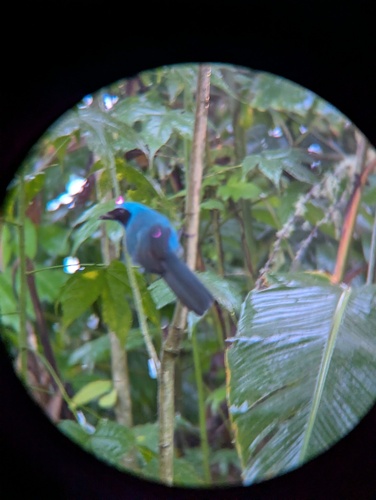


What the Turquoise Jay sounds like


ID tip
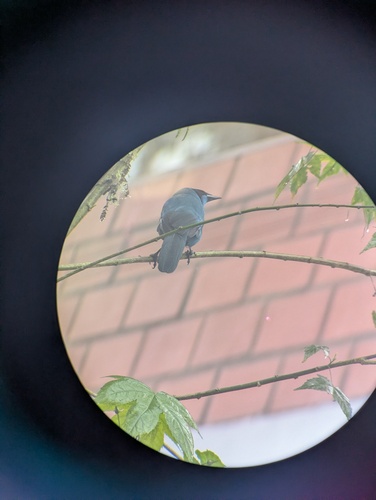
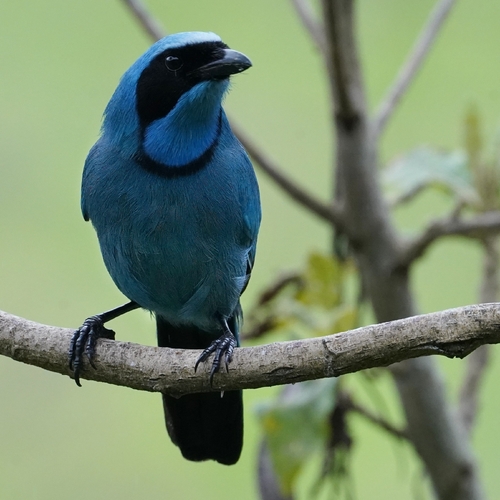
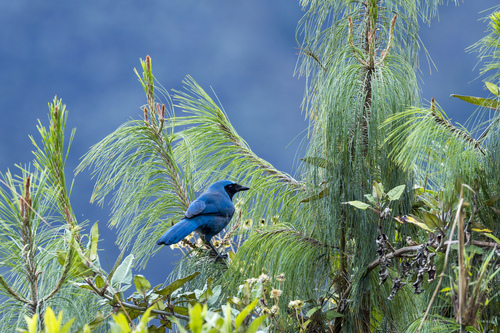
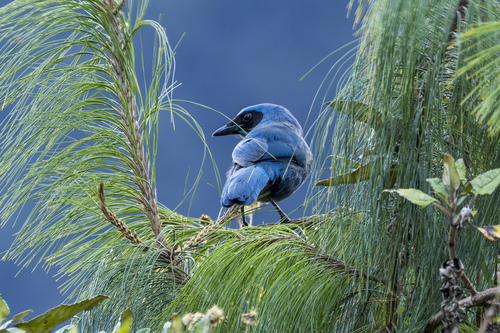
There exists no sexual dimorphism within the species. Adult turquoise jays are mainly a vibrant, blue-green color that can change depending on the lighting. The underside of the wings and tail are black. The turquoise jay has a thick, black face mask that extends to the auriculars and connects to a thin, black collar the wraps around the throat but does not extend around the nape of the neck. The forecrown of the turquoise jay is very light and almost white in color. The iris of the bird is brown while the legs, feet, and bill are all black.
Text from Wikipedia, licensed CC BY-SA 4.0.
When to see the Turquoise Jay
One bar for each month, and every month is filled: this bird is recorded here in all twelve. The wide bar is November, the month with the most records.
Where to see the Turquoise Jay
The map shades 2 countries with regular records, and 1 more in a lighter tone where the bird turns up only as a stray. Everything unshaded has no records. Countries are listed below the map.
Recorded as a rare visitor in Colombia.
About the Turquoise Jay
The turquoise jay is a species of bird in the family Corvidae.
Text adapted from Wikipedia, licensed CC BY-SA 4.0.
Easily confused with
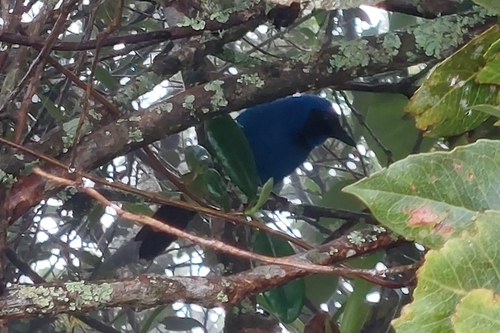 Black-collared JayCyanolyca armillataThe black-collared jay is 30 to 32 cm (12 to 13 in) long and weighs about 100 g (3.5 oz).
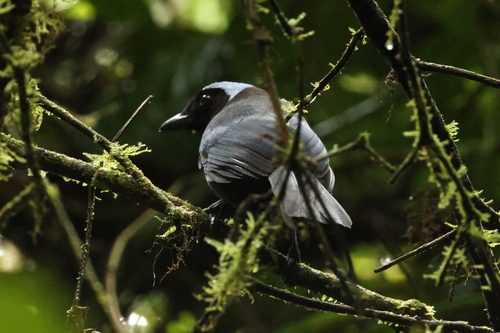 Azure-hooded JayCyanolyca cucullataThe azure-hooded jay ranges in length from 11 to 12 inches (28 to 30 cm), and it tends to weigh 3.52 ounces (100 g).
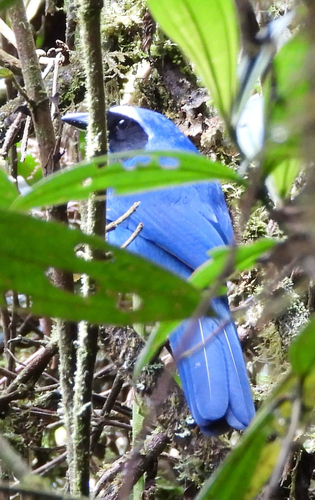 White-collared JayCyanolyca viridicyanusThe white-collared jay is 30 to 34 cm (12 to 13 in) long and weighs 82 to 127 g (2.9 to 4.5 oz).
Side by side: Black-collared Jay vs Turquoise Jay · Azure-hooded Jay vs Turquoise Jay · Turquoise Jay vs White-collared Jay
Learn the Turquoise Jay in the BeakBrain App
Photo and call practice. Coming soon to iPhone and Android.
Play today's Daily BirdEvery photo and recording on this page is credited to its author under the licence shown. Spotted a problem with this page, or have a better photo? Contribute.