Learn what every symbol on the card means.Full credits and sources at beakbrain.com/symbols
 RockyCavity nestMedium · 123 g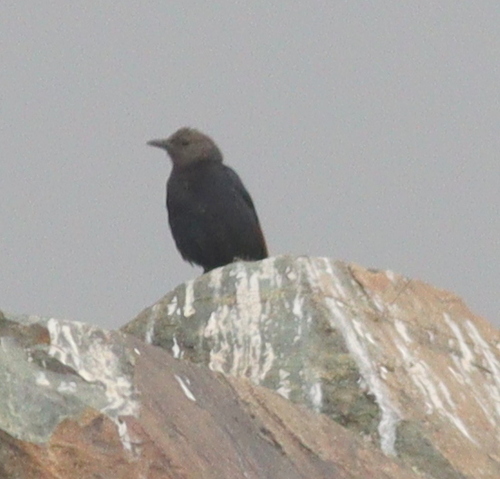
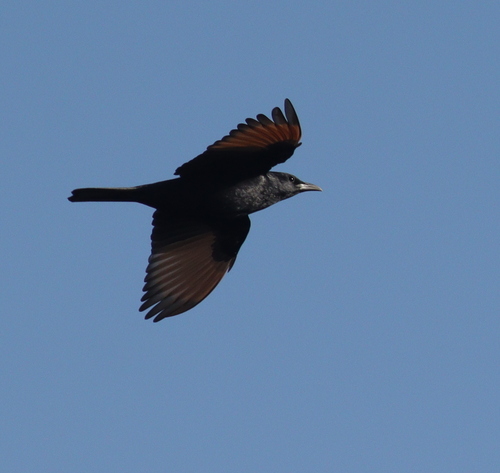
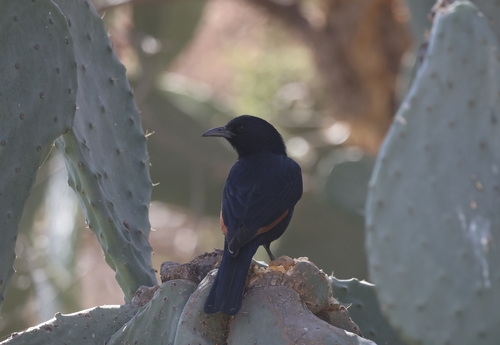
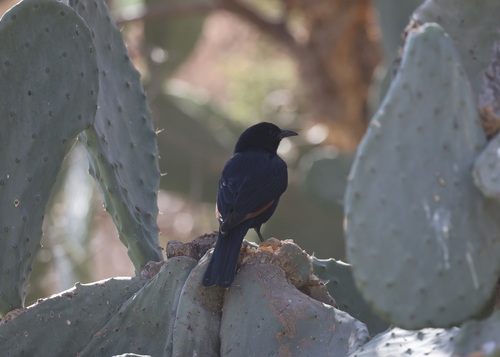


ID tip
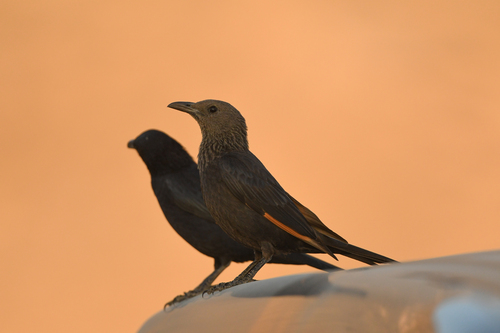
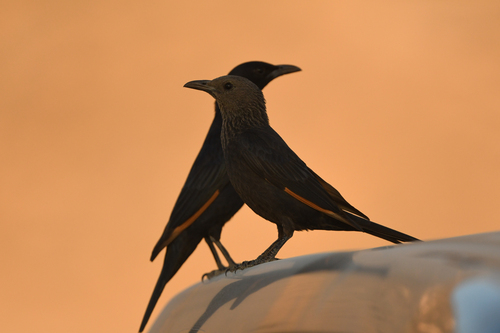
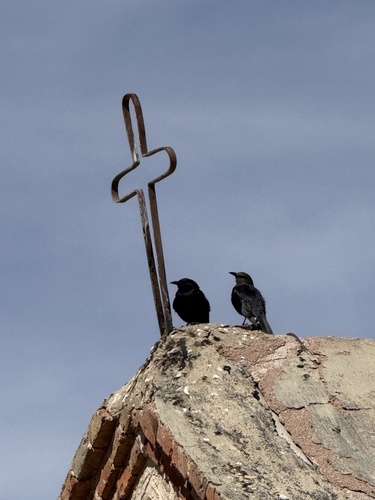
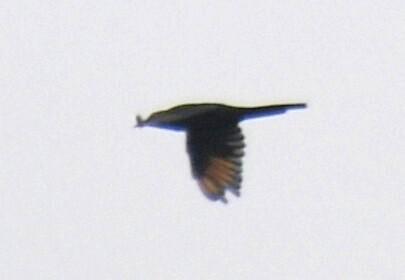
Tristram's starling is 25 cm long (including a 9 cm tail), with a wingspan of 44–45 cm, and a weight of 100–140 g. The males have glossy iridescent black plumage with orange patches on the outer wing, which are particularly noticeable in flight. The bill and legs are black. Females and young birds are similar but duller and with a greyish head, lacking the plumage gloss.
Text from Wikipedia, licensed CC BY-SA 4.0.
When to see the Tristram's Starling
One bar for each month. Filled bars are the 11 months with records; pale bars are months with none. The wide bar is March, the month with the most records.
Where to see the Tristram's Starling
The map shades 7 countries with regular records, and 1 more in a lighter tone where the bird turns up only as a stray. Everything unshaded has no records. Countries are listed below the map.
Recorded as a rare visitor in Tunisia.
About the Tristram's Starling
Tristram's starling, also known as Dead Sea starling or Tristram's grackle, is a species of starling native to the Middle East. It is the only member of the genus Onychognathus found mainly outside of Africa. The species is named after Reverend Henry Baker Tristram, who collected natural history specimens.
Text adapted from Wikipedia, licensed CC BY-SA 4.0.
Easily confused with
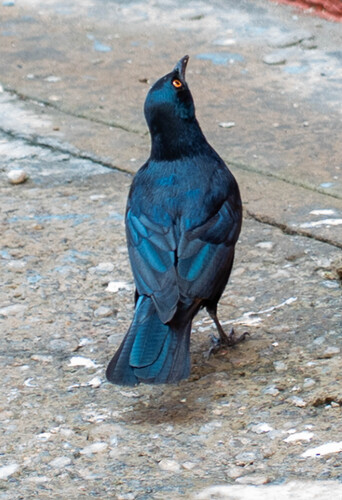 Pale-winged StarlingOnychognathus nabouroupThe pale-winged starling is a species of starling in the family Sturnidae.
 Waller's StarlingOnychognathus walleriWaller's starling is a species of starling in the family Sturnidae.
 Chestnut-winged StarlingOnychognathus fulgidusThe chestnut-winged starling is a species of starling in the family Sturnidae.
Side by side: Red-winged Starling vs Tristram's Starling
Learn the Tristram's Starling in the BeakBrain App
Photo and call practice. Coming soon to iPhone and Android.
Play today's Daily BirdEvery photo and recording on this page is credited to its author under the licence shown. Spotted a problem with this page, or have a better photo? Contribute.