Learn what every symbol on the card means.Full credits and sources at beakbrain.com/symbols
 ForestCup nestMedium · 163 g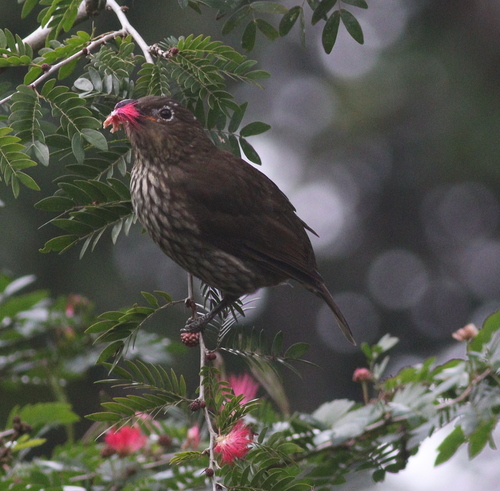
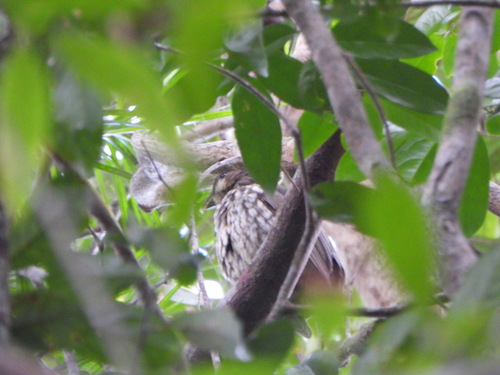
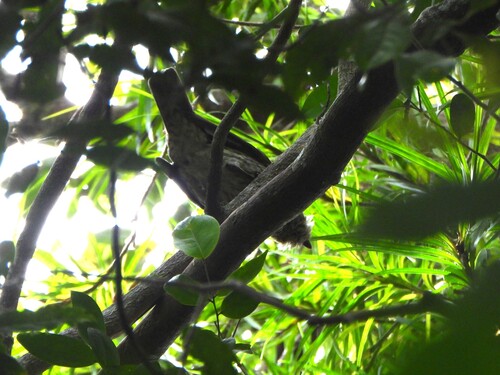
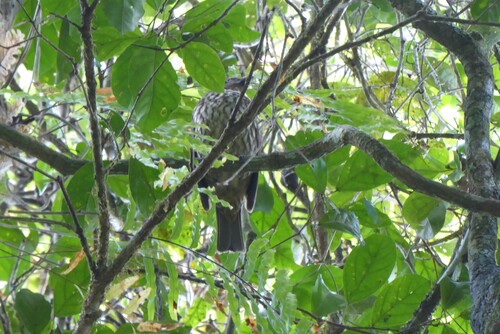
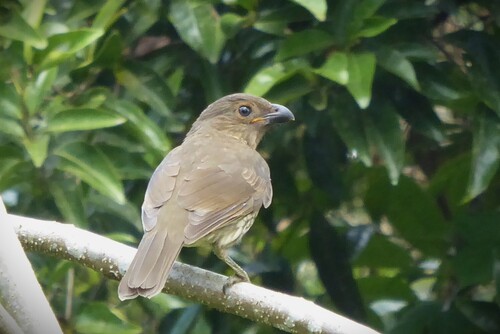
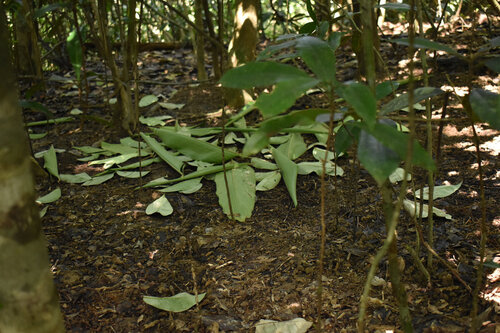
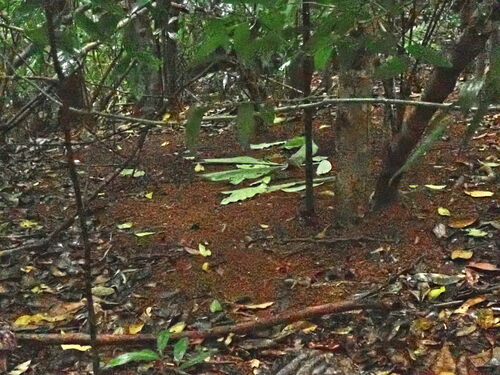
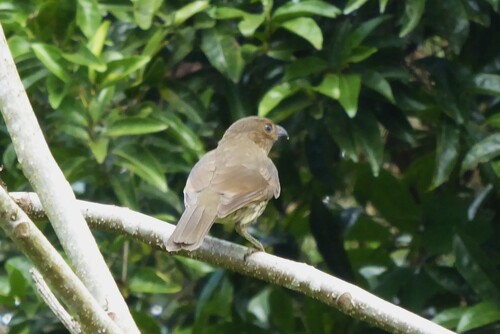
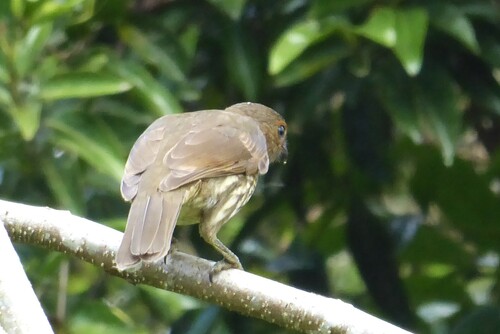
ID tip
The tooth-billed bowerbird is a medium-sized (approximately 27 centimetres (11 in) long) bowerbird. It is a stocky olive-brown bird with brown-streaked buffish white underparts, grey feet, a brown iris and a distinctive serrated bill. The sexes are similar, but the female is slightly smaller than the male.
Text from Wikipedia, licensed CC BY-SA 4.0.
When to see the Tooth-billed Bowerbird
One bar for each month. Filled bars are the 8 months with records; pale bars are months with none. The wide bar is October, the month with the most records.
Where to see the Tooth-billed Bowerbird
The map shades 1 country with regular records. Everything unshaded has no records. Countries are listed below the map.
About the Tooth-billed Bowerbird
The tooth-billed bowerbird, also known as the stagemaker bowerbird or tooth-billed catbird, is a species of passerine bird in the bowerbird family Ptilonorhynchidae. It is the only species placed in the genus Scenopoeetes. It is found in the Cape York Peninsula and northeast Queensland of northeast Australia.
Text adapted from Wikipedia, licensed CC BY-SA 4.0.
Easily confused with
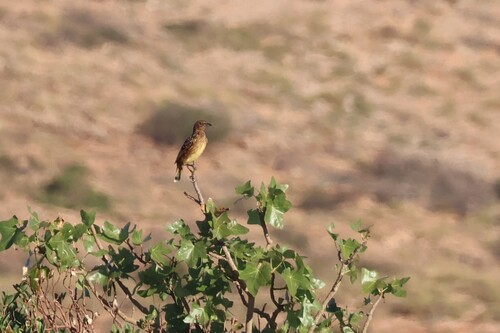 Western BowerbirdChlamydera guttataThe western bowerbird is smaller than the other bowerbird it shares its range with, the great bowerbird.
 Fawn-breasted BowerbirdChlamydera cerviniventrisThe fawn-breasted bowerbird is a medium-sized, up to 32 cm (13 in) long, bowerbird with a greyish brown spotted white plumage, a black bill, dark brown iris, yellow mouth and an orange buff below.
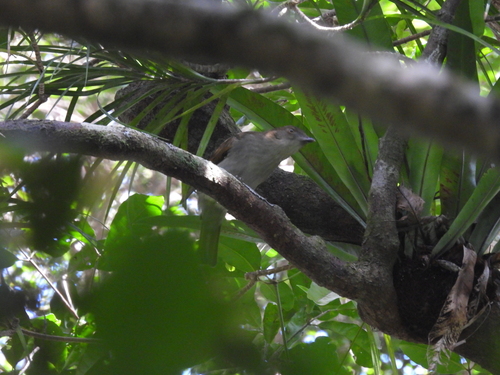 Golden BowerbirdPrionodura newtonianaThe male golden bowerbird has a brown head and brown wings which are bright yellow-gold underneath, as are the tail, crest and nape.
Side by side: Tooth-billed Bowerbird vs Western Bowerbird
Learn the Tooth-billed Bowerbird in the BeakBrain App
Photo and call practice. Coming soon to iPhone and Android.
Play today's Daily BirdEvery photo and recording on this page is credited to its author under the licence shown. Spotted a problem with this page, or have a better photo? Contribute.