Learn what every symbol on the card means.Full credits and sources at beakbrain.com/symbols
 WoodlandCup nestSmall · 30 g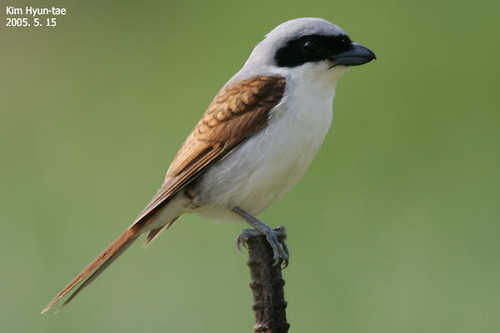


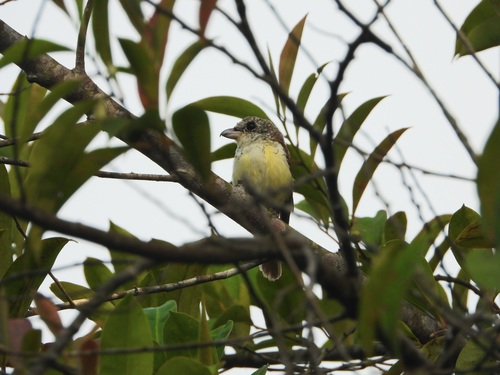
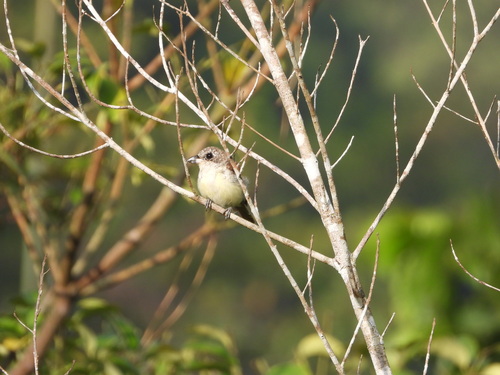
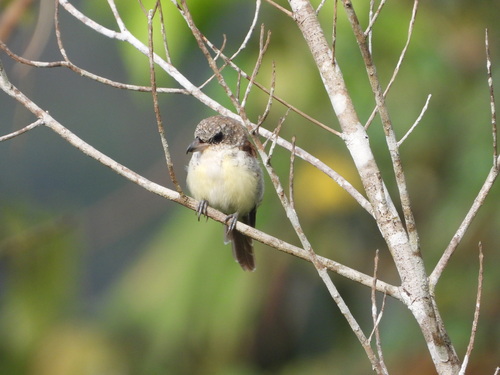
ID tip
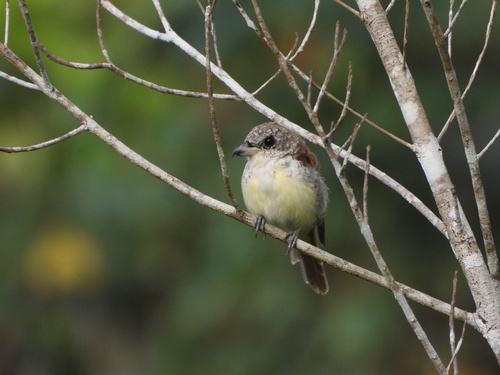
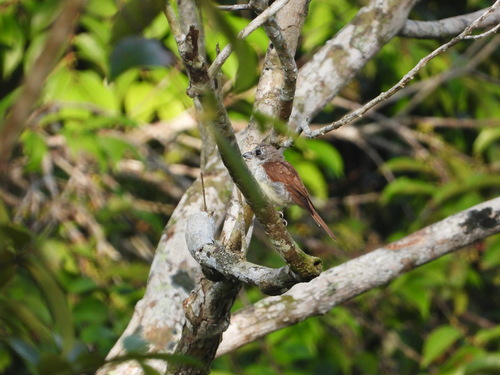
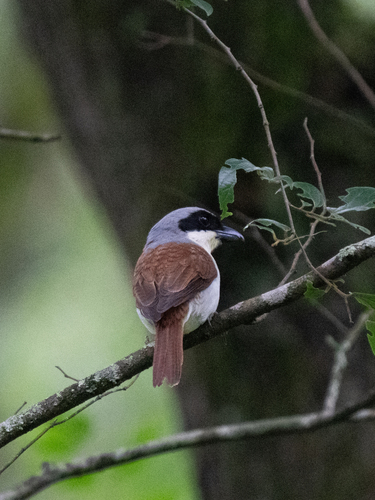
It is a fairly small, stocky shrike, 17–19 cm long. Males weigh 27-29 grams and have a wing length of 77.8-83.9 mm, a tail length of 66.9-75.0 mm and a bill length of 14.1-15.9 mm. Females weigh 29-37 grams and have a wing length of 79.5-85.3 mm, a tail length of 66.3-79.1 mm and a bill length of 14.8-16.7 mm. The thick bill is blue-black with a black tip and the legs are grey-black. The adult male's back, rump and shoulders are reddish-brown with blackish bars creating a tiger-like pattern. It has a black forehead and mask and grey crown and nape. Voice: Its song is a musical warbling. It has a variety of harsh calls including a loud, repeated territorial call, a chattering alarm call and a softer trilling call. It often calls from within cover but territorial males call from a prominent perch.
Text from Wikipedia, licensed CC BY-SA 4.0.
When to see the Tiger Shrike
One bar for each month. Filled bars are the 10 months with records; pale bars are months with none. The wide bar is September, the month with the most records.
Where to see the Tiger Shrike
The map shades 14 countries with regular records, and 5 more in a lighter tone where the bird turns up only as a stray. Everything unshaded has no records. Countries are listed below the map.
Recorded as a rare visitor in Japan, Australia, Myanmar (Burma), Russia, North Korea.
About the Tiger Shrike
The tiger shrike or thick-billed shrike is a small passerine bird which belongs to the genus Lanius in the shrike family, Laniidae. It is found in wooded habitats across eastern Asia. It is a shy, often solitary bird which is less conspicuous than most other shrikes. Like other shrikes it is predatory, feeding on small animals. Its nest is built in a tree and three to six eggs are laid.
Text adapted from Wikipedia, licensed CC BY-SA 4.0.
Easily confused with
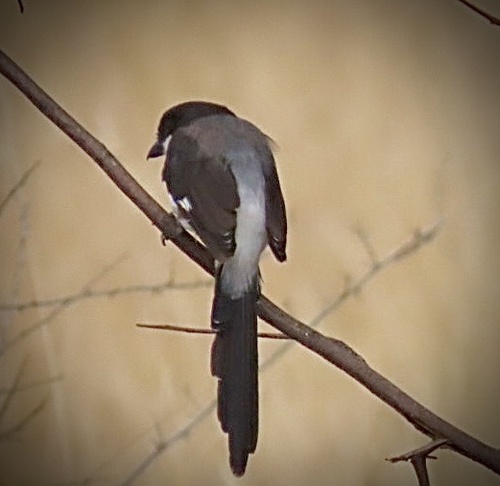 Long-tailed FiscalLanius cabanisiLike many shrike species the appearance of the adults is similar between the sexes but strikingly different in juvenile birds.
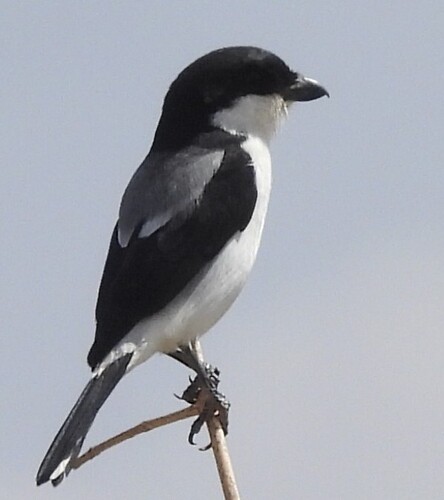 Taita FiscalLanius dorsalisThis is a fairly distinctive 21 cm (8.3 in)-long passerine with white underparts and a black crown, hindneck and wings.
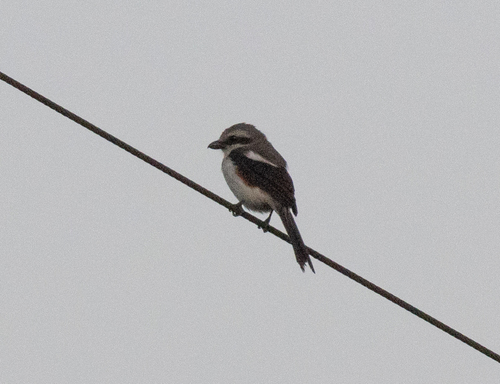 Mackinnon's ShrikeLanius mackinnoniMackinnon's shrike grows to a length of about 20 cm (8 in).
Side by side: Tiger Shrike vs Yellow-billed Shrike · Long-tailed Fiscal vs Tiger Shrike · Taita Fiscal vs Tiger Shrike · Mackinnon's Shrike vs Tiger Shrike
Learn the Tiger Shrike in the BeakBrain App
Photo and call practice. Coming soon to iPhone and Android.
Play today's Daily BirdEvery photo and recording on this page is credited to its author under the licence shown. Spotted a problem with this page, or have a better photo? Contribute.