Learn what every symbol on the card means.Full credits and sources at beakbrain.com/symbols



ID tip
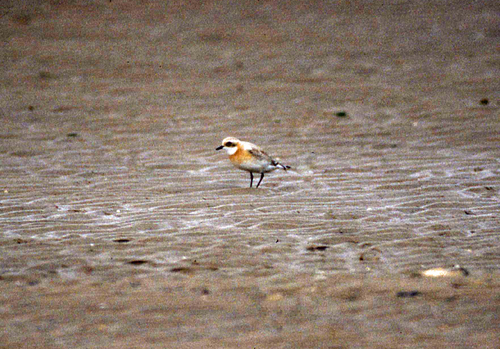
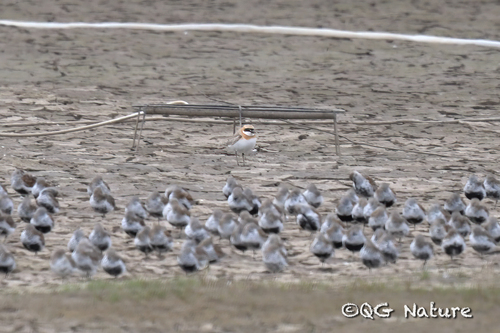
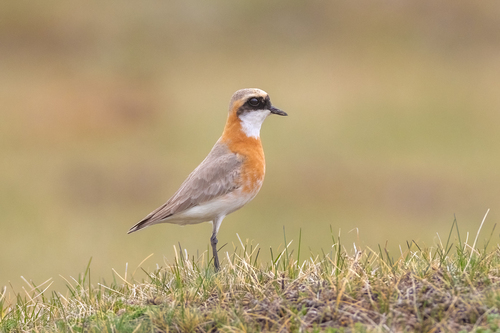
It is a medium-sized plover with a pale throat, brown back and white underparts. Adults in summer plumage have a black mask and a light orange chest and neck; males are on average paler than females. Adults in winter plumage and juveniles have light brown upperparts and white underparts, with varying amounts of white on the forehead and back.
Text from Wikipedia, licensed CC BY-SA 4.0.
About the Tibetan Sand Plover
The Tibetan sand plover is a small wader in the plover family of birds, breeds in Pamir Mountains, Tian Shan, Tibetan Plateau and south Mongolia, winters in east and south Africa, south, east and southeast Asia.
Text adapted from Wikipedia, licensed CC BY-SA 4.0.
Easily confused with
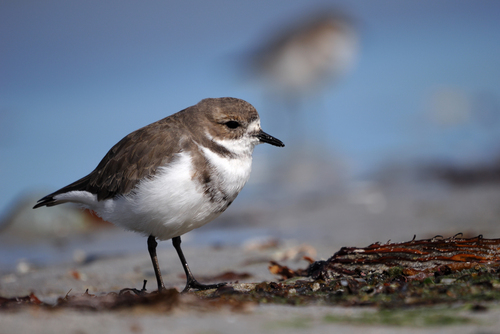 Two-banded PloverAnarhynchus falklandicusThe two-banded plover is 17 to 19 cm (6.7 to 7.5 in) long and weighs 62 to 72 g (2.2 to 2.5 oz).
 White-fronted PloverAnarhynchus marginatusThe average white-fronted plover weighs approximately 45-50 g, and the two sexes differ slightly in plumage coloration.
 Malaysian PloverAnarhynchus peroniiThe Malaysian plover is 15 cm (5.9 in) in length.
Side by side: Tibetan Sand Plover vs Two-banded Plover · Tibetan Sand Plover vs White-fronted Plover · Malaysian Plover vs Tibetan Sand Plover
Learn the Tibetan Sand Plover in the BeakBrain App
Photo and call practice. Coming soon to iPhone and Android.
Play today's Daily BirdEvery photo and recording on this page is credited to its author under the licence shown. Spotted a problem with this page, or have a better photo? Contribute.