Learn what every symbol on the card means.Full credits and sources at beakbrain.com/symbols
 GrasslandDomed nestSmall · 23 g

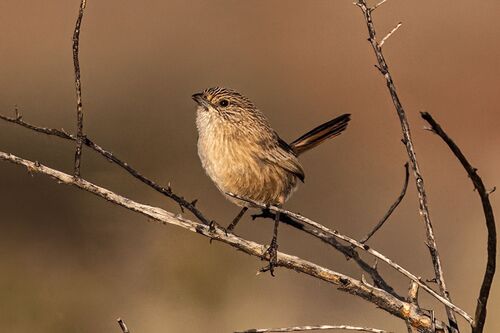
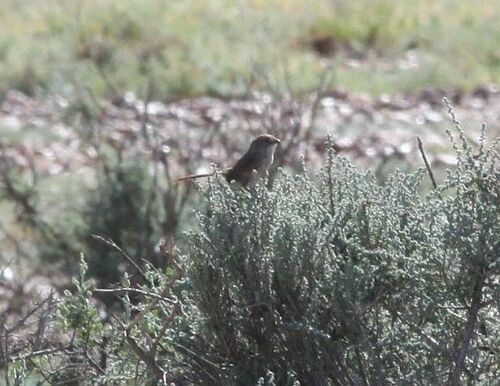
ID tip
The thick-billed grasswren has dull brown underparts, a long dark-brown tail and noticeable white streaking on the head. It has white streaks continuing down the neck, throat and down to the rump. The white streaks across the chin to the forehead and along the wings and rump, contrast with the red-brown to grey colours of the feathers. Males have distinguishably longer tails. Females also have chestnut flanks. Vocals are a combination of short high-pitched song, repeated. They have a soft, high-pitched call that is often inaudible to human ears.
Text from Wikipedia, licensed CC BY-SA 4.0.
When to see the Thick-billed Grasswren
One bar for each month. Filled bars are the 8 months with records; pale bars are months with none. The wide bar is September, the month with the most records.
Where to see the Thick-billed Grasswren
The map shades 1 country with regular records. Everything unshaded has no records. Countries are listed below the map.
About the Thick-billed Grasswren
The thick-billed grasswren is a species of bird in the family Maluridae. It is endemic to Australia. Its natural habitat is Mediterranean-type shrubby vegetation.
Text adapted from Wikipedia, licensed CC BY-SA 4.0.
Easily confused with
 White-throated GrasswrenAmytornis woodwardiThe white-throated grasswren is the largest member of the Australian grasswrens (Amytornis spp.), with a wing length of 70–80 mm.
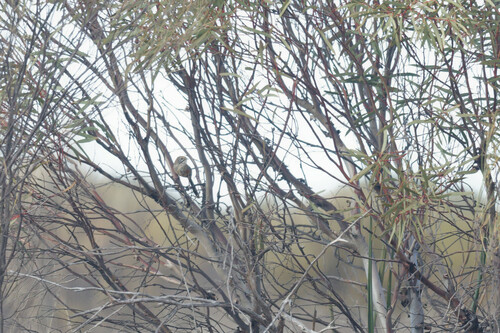 Sandhill GrasswrenAmytornis oweniThe sandhill grasswren is an insectivorous bird in the Australasian wren family Maluridae.
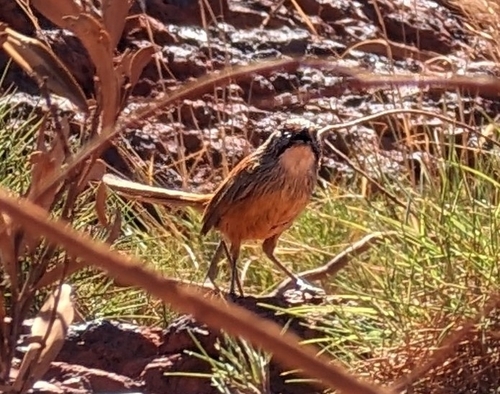 Pilbara GrasswrenAmytornis whiteiThe Pilbara grasswren, also known as the rufous grasswren, is an insectivorous bird in the Australasian wren family Maluridae.
Learn the Thick-billed Grasswren in the BeakBrain App
Photo and call practice. Coming soon to iPhone and Android.
Play today's Daily BirdEvery photo and recording on this page is credited to its author under the licence shown. Spotted a problem with this page, or have a better photo? Contribute.