Learn what every symbol on the card means.Full credits and sources at beakbrain.com/symbols
 ForestPlatform nestMedium · 86 g
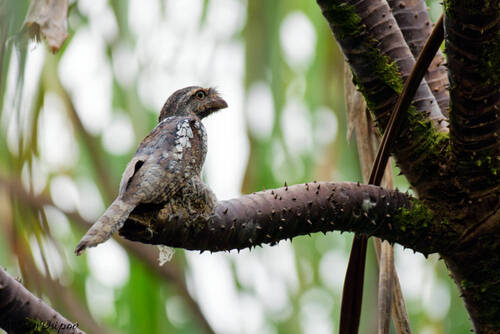
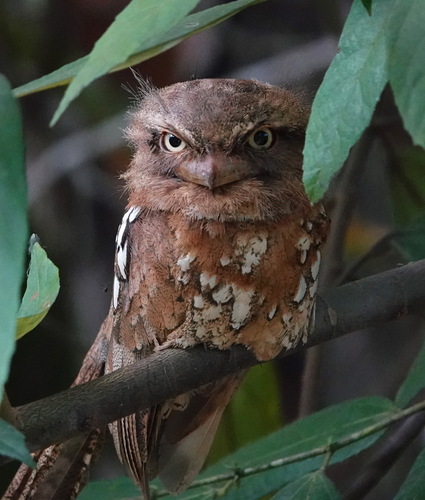
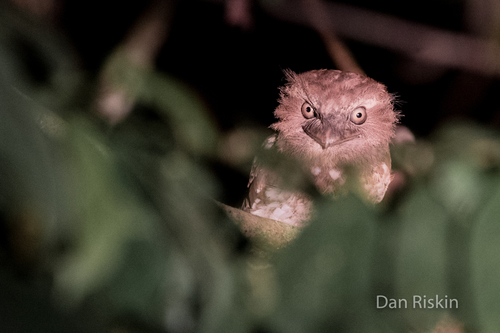
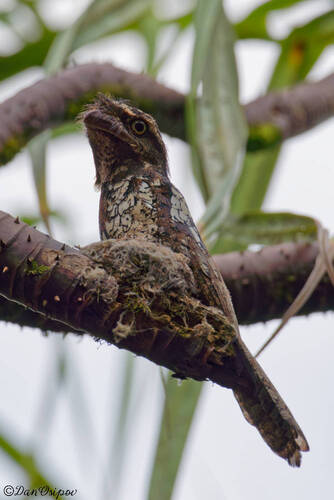
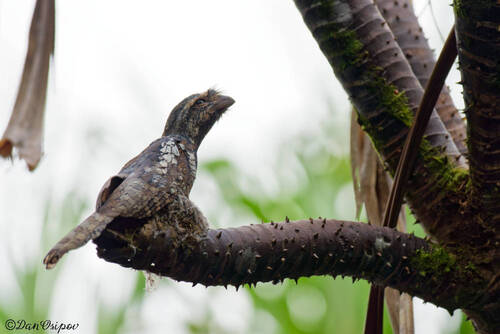
ID tip
The young Sunda frogmouth is covered in down. There are two successive downy plumages, which characterizes more primitive birds. The first down is much shorter than the second down. The second down occurs on the 7th day and the juvenile plumage comes in around 3 to 4 weeks. This plumage is a softer and looser texture with more pointed primary feathers. Within a few weeks of fledging, the first adult plumage comes in. The frogmouth has one moult per year. The Sunda frogmouth has a round tail with a centrifugal moult, meaning it moults from the inside out. Voice: The analysis of sonograms is the best way to identify frogmouth species. The calls make a "gwaa" noise. The females will make the main territorial call. The other main vocalization from frogmouths is hissing during defence behavior.
Text from Wikipedia, licensed CC BY-SA 4.0.
When to see the Sunda Frogmouth
One bar for each month. Filled bars are the 9 months with records; pale bars are months with none. The wide bar is July, the month with the most records.
Where to see the Sunda Frogmouth
The map shades 2 countries with regular records, and 1 more in a lighter tone where the bird turns up only as a stray. Everything unshaded has no records. Countries are listed below the map.
Recorded as a rare visitor in Brunei.
About the Sunda Frogmouth
The Sunda frogmouth is a medium-sized, old world species of bird within the order Podargiformes. It is also uncommonly referred to as the long-tailed frogmouth or the horned frogmouth. The term "Sunda" is based on the geographical range of the species to regions around the Sunda islands. The genus name, Batrachostomus, is a Greek translation to 'frogmouth', which comes from the wide shape of the bill and slight gape. The species name cornutus is a Latin word translated to "having horns", referring to the tufts of feathers on the head.
Text adapted from Wikipedia, licensed CC BY-SA 4.0.
Easily confused with
 Javan FrogmouthBatrachostomus javensisThe species grows to a length of about 22 cm (9 in).
 Palawan FrogmouthBatrachostomus chaseniThe Palawan frogmouth is a species of bird in the family Podargidae.
Sumatran FrogmouthBatrachostomus poliolophusB. poliolophus has a large, arched bill with a light-brown to straw-yellow color.
Palawan FrogmouthBatrachostomus chaseniThe Palawan frogmouth is a species of bird in the family Podargidae.
Sumatran FrogmouthBatrachostomus poliolophusB. poliolophus has a large, arched bill with a light-brown to straw-yellow color.
Learn the Sunda Frogmouth in the BeakBrain App
Photo and call practice. Coming soon to iPhone and Android.
Play today's Daily BirdEvery photo and recording on this page is credited to its author under the licence shown. Spotted a problem with this page, or have a better photo? Contribute.