Learn what every symbol on the card means.Full credits and sources at beakbrain.com/symbols
 WoodlandPlatform nestMedium · 153 g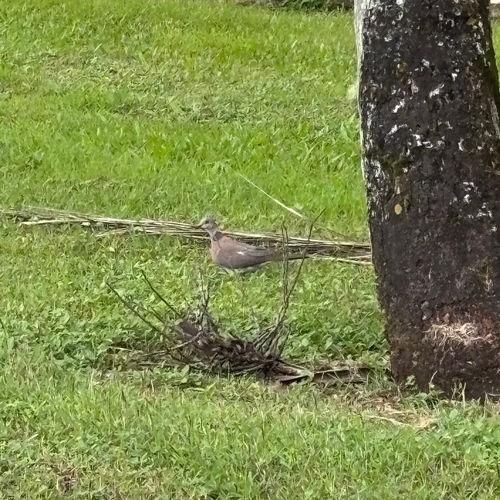
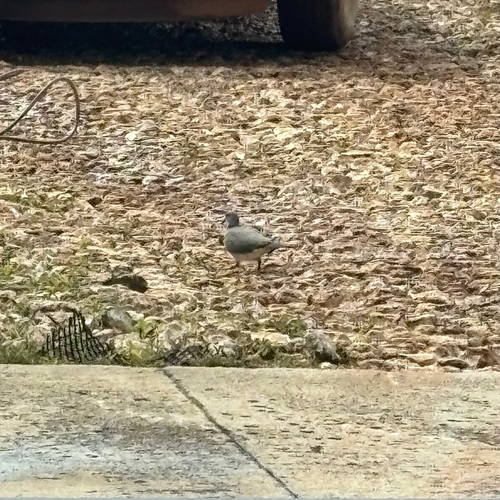
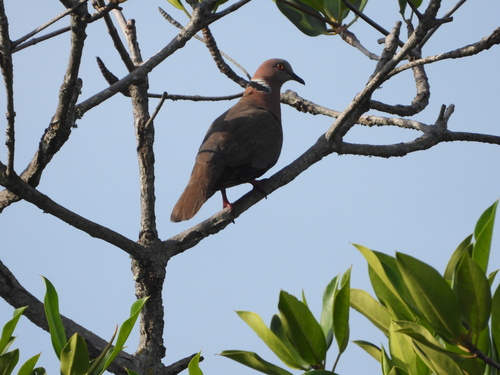
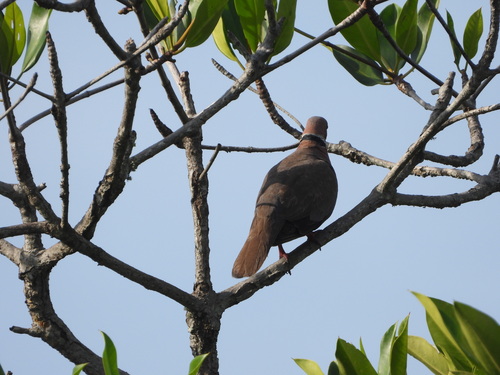


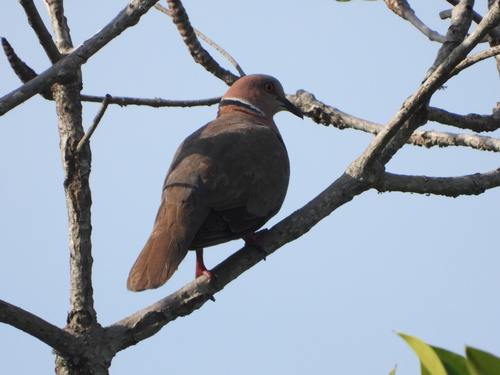
ID tip
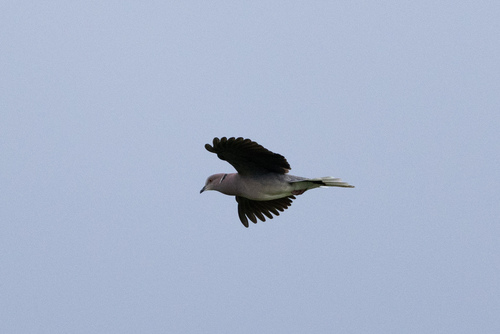
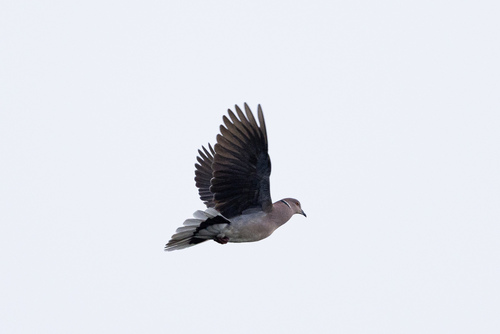
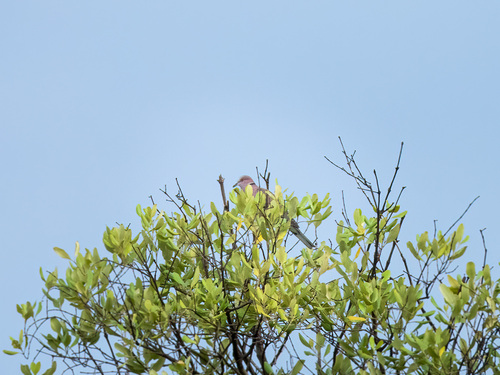
The Sunda collared dove is a small to medium-sized bird which has a light, rosy hue around the neck and chest area, fading into the underside of the bird which consists of a light caramel color, into a shade of cream at the base (start) of the tail. The start of the wings have a light grey tone, protruding to a steely grey hue near the end of the wing, all the way to the tip of the tail. The tail feathers under the bird are 'eggshell' white in colour. The birds tail consists of few layers from creamy colored to an ashen grey. The eye is quite rounded like that of most pigeons and doves.
Text from Wikipedia, licensed CC BY-SA 4.0.
When to see the Sunda Collared Dove
One bar for each month, and every month is filled: this bird is recorded here in all twelve. The wide bar is December, the month with the most records.
Where to see the Sunda Collared Dove
The map shades 4 countries with regular records. Everything unshaded has no records. Countries are listed below the map.
About the Sunda Collared Dove
The Sunda collared dove, sometimes referred to as the island collared dove, Javanese turtle dove, Javanese collared dove, or Indonesian collared dove, is a species of bird in the family Columbidae. Sometimes confused with the Eurasian collared dove which is very similar in appearance, the Sunda collared dove is a small to medium-sized bird, native to the tropical and subtropical islands of Indonesia.
Text adapted from Wikipedia, licensed CC BY-SA 4.0.
Easily confused with
 Adamawa Turtle DoveStreptopelia hypopyrrhaThe Adamawa turtle dove is a species of bird in the pigeon and dove family Columbidae.
 Dusky Turtle DoveStreptopelia lugensThe dusky turtle dove is a very dark or slaty gray dove, generally 28–30 centimeters long and 120–205 grams.
 Burmese Collared DoveStreptopelia xanthocyclaThe Burmese collared dove is a species of bird in the family Columbidae.
Side by side: Sunda Collared Dove vs Vinaceous Dove · Dusky Turtle Dove vs Sunda Collared Dove
Learn the Sunda Collared Dove in the BeakBrain App
Photo and call practice. Coming soon to iPhone and Android.
Play today's Daily BirdEvery photo and recording on this page is credited to its author under the licence shown. Spotted a problem with this page, or have a better photo? Contribute.