Learn what every symbol on the card means.Full credits and sources at beakbrain.com/symbols
 ForestCavity nestMedium · 67 g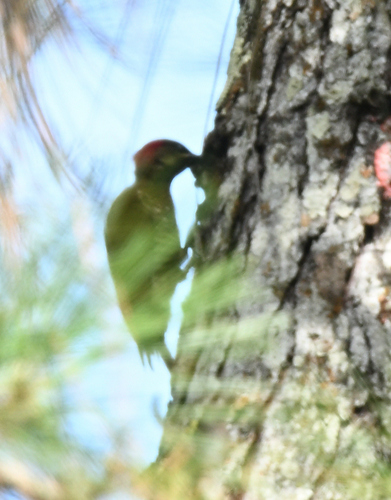
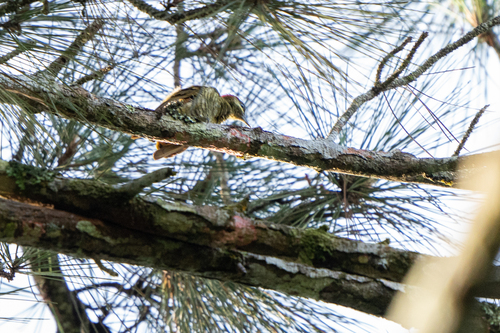

ID tip
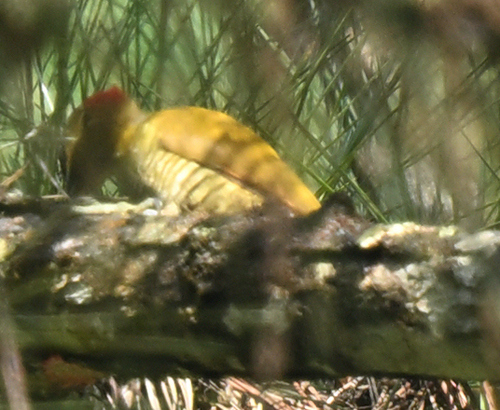
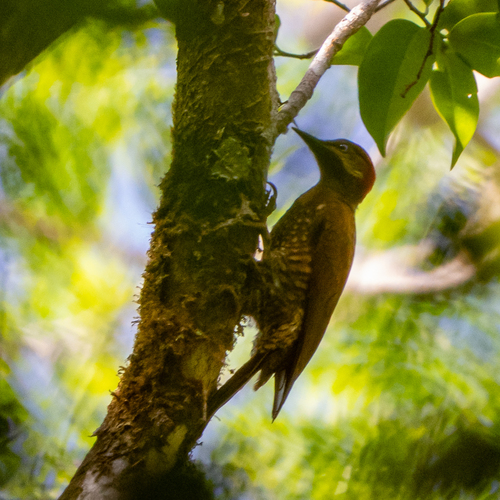
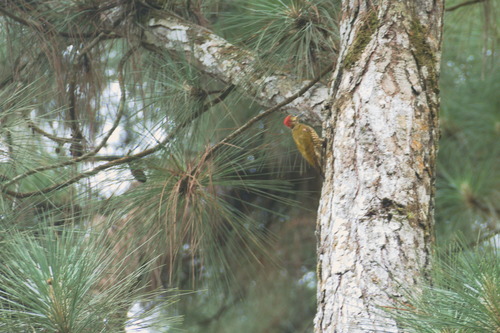
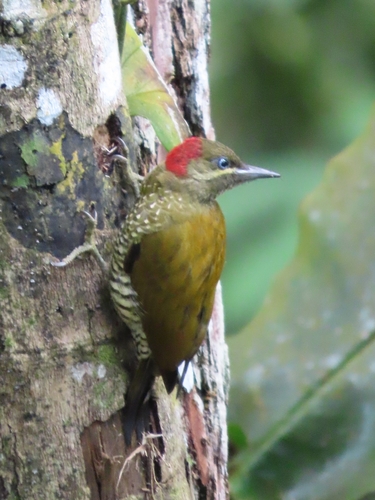
The stripe-cheeked woodpecker is about 17 cm (6.7 in) long. Males and females have the same plumage except on their heads. Males are red from forehead to hindneck and very widely on the malar (cheek); the latter has a buffy white stripe above it. The rest of its face is olive. The female has red only from the back of the crown to the hindneck but is otherwise the same as the male. Adults of both sexes have bronze-green upperparts. Their flight feathers are mostly cinnamon-rufous with dark brown bars. Their tail is blackish with some cinnamon-rufous on the outer feathers. Voice: The stripe-cheeked woodpecker's primary call is "a nasal bi-syllabic note 'nyeeeh-wheet'"; both sexes utter it, singly or in a fast series. "Other vocalizations include scolding and a fast chattering series of short nasal notes, presumably when excited."
Text from Wikipedia, licensed CC BY-SA 4.0.
When to see the Stripe-cheeked Woodpecker
One bar for each month, and every month is filled: this bird is recorded here in all twelve. The wide bar is March, the month with the most records.
Where to see the Stripe-cheeked Woodpecker
The map shades 1 country with regular records. Everything unshaded has no records. Countries are listed below the map.
About the Stripe-cheeked Woodpecker
The stripe-cheeked woodpecker is a species of bird in subfamily Picinae of the woodpecker family Picidae. It is endemic to Panama.
Text adapted from Wikipedia, licensed CC BY-SA 4.0.
Easily confused with
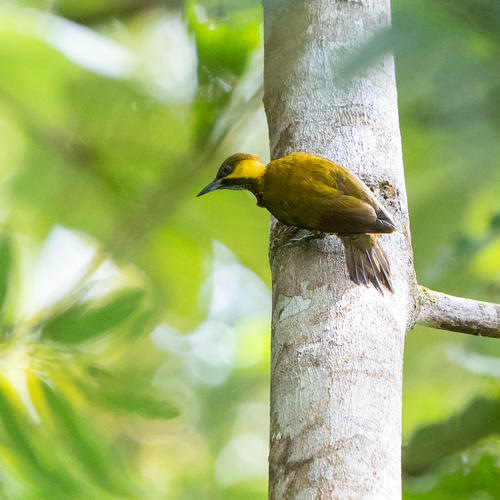 Lita WoodpeckerPiculus litaeThe Lita woodpecker is about 17 to 18 cm (6.7 to 7.1 in) long.
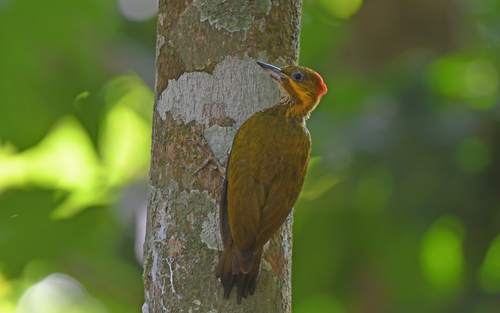 White-throated WoodpeckerPiculus leucolaemusThe white-throated woodpecker is about 19 to 20 cm (7.5 to 7.9 in) long and weighs about 69 g (2.4 oz).
 Yellow-browed WoodpeckerPiculus aurulentusThe yellow-browed woodpecker is 21 to 22 cm (8.3 to 8.7 in) long and weighs 22 to 68 g (0.78 to 2.4 oz).
Learn the Stripe-cheeked Woodpecker in the BeakBrain App
Photo and call practice. Coming soon to iPhone and Android.
Play today's Daily BirdEvery photo and recording on this page is credited to its author under the licence shown. Spotted a problem with this page, or have a better photo? Contribute.