Learn what every symbol on the card means.Full credits and sources at beakbrain.com/symbols
 ForestSmall · 55 g

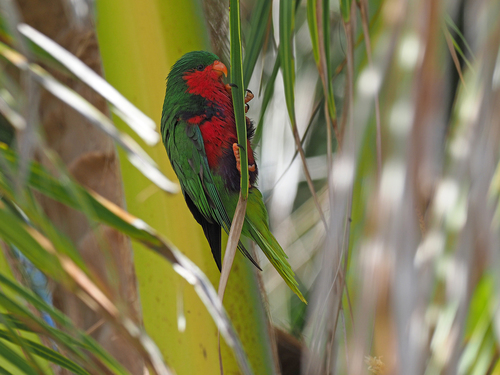
ID tip
The lorikeets are 19 cm (7.5 in) in length and weigh 42–55 g (1.5–1.9 oz). Adults are green on the upper side, with a green occiput and crown. The green color turns into a yellow-green at the base and tail. They have a green underwings, with a green band across the chest that varies in appearance. Their breast is red in color, and turns purple towards their abdomen and thighs. They have a deep orange beak with yellow or orange eyes. Juvenile Stephen's lorikeets have green underparts with purple or red marks on their throats and abdomens. Their tail tends to be a dark green.
Text from Wikipedia, licensed CC BY-SA 4.0.
When to see the Stephen's Lorikeet
One bar for each month. Filled bars are the 6 months with records; pale bars are months with none. The wide bar is July, the month with the most records.
Where to see the Stephen's Lorikeet
The map shades 1 country with regular records. Everything unshaded has no records. Countries are listed below the map.
About the Stephen's Lorikeet
Stephen's lorikeet, also known as the Henderson lorikeet or the Henderson Island Lorikeet, is a species of parrot in the family Psittaculidae. It is endemic to Henderson Island in the Pitcairn Islands of the South Pacific.
Text adapted from Wikipedia, licensed CC BY-SA 4.0.
Easily confused with
 Palm LorikeetVini palmarumThe palm lorikeet is a species of parrot in the family Psittaculidae.
 Kuhl's LorikeetVini kuhliiIt is a fast flying lorikeet with vibrant plumage; a green back, wings and crown, a blue nape and legs and bright red undersides and cheeks.
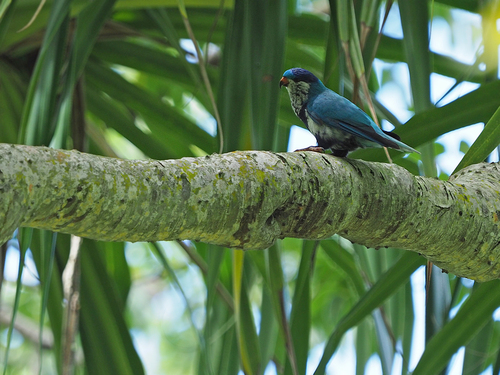 Ultramarine LorikeetVini ultramarinaThe ultramarine lorikeet is a species of parrot in the family Psittaculidae, endemic to the Marquesas Islands.
Learn the Stephen's Lorikeet in the BeakBrain App
Photo and call practice. Coming soon to iPhone and Android.
Play today's Daily BirdEvery photo and recording on this page is credited to its author under the licence shown. Spotted a problem with this page, or have a better photo? Contribute.