Learn what every symbol on the card means.Full credits and sources at beakbrain.com/symbols
 ForestCup nestTiny · 9 g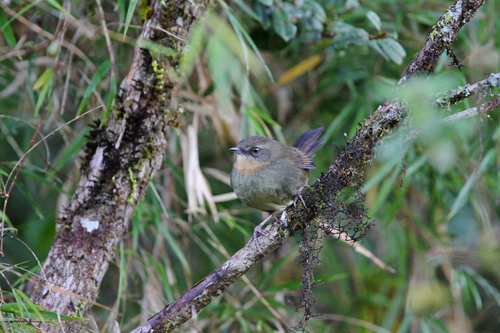
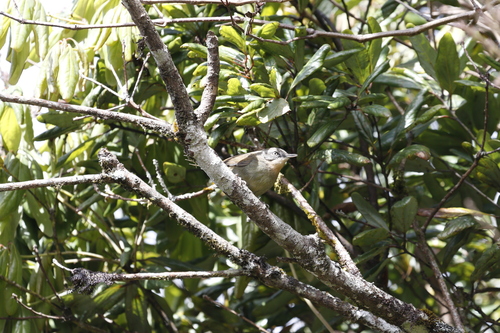
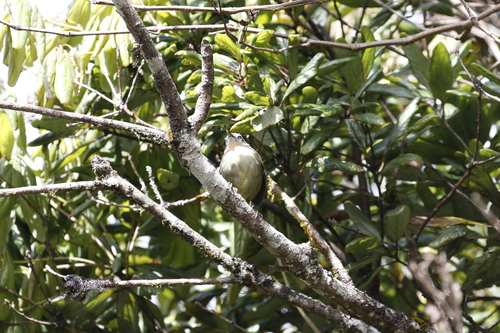
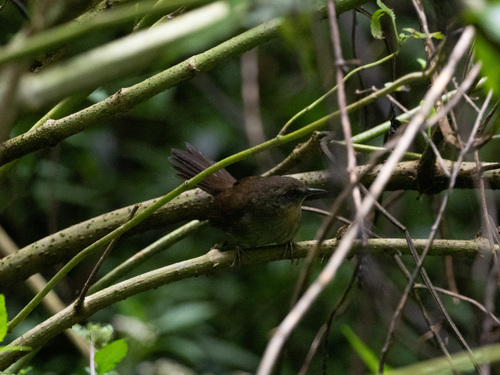
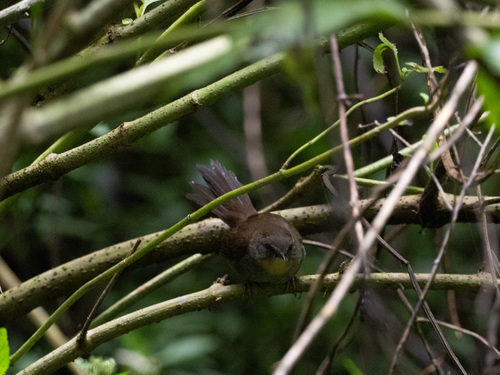
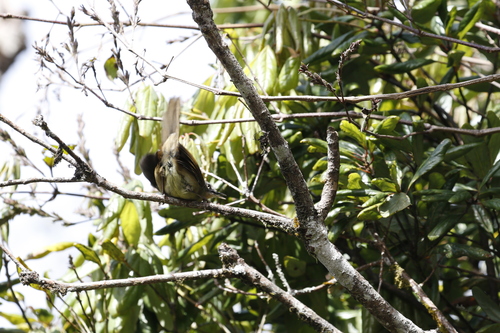
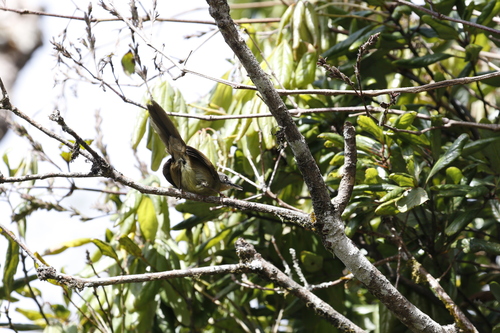
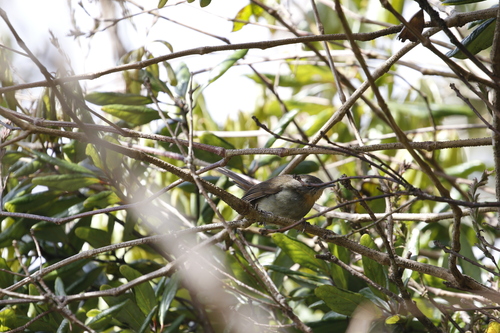
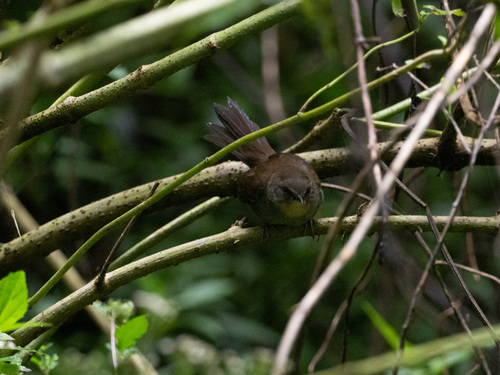
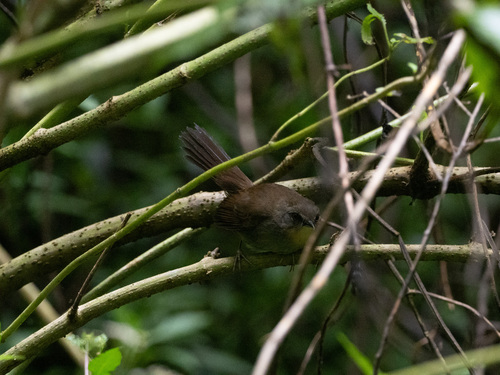
ID tip
This is a medium-large warbler at 14 cm. The adult has a plain brown back, pale grey underparts, a broad tail and short wings. There is a weak supercilium, and the throat is tinged orange. The sexes are identical, as with most warblers, but young birds lack the throat colouration. The Sri Lanka bush warbler is a skulking species which can be very difficult to see. Perhaps the best site is Horton Plains National Park. It keeps low in vegetation and, like most warblers, it is insectivorous. Males are often only detected by the loud song, which has an explosive queet.
Text from Wikipedia, licensed CC BY-SA 4.0.
When to see the Sri Lanka Bush Warbler
One bar for each month. Filled bars are the 6 months with records; pale bars are months with none. The wide bar is January, the month with the most records.
Where to see the Sri Lanka Bush Warbler
The map shades 1 country with regular records. Everything unshaded has no records. Countries are listed below the map.
About the Sri Lanka Bush Warbler
The Sri Lanka bush warbler, also known as Ceylon bush warbler or Palliser's warbler, is an Old World warbler which is an endemic resident breeder in Sri Lanka, where it is the only bush warbler.
Text adapted from Wikipedia, licensed CC BY-SA 4.0.
Easily confused with
 Gray's Grasshopper WarblerHelopsaltes fasciolatusThe adult has an unstreaked olive-brown back, uniformly grey breast and buff underparts, with unmottled dull orange undertail coverts.
 Brown Bush WarblerLocustella luteoventrisThe brown bush warbler is a songbird species.
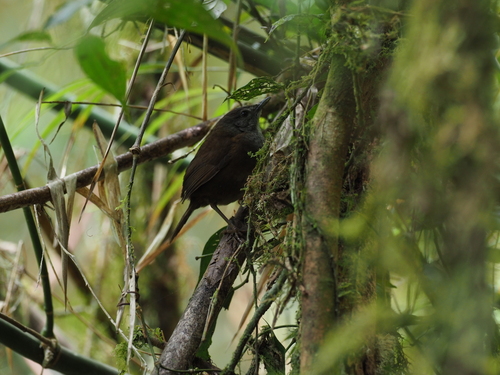 Sulawesi Bush WarblerLocustella castaneaThe Sulawesi bush warbler is a species of Old World warbler in the family Locustellidae.
Learn the Sri Lanka Bush Warbler in the BeakBrain App
Photo and call practice. Coming soon to iPhone and Android.
Play today's Daily BirdEvery photo and recording on this page is credited to its author under the licence shown. Spotted a problem with this page, or have a better photo? Contribute.