Learn what every symbol on the card means.Full credits and sources at beakbrain.com/symbols
 ForestCup nestMedium · 196 g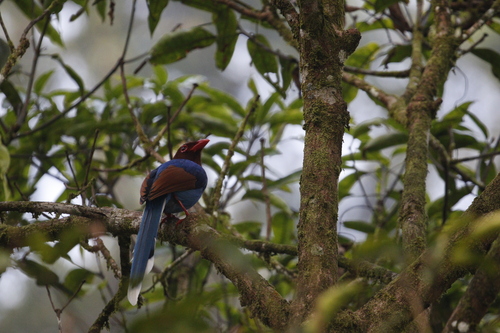


ID tip
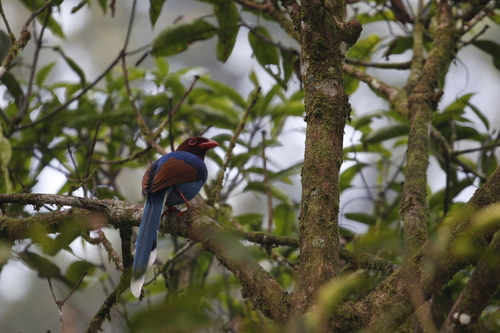
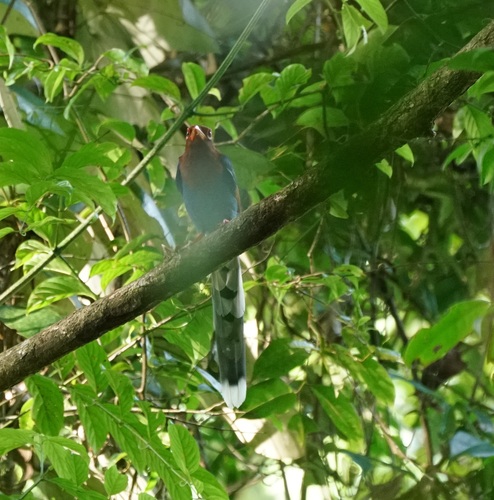
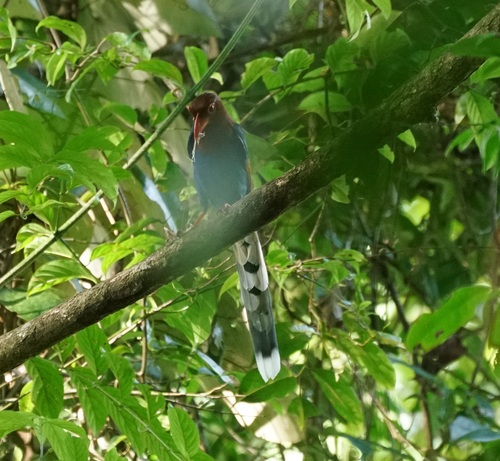
The Sri Lanka blue magpie measures 42–47 cm (17–19 in) in length, which is larger than a mynah, but smaller than a crow. It has a sturdy bill. Its plumage is bright blue, with a reddish-brown or chestnut head, neck, and wing. The blue tail is long and graduated, with a white tip. The bill, legs, feet, and featherless eye ring of this species are all vibrant red. Both the male and female of the species share this description.
Text from Wikipedia, licensed CC BY-SA 4.0.
When to see the Sri Lanka Blue Magpie
One bar for each month. Filled bars are the 9 months with records; pale bars are months with none. The wide bar is January, the month with the most records.
Where to see the Sri Lanka Blue Magpie
The map shades 1 country with regular records. Everything unshaded has no records. Countries are listed below the map.
About the Sri Lanka Blue Magpie
The Sri Lanka blue magpie or Ceylon magpie is a brightly coloured member of the family Corvidae, found exclusively in Sri Lanka. This species is adapted to hunting in the dense canopy, where it is highly active and nimble. Its flight is rather weak, though, and is rarely used to cover great distances. In spite of its ability to adapt to the presence of humans, it is classified as vulnerable to extinction due to the fragmentation and destruction of its habitat of dense primary forest in the wet zone of southern Sri Lanka.
Text adapted from Wikipedia, licensed CC BY-SA 4.0.
Easily confused with
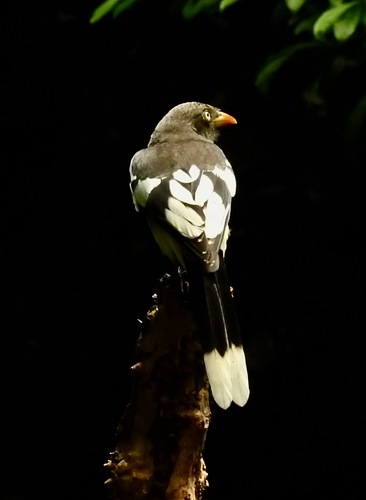 White-winged MagpieUrocissa whiteheadiThe white-winged magpie or Hainan magpie is a passerine bird of the crow family, Corvidae.
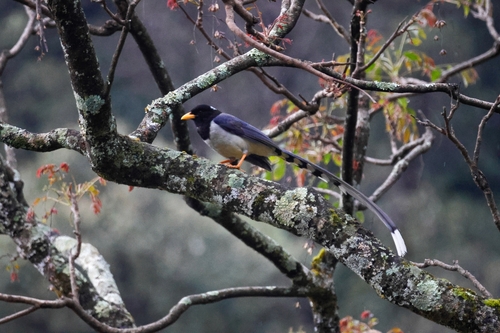 Yellow-billed Blue MagpieUrocissa flavirostrisLength 66 cm (26 in), including tail of about 46 cm (18 in).
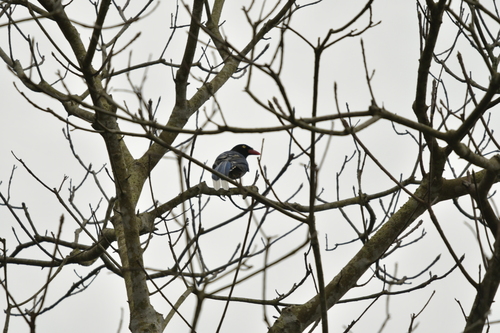 Taiwan Blue MagpieUrocissa caeruleaIt is 63–68 cm (25–27 in) in length.
Learn the Sri Lanka Blue Magpie in the BeakBrain App
Photo and call practice. Coming soon to iPhone and Android.
Play today's Daily BirdEvery photo and recording on this page is credited to its author under the licence shown. Spotted a problem with this page, or have a better photo? Contribute.