Learn what every symbol on the card means.Full credits and sources at beakbrain.com/symbols
 ForestCup nestSmall · 19 g

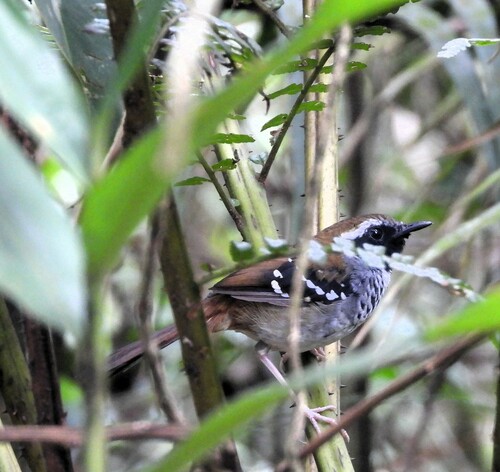
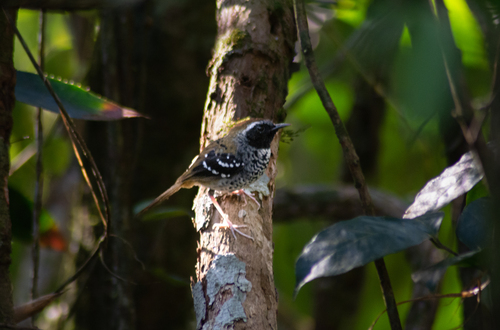
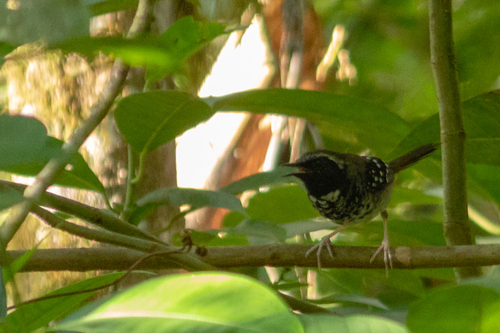
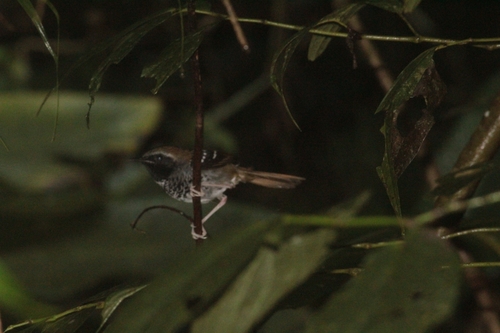
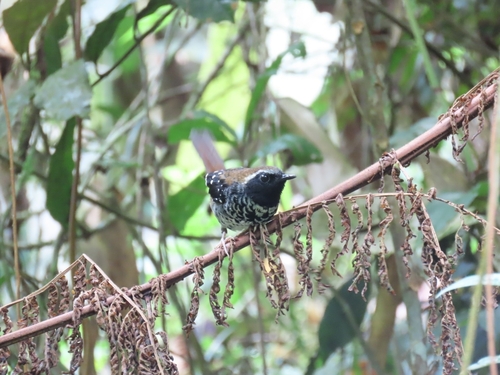
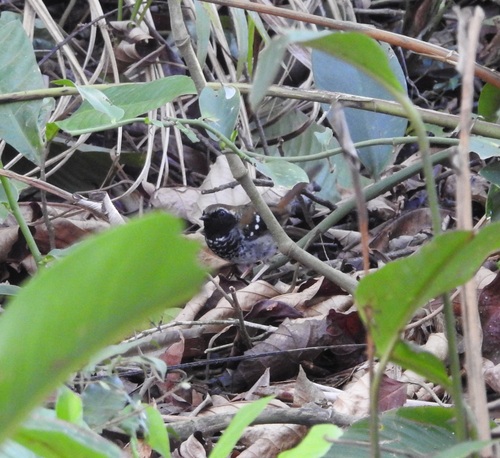
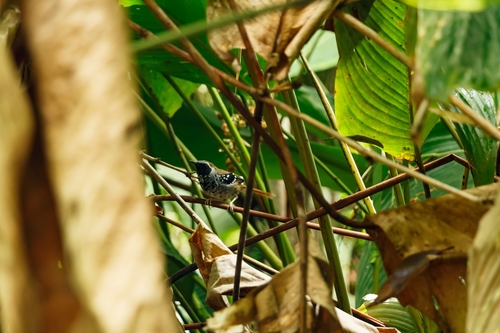
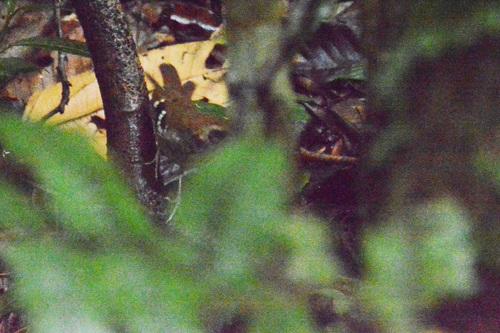
ID tip
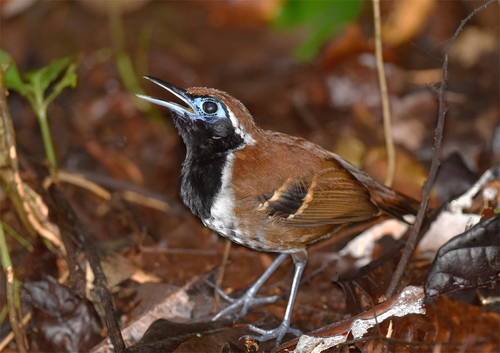
The squamate antbird is 14 to 15 cm (5.5 to 5.9 in) long and weighs 16.5 to 20 g (0.58 to 0.71 oz). Adult males have a dark yellowish brown crown and upperparts with a white patch between their scapulars; some black is scattered across their back. They have a long gray-tinged white supercilium on an otherwise mostly black face. Their tail is dark yellowish brown with tawny feather edges. Their flight feathers are brownish with rufous edges and their wing coverts black with wide white tips. Their chin and throat are black. Their breast and side feathers are black with wide white edges. Voice: The squamate antbird's song is "a countable series of doublets...similar to that of M. loricatus but starts at higher frequency and descends substantially more in pitch". Its call is "a short rattle and short downslurred note" that also is similar to the white-bibbed antbird's.
Text from Wikipedia, licensed CC BY-SA 4.0.
When to see the Squamate Antbird
One bar for each month, and every month is filled: this bird is recorded here in all twelve. The wide bar is October, the month with the most records.
Where to see the Squamate Antbird
The map shades 1 country with regular records. Everything unshaded has no records. Countries are listed below the map.
About the Squamate Antbird
The squamate antbird is a species of bird in subfamily Thamnophilinae of family Thamnophilidae, the "typical antbirds". It is endemic to Brazil.
Text adapted from Wikipedia, licensed CC BY-SA 4.0.
Easily confused with
 Ferruginous-backed AntbirdMyrmoderus ferrugineusThe ferruginous-backed antbird is 14 to 15 cm (5.5 to 5.9 in) long and weighs 24 to 29 g (0.85 to 1.0 oz).
 White-bibbed AntbirdMyrmoderus loricatusThe white-bibbed antbird is 14 to 15 cm (5.5 to 5.9 in) long.
 Scalloped AntbirdMyrmoderus ruficaudaThe scalloped antbird is 14 to 15 cm (5.5 to 5.9 in) long.
Side by side: Ferruginous-backed Antbird vs Squamate Antbird
Learn the Squamate Antbird in the BeakBrain App
Photo and call practice. Coming soon to iPhone and Android.
Play today's Daily BirdEvery photo and recording on this page is credited to its author under the licence shown. Spotted a problem with this page, or have a better photo? Contribute.